The Underlying Causes of World War I: Imperialism, Nationalism, and Alliances
This detailed overview explores the primary causes of World War I, including the roles of imperialism, nationalism, militarism, and entangling alliances. It discusses how the assassination of Archduke Francis Ferdinand catalyzed existing tensions, leading to declarations of war. Key events such as the Schlieffen Plan, trench warfare, and the involvement of major powers like the U.S. are highlighted. Furthermore, it examines the short-term and long-term consequences of the war, particularly the Treaty of Versailles and its effect on Germany, creating a lasting sense of resentment and instability.

The Underlying Causes of World War I: Imperialism, Nationalism, and Alliances
E N D
Presentation Transcript
Underlying Causes (excuses) • Imperialism • Taking over other nations (motivations vary) • Creates instability and violates nations’ sovereignty (self-determination) • Nationalism • Intense feeling of pride/loyalty to one’s own group • Problematic when at expense of other nations’ sovereignty (self-determination) Ex. Pan-Germanism and Pan-Slavism • Militarism • Arms racing and keeping an army prepared for war • defense or hostile actions/intentions??? • Entangling Alliances • Triple Alliance (Germany, Austria-Hungary, and Italy) • Triple Entente (G.B., France, and Russia) • Causes chain reaction and a much bigger conflict - “world war”
How does it all start? • Where does it start? • Balkan Peninsula • “Powder Keg of Europe” • Why called Powder Keg? • Ethnic/religious disputes in region (explosive situation) • The “Spark” • Archduke Francis Ferdinand and his wife Sophie assassinated by Serb nationalist • Part I • Part II
War Declared • Austria-Hungary declares war on Serbia after issuing an ultimatum • War Declared - July 28th 1914 • Sets off chain reaction due to alliance system • Russia, Germany, France, and finally Britain (major powers directly involved)
MAJOR NATIONS INVOLVED IN WAR • Allies • Great Britain, France, Russia (until 1918), Serbia, Japan, Italy (1915), U.S. (1917) • Central Powers • Germany, Austria-Hungary, Ottoman Empire
INITIALLY NOT SEENAS A MAJOR WAR • Most believe it will be over quickly • Patriotic fervor sweeps Europe
SCHLIEFFEN PLAN • Quick victory in France; then turn on Russia • “Paris for lunch; dinner in St. Petersburg” • Does not turn out that way • Why not? • With help from Belgium, and Russian attack; France and Britain are able to mobilize and halt German advance at Battle of the Marne
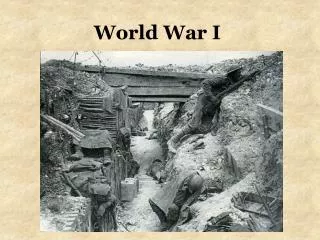
WESTERN FRONT • Trench Warfare; basically a stalemate • Why? • New Technology (weapons); too costly to use old battle tactics
EASTERN FRONT • Russians had to mobilize (outdated army) • German forces Russian retreat (Tannenberg) • Russians sign treaty in 1918 (Brest-Litovsk) • Why? • Revolution (1917)
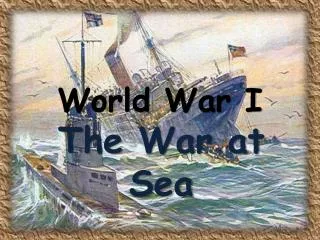
UNITED STATES • Why does it take so long for the U.S. to enter the war? • Isolationism • Why? • Tradition (Washington, Jefferson, others) • Ethnicity (British or Germans???) • Why does U.S. finally enter the war on the Allies side? • Propaganda (mostly from British) • Sinking of the Lusitania 1915 • Unrestricted U-boat warfare • Zimmerman telegram (1917)
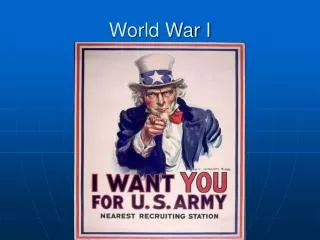
U.S. DECLARES WAR APRIL 6, 1917 • “World must be made safe for Democracy!” • Not well prepared (non-intervention) • Americans turn the tide of war • Change way war is waged • “Devil Dogs” (Marines)
ARMISTICE • November 11, 1918 at 11:00 am “Eleventh hour of the eleventh day of the eleventh month” • German economy in poor shape • New Leadership (Weimar Republic) surrenders – • Revolution (Hitler’s “November Criminals”)
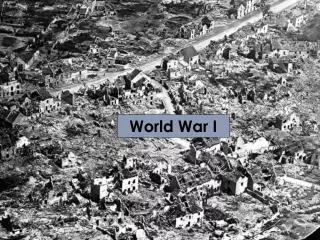
Short Term Consequences of War • Death- 30 million people • Slaughter, disease, starvation • Destruction • Farmland, homes, and villages • Economic Impact • National treasuries drained; debt figures vary – much owed to U.S. (creditor nation v. debtor nation) • Psychological Effect- despair, insecurity
Long Term Consequences • Peace Process (Versailles Treaty) • Big Four dominate proceedings • Wilson – U.S. (14 Points) • Wilson had attempted earlier to negotiate peace settlement – a “peace without victory” • Clemenceau – France (Punish Germany!) • David Lloyd George – G.B. (punish but more moderate than Clemenceau) • Orlando – Italy (Land) • End Result = Germans must pay!! • Their excuse for not listening to Wilson? • U.S. had not sacrificed as much as other Allies
Long Term Consequences (cont.) • Treaty creates bitterness and resentment • Germany- as a result of Versailles Treaty: • Must accept full responsibility for the War • Must pay war reparations (severe) • Loses territory (Alsace/Lorraine and other) • Military limited (100,000 man army) • Italy – did not gain territory • League of Nations • U.S. does not join • Why not? • Only Senate has power to declare war not League of Nations • World Wide Economic Crisis (Depression) • Belfour Declaration - Zionism