Download

1 / 17
170 likes | 289 Vues
Discover essential nutrition strategies that promote optimal health and well-being. Learn about the foods your body needs, how to navigate food marketing, and manage your weight effectively. This resource reviews the 2010 USDA Dietary Guidelines, emphasizing the importance of a balanced diet rich in whole foods, lean proteins, and healthy fats. Explore the benefits of a nutritious lifestyle, including energy management, disease prevention, and enhanced quality of life. Gain insights into meal planning, portion control, and making smart food choices for long-lasting health.

E N D
Eating Right for Life BALANCING LIFE’S ISSUES, INC.
Objectives • Understand what food your body needs for optimal health • Navigate foods and food marketing based on sound nutrition advice • Learn to manage weight, energy and long-term health with nutrition guidance • Review and understand the 2010 Dietary Guidelines issued by the USDA and HHA
Benefits of Eating Right • Quality of life • Weight management • Disease Prevention • Immediate benefits • Increases energy • Improved and controlled mood • Connection with self and others • Longevity • Self confidence
Healthy Lifestyle • Exercise • Sleep • Managing stress – fight or flight response • Hydrate
Variety • Smart food combinations • Many foods • Balance • How much • When • Smart Choices • Limit certain foods • Whole foods vs. processed foods What are some components of a healthy diet?
Smart Food Combinations Combine all 3 at every snack or meal for your best energy and satisfaction
Variety • Carbohydrates • Fruits and vegetables • Each color has its own health benefits so eat them all • Get 9 servings of them a day! • Grains • Get at least, if not all of them whole grains • Includes Brown rice, whole grain bread, quinoa, oats • Protein • Take in small amounts of lean and low-fat protein (6-8oz) daily • Includes Lean meats, fish, dairy, eggs, beans, nuts, seeds, soy • Fat • Limit saturated fat and take in Omega-3s, poly and mono unsaturated fats such as avocadoes, olives, vegetable oils, fatty fish, nuts, seeds
Balance – When to eat • Caloric pacing - 3 meals and 2-3 snacks per day • Choose small meals and eat every 2-3 hours • Snack ideas - Choose fruits and vegetables whenever possible • Have nuts, hard cheeses, bean dips and lean proteins alongside them • When having grains make them whole • Benefits • Increases metabolism • Controls appetite and often portions and food choices • Energy Balance daily is key!
Balance – How much • One cup is about the size of your fist or a tennis ball • Servings size for cooked vegetable or grain is 1/2 cup • 1 oz. is about the size of your thumb or a poker chip • Serving size for cheese or peanut butter • 3 oz is about the size of a deck of cards or the palm of your hand • Serving size for meat Check out: www.webmd.com healthy eating section for a great portion size helper
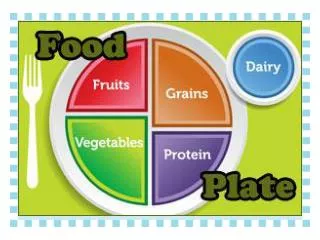
The New Proportions • The plate is designed to show how your food should be portioned • Its important to enjoy your food, but eat less and avoid oversized servings • Half your plate fruits & vegetables • Grains should be whole grains • Choose lean with protein • Switch to fat-free or low-fat milk Check out www.choosemyplate.gov
Whole Foods vs. Food Products • Whole foods are in their natural form • Processed foods often add sugar, salt and fat • All things that increase our risk for diseases like diabetes, heart disease, stroke • Food labels • Contain the truth about health of a food product more than food claims • Labeling can be misleading • “Healthy”, “natural” or “cholesterol free” • Ingredient list gives you the power to know what you are eating • Listed by weight • Choose less: hydrogenated oils and added sugars FOODS TO LIMIT
Meal Planning • Carbohydrates, protein and healthy fat • Vegetable stir fry with beans and rice • Fish, potato and vegetable • Meat stew with vegetables and grain (barley) • Time-saving tips • Cook extra food and save in fridge or freezer • Have tools on hand like a rice cooker, blender, steamer and sauté pan • Keep cooked or fast-cooking grains on hand • Store frozen berries and greens like spinach in the freezer • Keep nuts, nut butters and beans in cabinets
Sit down to a meal whenever possible • Ask for modifications to meals when eating out Add as much color to your plate as possible • Keep snacks on hand so you never get too hungry • Chew your food completely • Eat with others Social interaction enhances our satisfaction • Body absorbs nutrients and digests best when it is relaxed • Get involved in the purchasing and preparation of your food whenever possible The Art of Eating
Updated Statistics and Dietary Guidelines • 68% of United States population are overweight or obese and more than 33% of children • New guidelines will focus on reducing calories while increasing physical activity. • It is all about making better choices • Fruits, vegetables, whole grains, fat free and low fat dairy. • Consume less processed food, salty foods, foods high in sugar. • Lean and then be aware of portion sizes • Increase your physical activity • It is not just about looking better but feeling better and living longer and healthier Source: United State Department of Agriculture
6 Easy Guidelines to remember • Savor your food at meals but consume less. • Learn portion control for each kind of food. • Make vegetables and fruits the bulk of your plate. • Drink 1% or fat free milk or try almond or rice milk. • Watch out for hidden sodium in foods you don’t usually think as “salty” like breakfast cereals etc. • Make water and calorie-free beverages your primary source of fluids rather than sugary, calorie-containing drinks.
The bottom line… • Accept the fact that we need fewer calories overall • Unconsciously we have been encouraged that bigger and more is better and it not true • Think of food as you would fuel for your car • Savor and enjoy every bite! Balance overall calories with plenty of activity & exercise.