Understanding Cellular Respiration: Aerobic and Anaerobic Processes
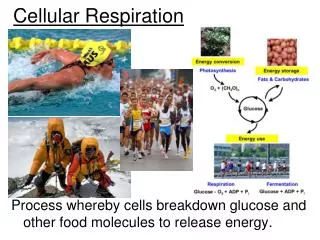
This review covers key concepts of cellular respiration, which occurs in the mitochondria, the "powerhouse" of the cell responsible for producing energy. Aerobic respiration requires oxygen, where glucose is metabolized to generate ATP, alongside carbon dioxide and water as byproducts. In contrast, anaerobic respiration can occur without oxygen. Understanding these processes is essential for comprehending how cells produce energy for their functions.

Understanding Cellular Respiration: Aerobic and Anaerobic Processes
E N D
Presentation Transcript
Cellular Respiration Unit 1 Midterm Review
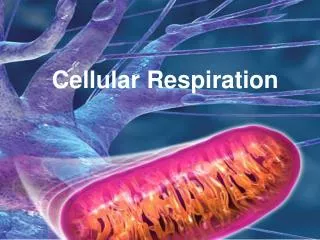
Cellular Respiration • Takes place in the mitochondria. • The mitochondria is known as the “powerhouse” of the cell because it produces the energy needed for cellular functions. http://4.bp.blogspot.com/-VuGbfaqr0I0/TY9cuCY6nnI/AAAAAAAAAfA/1uqzNWDEKkA/s1600/mitochondria.jpg http://upload.wikimedia.org/wikipedia/commons/thumb/0/0c/Animal_mitochondrion_diagram_en_(edit).svg/400px-Animal_mitochondrion_diagram_en_(edit).svg.png
Cellular Respiration • There are two types of cellular respiration. • Aerobic respiration requires oxygen. • Anaerobic respiration does not require oxygen.
Aerobic Respiration • Oxygen is always required. • The molecules of food (Glucose)are broken down to obtain energy in the form of ATP. • Carbon dioxide (CO2) and water (H2O) are excreted as wastes.
Cellular Respiration Oxygen Glucose + Mitochondria Carbon dioxide Water + + 38 ATP http://bioweb.wku.edu/courses/biol115/wyatt/Metabolism/Respiration.gif
References http://www.anaerobicrespiration.net/general/simple-definition-of-aerobic-and-anaerobic-respirations/