Download
1 / 10
110 likes | 237 Vues
In this lesson plan by Mrs. Price for Grade 4/5, students learn about ecosystems and biomes, encompassing everything that surrounds living organisms. Key concepts include the definition of environments, ecosystems, and the interdependent relationships within. The lesson highlights specific types of ecosystems such as deserts, tundras, grasslands, and the Everglades, detailing their unique characteristics and adaptations of flora and fauna. Students will explore how living organisms adapt to their surroundings to ensure survival, enhancing their understanding of ecological balance.

E N D
Academic Raceway LessonEcosystems and Biomes Mrs. Price Grade 4/5
What is an environment? • Everything that surrounds and affects an animal, including living and nonliving things.
What is an ecosystem? • An ecosystem is the environment, its living and nonliving elements, and how they work together.
Types of ecosystems: • Desert • Tundra/Alpine Tundra • Grassland/Savanna • Everglades
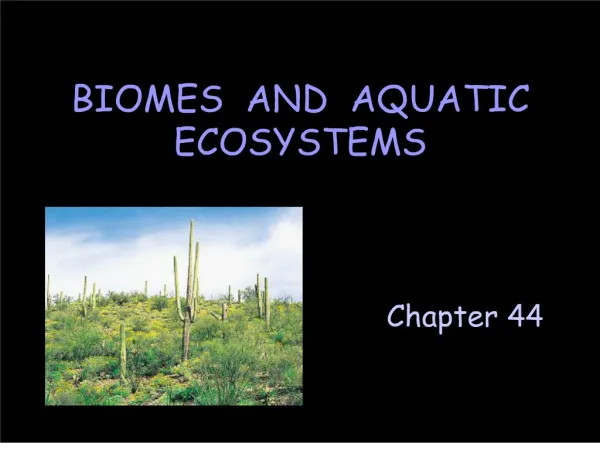
Characteristics of a Desert • Very little rainfall (less than 10 inches/yr) • Very hot and dry • Animal adapt to heat by being nocturnal, active at night and rest during the day.
Tundra/Alpine Tundra • Very cold. • Home to many types of plants and animals that have adapted to extreme conditions. • Very few trees survive, but there are many shrubs, mosses, and lichens. • Much of the land has ground that is permafrost, permanently frozen.
Characteristics of a Grassland • Grassland biomes are large, rolling terrains of grasses, flowers and herbs. • Grasslands are found on every continent except Antarctica.
Characteristics of Everglades • Called a "river of grass" because of its water and the thick sawgrass that grows there. • Home to hundreds of different organisms. • Over 43 different types of mosquitoes. • Mangrove forests help rid water of excess salt.
Vocabulary • Adaptation occurs when plants and animals change in order to survive. • One way animals can adapt to the changing environment is by hibernating. • Plants have thick leaves in the desert to retain water.