
Molecular Modeling?

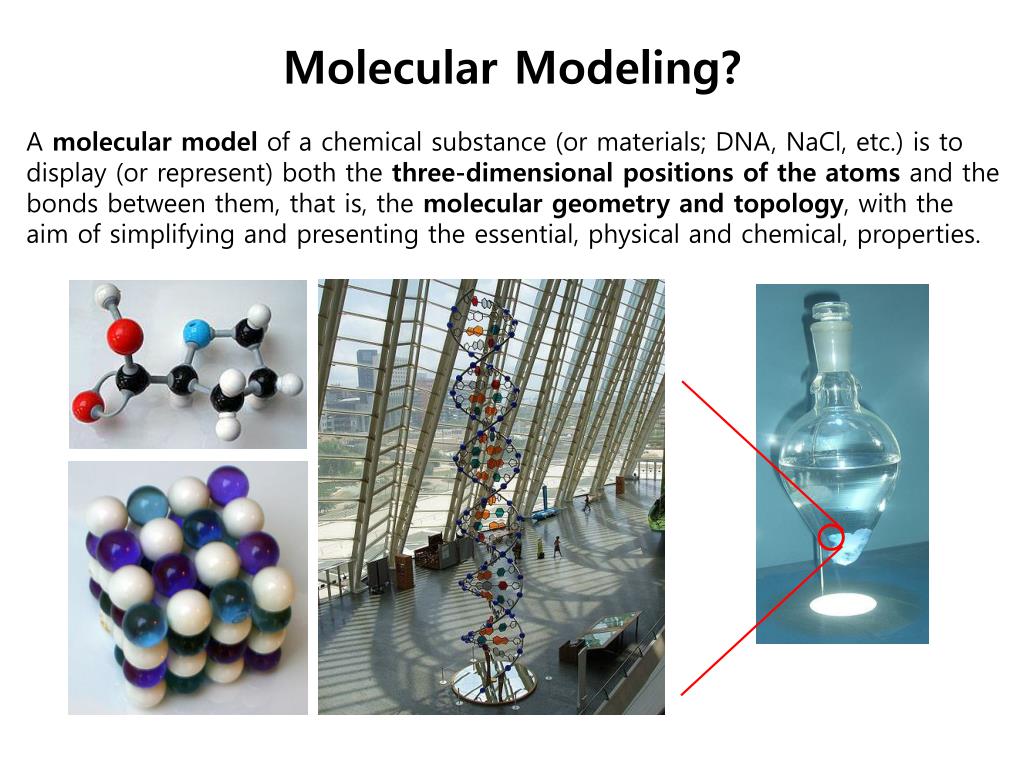
Molecular modeling is a powerful tool for visualizing the three-dimensional structures of chemical substances such as DNA and NaCl. It represents atomic positions and bonding geometries, allowing for a simplified presentation of physical and chemical properties. Computer-based models enable dynamic simulations that reveal molecular behaviors over time, informed by quantum mechanical calculations that study equilibrium geometries, vibrations, and electronic distributions. This approach is crucial for advancing research in areas like bulk heterojunction solar cells and understanding fundamental molecular functions.
Télécharger la présentation 
Politique de téléchargement : le contenu du site vous est fourni TEL QUEL pour votre information et votre usage personnel ; il ne peut être vendu, concédé sous licence ni partagé sur d’autres sites sans l’accord de son auteur.Le contenu vous est fourni TEL QUEL, pour votre information et votre usage personnel uniquement. Téléchargez la présentation en cliquant sur ce lien. Lors du téléchargement, si vous ne parvenez pas à télécharger une présentation, l’éditeur a peut-être supprimé le fichier de son serveur.Pendant le téléchargement, si vous ne parvenez pas à obtenir une présentation, le fichier a peut-être été supprimé par l’éditeur.
F I N