Download
1 / 9
90 likes | 218 Vues
Learn the fundamental concepts of forces and motion, including Newton's Laws, the distinction between mass and weight, and types of energy. Discover how gravity influences weight and how friction impacts motion. Master the principles of balanced vs. unbalanced forces and the law of conservation of energy. Understand how action and reaction forces work in different scenarios, and explore practical examples like car acceleration and momentum during collisions. This guide will clarify these essential physics concepts for better comprehension.

E N D
3.1- Force • Force- Ability to change motion(push or pull) • Units of lb, N=km.m/sec2 • Mass- amount of matter in an object compared to a standard • Weight- force acting on object (gravity) in lb or N • Inertia- property of an object to resist change in state of motion • If forces are balanced= doesn’t move=equilibrium • Unbalanced forces=move • Forces always occur in pairs!!!!!
Newton’s Laws of Motion • Newton’s First Law: • “AKA” Inertia • an object will stay at rest until acted on by an unbalanced force • In other words, things tend to keep on doing what they were doing in the first place unless you apply a force.
Types of Energy • Kinetic Energy: energy of motion_____ • Potential Energy: Energy being stored due to its position; energy at rest. • Law of conservation of energy: energy is not created nor destroyed but changed from one type to another.
Newton’s Laws of Motion • Newton’s Second Law: • force causes an object to accelerate while the object’s mass resists acceleration • F=ma • a=acceleration (m/s2), F= force (N), m=mass (kg) • EX. Lighter cars go faster
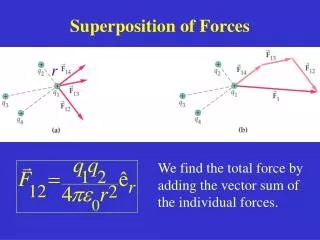
3.2 Gravity and Weight • Fw=mg • Fw= weight force (N) • m=mass (kg) • g=acceleration due to gravity (9.8 m/sec2) • Gravity- • Force pulling toward mass of planet • Depends on mass • Changes on other planets • On Earth= 9.8m/s2 • Weight- force created by gravity depends on mass • Force depends on mass they are not equal • Law of Universal Gravitation: force of attraction directly related to masses & indirectly related to distance
Friction • Friction: • Reduce acceleration • Works against motion • When surfaces move against on another • Causes wear on parts • Types of friction: • Air friction- (air resistance) • Sliding friction (rub hands together) • Viscous friction- (oil in car engines & joint fluid) • Rolling friction- (wheel on road, ball bearings)
3.3 Newton’s Third Law • Newton’s 3rd Law: • For every reaction there is a reaction force equal in strength & opposite in direction • For every reaction there is an equal & opposite reaction • Can be + (move to right) or – (move to left) • Examples: rockets, stepping into a boat, throw a ball on a a skate board • Law of Conservation of Momentum: as long as interacting objects are not influenced by outside forces (friction), the total amount of momentum cannot change
Can talk about 2 systems: • m1v1=m2v2 • Positive side shows movement • Ex: A 100 kg football player (fullback) moving at a speed of 3.5 m/sec collides with a 75 kg defensive back running at a velocity of 5 m/sec. Who gets thrown backwards? Why?