Download
1 / 28
280 likes | 410 Vues
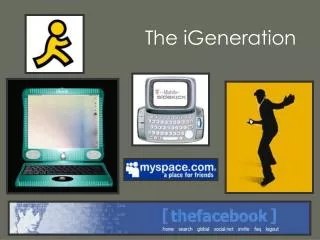
The iGeneration, born post-2003, is characterized by their innate technological fluency, rapid communication styles, and a unique mindset influenced by their digital upbringing. This overview explores generational shifts from Baby Boomers to Millennials, highlighting how the iGeneration differs. They are known for their reliance on technology, desire for immediacy, and preference for custom experiences. As this group gains increasing economic power, understanding their behaviors and expectations is crucial for educators and marketers alike. What opportunities and challenges will the iGeneration present in the future?

E N D
Doug Tschopp April 2013 Communicating with the iGeneration
Overview • The Past • What is a Generation? • What is new? • iGeneration
A look to the past • Baby Boomer Generation • 1946-1964 • Generation X • 1965-1982 • Millennials • 1982-2003 • iGeneration • 2003+
Baby Boomer Generation • Optimistic • Idealist • Communicative • Value good education
Generation X • Influenced by technology • Desire instant gratification • Value family • Flexible
Millennials • Diverse • Redefined tradition and religion • Influenced by the recession • Desire immediate gratification
Strauss–Howe Generational Theory • Location in history • Beliefs and behaviors • Perceived membership
What defines a generation? • Family Life • Gender Roles • Important Institutions • Politics • Religion • Culture • Lifestyle • Views on the Future (Howe and Strauss 2000)
New Generational Trends • Generations are becoming shorter • Why?
A New Mindset • They have always lived in cyberspace, addicted to a new generation of “electronic narcotics.” • They can’t picture people actually carrying luggage through airports rather than rolling it. • Michael Jackson’s family, not the Kennedys, constitutes “American Royalty.”
A New Mindset • Probably the most tribal generation in history, they despise being separated from contact with their similar-aged friends. • They watch television everywhere but on a television • Before they purchase an assigned textbook, they will investigate whether it is available for rent or purchase as an e-book.
iGeneration • Who They Are • How They Communicate • What the Future May Hold
The iGeneration • Who are they? • What does the “I” represent”?
Quick Facts • Internet-savvy • Comfortable with technology • Great multi-taskers or task switchers • Favor individualization and all things customized
iGens • Of interest • Nielsen Company (Educational Leadership 2011) • The average teenager sends 3,399 texts a month • 6 messages every hour that he or she is not sleeping
iGeneration • Of interest • Rewired: Understanding iGeneration and How They Learn • 35% of children ages 6mo to 3 years have TV in their room • 10% of children ages 4-8 have a computer in their bedroom • 51% of children ages 9-12 have cell phone
Decision Makers • iGens hold more shopping power • Spending $239 billon annually • Influential in family purchases • Rely on parents for money
iGens • “WWW” • Whatever • Whenever • Where ever
Defining Characteristics • Rewired: Understanding iGeneration and How They Learn • Early introduction to technology • Adeptness at multitasking or switching tasks • Desire for immediacy • Ability to use technology to create a vast array of content
Defining Characteristics Fears • Not getting good grades • Not having enough money • Appearance Hopes • Become a millionaire • Have positive impact on society A+ A+ A+ A+ A+ A+
The Rise of the Mobile Device • 37% of teens in the U.S. have a smartphone. • 25% of those aged 12-17 access the Internet "primarily" via a cell phone or smartphone. • Among teens with a smartphone, however, 50% access the Internet primarily via the mobile device. • Girls are more likely than boys to rely on their smartphone as their primary Internet access device.
iGens and Communication • Pew Internet Teens and Privacy Management Survey • July 26-September 30, 2012
What are they doing online? • Pew Internet and American Life Project 2011 • Use social networking sites such as Facebook, Myspace, and Twitter • Use video chat resources such as Skype or iChat • Record and upload videos
Teaching the iGens • Use technology to convey content • Utilize video outside of class • Free up time to analyze, synthesize and assimilate material
What the Future May Hold • Are we out of step?
Conversation Questions?