Understanding Earth's Atmosphere: Composition and Sunlight Intensity
80 likes | 198 Vues
Explore the layers of Earth's atmosphere, including the troposphere and stratosphere, and their temperature variations. Discover the main gases that make up our air: nitrogen (78%), oxygen (21%), argon (1%), and carbon dioxide (350 ppm). Learn what ppm means and the concentration of neon (18 ppm) and argon (10,000 ppm). Understand why sunlight is more intense at the equator and the implications of radiation frequencies for human health, particularly concerning melanoma incidence in the U.S.


Understanding Earth's Atmosphere: Composition and Sunlight Intensity
E N D
Presentation Transcript
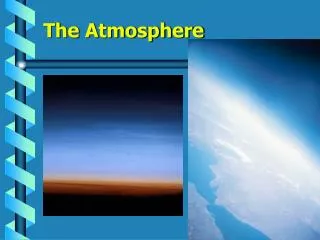
Physical 15ºC 50 km Stratosphere 15 km -70ºC Troposphere 15ºC
Chemical – what are the main gases ? Nitrogen 78 % 21% Oxygen Argon 1% 350 ppm Carbon Dioxide
What are ppm? ppm = parts per million. so 350 ppm means 350/1000000 = 3.5 × 10 - 4 on your calculator times 100 = 3.5 × 10 - 2 % = 0.035 %
Now your turn ! What is the % neon in air ? – 18 ppm 0.0018 % How many ppm is argon ? 1% 10000 ppm
Deaths from melanoma in USA o o o o o o o o o o o o o o o o o 30 Latitude / ºN 40 50
Why is sunlight more intense at the equator ? smaller distance through atmosphere less spread out
What frequencies of radiation are the most dangerous ? Why ?