Download

1 / 21
210 likes | 335 Vues
This study investigates the Peaks-Over-Threshold (POT) modeling techniques applied to hydrological data from Szabolcs Erdélyi's research. We utilize daily maximum values to select appropriate thresholds, ensuring statistical independence through a robust declustering method. The analysis involves calculating model parameters using maximum likelihood estimation, leading to interpretations of return levels and confidence intervals via profile likelihood. Findings reveal generally appropriate fits for the majority of data series, although certain datasets show discrepancies due to incidental calculation errors.

E N D
Peaks-over-threshold models Szabolcs Erdélyi research assistant VITUKI Plc.
Abstract • Used data • POT model • Choosing thresholds • Results • Summary
POT model X1 , X2 , … independence, identically distributed random variables u high enough threshold H(z) distribution function of GPD when y > 0, and
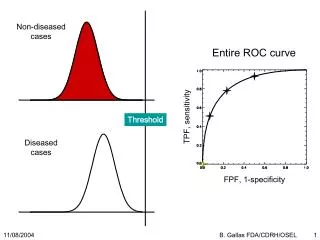
POT model • Choosing threshold • Selecting data over threshold from daily maximum values • Declustering • Time of declustering (It’s necessary because of independence): 30-60 days • Calculate model parameters with maximum likelihood function • Representing results: return levels and confidence intervals with profile likelihood
Choosing threshold Expected value of GPD, when threshold is u0: when < 1 (else infinity). Every u > u0: Expected value is linear, the shape parameter is constant function in u.
250 200 Átlagos meghaladás (cm) 150 100 y = -0.2844x + 289.2 50 100 200 300 400 500 600 700 800 900 Küszöbérték (cm) Average exceed curve Szeged(H)
1000 900 /s) 3 800 700 Átlagos meghaladás (m 600 y = -0.1741x + 970.2 500 400 0 500 1000 1500 2000 2500 3000 3 Küszöbérték (m /s) Average exceed curve Szeged(Q)
300 250 200 Átlagos meghaladás (cm) 150 100 y = -0.247x + 219.4 50 0 300 400 700 800 0 100 200 500 600 Küszöbérték (cm) Average exceed curve Polgár(H)
800 700 /s) 3 600 Átlagos meghaladás (m 500 400 y = -0.2677x + 1237.4 300 0 500 1000 1500 2000 2500 3000 3500 3 Küszöbérték (m /s) Average exceed curve Polgár(Q)
Summary • On the majotity of data series the fitting is appropriate, the results are resonable • The final result is slighty affected by the selection of thresholds • In the cause of the data of Polgár(Q) and Szolnok(Q) the model does not fit properly • The reason for that can be found in the incidental errors of the calculation of data