SlideServe
Menu
Préférences
© SlideServe · v2026

Dairy Products

charissa-harmon avatar
15 diapositives · 1.2K Views · Nov 15, 2014

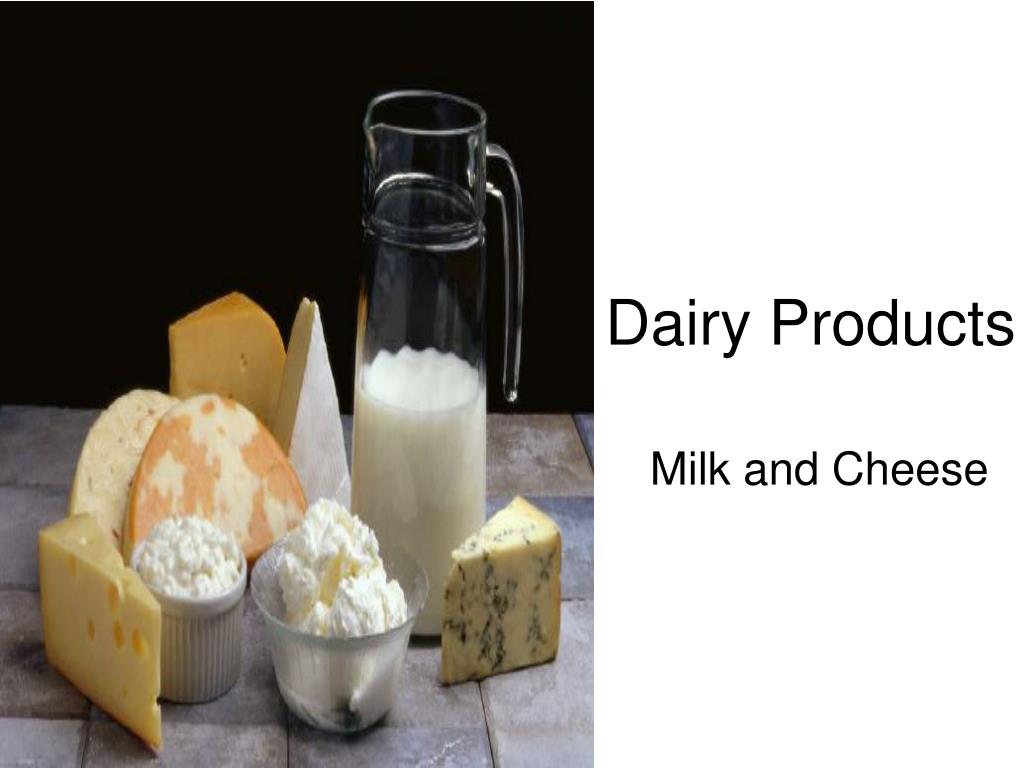
Dairy Products. Milk and Cheese. Milk. Products of milk (dairy products) Butter Cream Cheese. Milk. Types of milk Untreated Pasteurised Homogenized Sterilized Ultra-high temperature (UHT) Evaporated Condensed Powdered Skimmed. Milk. Types of milk Untreated milk :
Dairy Products - slide 1
01 / 15Dairy Products
1 / 17

Télécharger la présentation

Dairy Products
Une image / un lien ci-dessous est fourni (tel quel) pour télécharger la présentation

Politique de téléchargement : le contenu du site vous est fourni TEL QUEL pour votre information et votre usage personnel ; il ne peut être vendu, concédé sous licence ni partagé sur d’autres sites sans l’accord de son auteur.Le contenu vous est fourni TEL QUEL, pour votre information et votre usage personnel uniquement. Téléchargez la présentation en cliquant sur ce lien. Lors du téléchargement, si vous ne parvenez pas à télécharger une présentation, l’éditeur a peut-être supprimé le fichier de son serveur.Pendant le téléchargement, si vous ne parvenez pas à obtenir une présentation, le fichier a peut-être été supprimé par l’éditeur.

F I N

Plus de contenu associé

Transcription de la présentation
  1. Dairy Products Milk and Cheese

  2. Milk • Products of milk (dairy products) • Butter • Cream • Cheese

  3. Milk • Types of milk • Untreated • Pasteurised • Homogenized • Sterilized • Ultra-high temperature (UHT) • Evaporated • Condensed • Powdered • Skimmed

  4. Milk • Types of milk • Untreated milk: • has not gone through any kind of heat treatment • bottled on the farm 2. Pasteurized milk: • given mild heat treatment (72’C for 15 seconds) to destroy most disease-carrying germs

  5. Milk • Types of milk 3. Homogenised milk: pasteurised milk processed to disperse the fat globules and distribute them evenly throughout the milk 4. Sterilised milk: homogenised milk heated to a high temperature (113’C) for 15 – 40 minutes

  6. Milk • Types of milk 5. Ultra-high temperature (UHT) milk: homogenised milk heated to a high temperature of 132’C for not more than one second - can be kept for months without refrigeration

  7. Milk • Types of milk 6. Evaporated milk: some water has been removed from the milk through evaporation - contains 25% less water than fresh milk - sterilised at 115.5’C for 20 minutes 7. Condensed milk: some water has been removed from milk through evaporation - sweetened with sugar

  8. Milk • Types of milk 8. Powdered milk: all water has been removed (powder form) 9. Skimmed milk: fats have been skimmed off the milk

  9. Nutritive Value of Milk • Proteins • High biological value • Caseinogen (80%), lactalbumin, lactoglobulin 2. Fats • In the form of very tiny droplets dispersed throughout the milk (emulsion) • Milk fats are used in the production of cream and butter

  10. Nutritive Value of Milk 3. Carbohydrate • In the form of lactose (milk sugar) 4. Vitamins • A, D, B1, B2 5. Minerals • Calcium • Phosphorus • Sodium • Chlorine • Potassium 6. Water: 87%

  11. Effect of Heat on Milk • When milk is boiled, proteins coagulate and form a layer on the surface. • As boiling continues, hot air and steam get trapped under this layer. • This results in milk overflowing from its container.

  12. Cheese • A concentrated form of milk • It is a means of preserving nutritive value of milk

  13. Types of Cheese • Very hard cheese: water content is 30 – 32% (Parmesan cheese: grated for sprinkling on cooked food) • Hard cheese: water content is 37 – 40% (Cheddar cheese: grated for use in cooking) • Soft cheese: water content is 50% (Cream cheese, processed cheese and cottage cheese: used as spreads on biscuits and for cheesecakes)

  14. Nutritive Value of Cheese • Contains practically all the nutrients found in milk EXCEPT carbohydrates • Lactose in milk is converted into lactic acid during the manufacturing of cheese

  15. Effect of Heat on Cheese • When cheese is heated, the fat melts and separates. • Cheese becomes soft. • On further heating, proteins over-coagulate and become stringy and tough.