
SlideServe
Menu
Préférences
© SlideServe · v2026

Performing a Erythrocyte Sedimentation Rate

chiquita-lane avatar
6 diapositives · 726 Views · Nov 16, 2014

Performing a Erythrocyte Sedimentation Rate. Erythrocyte Sedimentation Rate. The erythrocyte sedimentation rate (ESR or sed rate) is a test measuring the rate at which erythrocytes (RBCs) settle. This test is used to diagnose inflammation and inflammatory disorders.
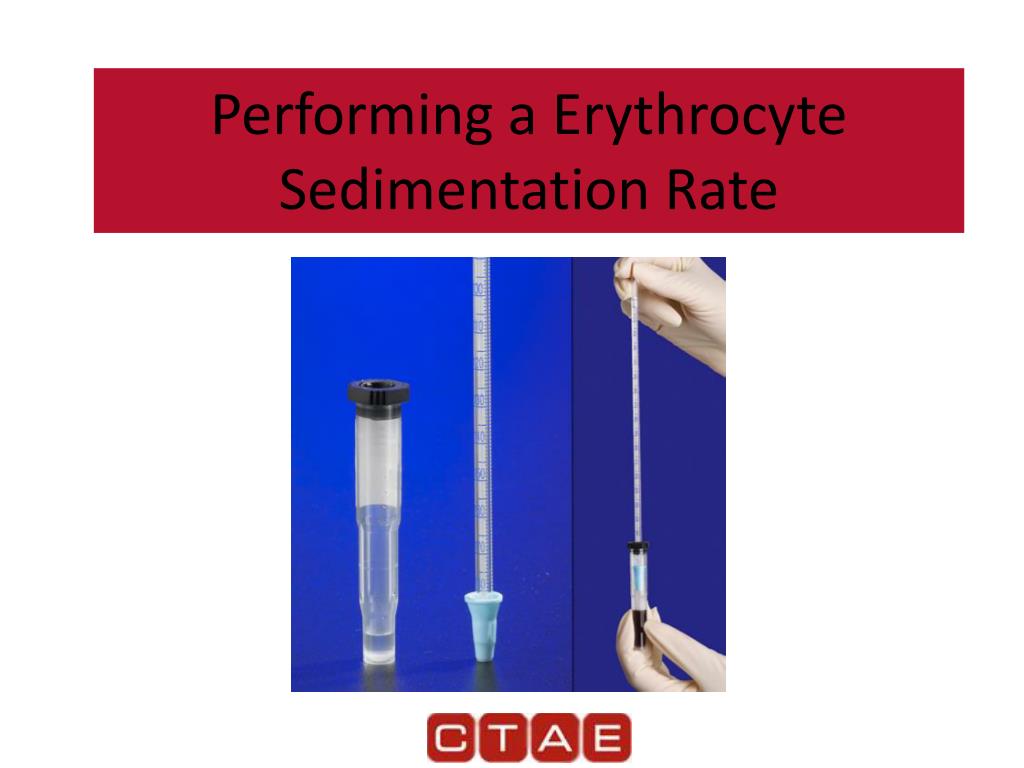
Performing a Erythrocyte Sedimentation Rate - slide 1
01 / 6Performing a Erythrocyte Sedimentation Rate
1 / 17

Télécharger la présentation

Performing a Erythrocyte Sedimentation Rate
Une image / un lien ci-dessous est fourni (tel quel) pour télécharger la présentation

Politique de téléchargement : le contenu du site vous est fourni TEL QUEL pour votre information et votre usage personnel ; il ne peut être vendu, concédé sous licence ni partagé sur d’autres sites sans l’accord de son auteur.Le contenu vous est fourni TEL QUEL, pour votre information et votre usage personnel uniquement. Téléchargez la présentation en cliquant sur ce lien. Lors du téléchargement, si vous ne parvenez pas à télécharger une présentation, l’éditeur a peut-être supprimé le fichier de son serveur.Pendant le téléchargement, si vous ne parvenez pas à obtenir une présentation, le fichier a peut-être été supprimé par l’éditeur.

F I N

Plus de contenu associé

Transcription de la présentation
  1. Performing a Erythrocyte Sedimentation Rate

  2. Erythrocyte Sedimentation Rate • The erythrocyte sedimentation rate (ESR or sed rate) is a test measuring the rate at which erythrocytes (RBCs) settle. • This test is used to diagnose inflammation and inflammatory disorders. • The test is also used to monitor the treatment of an inflammatory disorder. • A sample of anticoagulated blood, commonly EDTA, is placed into a tube and the blood is allowed to settle. • After a specific amount of time, per the procedure used, the amount of RBC settling is measured.

  3. Erythrocyte Sedimentation Rate • Performing an ESR • To perform a manual ESR test you need a calibrated tube filled with anticoagulated blood. • The RBCs will settle toward the bottom leaving plasma at the top area. • The sample is left for a specified amount of time. • At the end of the time period, you measure the distance from where the sample started to the settled RBCs. • Most healthy people have slow ESR rates. • In patients with specific inflammatory disorders, the rate of sedimentation is faster. • Sometimes the faster the settling the worse the severity of the disease.

  4. Erythrocyte Sedimentation Rate • Factors effecting an ESR include….. • The plasma’s properties  if rouleaux is present • Rouleaux is when the RBCs form stacks • Rouleaux increases the mass of the RBCs and increases the rate of sedimentation. • The RBC’s properties • Large RBCs (macrocytes) settle faster than small cells (microcytes). • Irregular shaped cells cannot settle as fast and result in a slower rate of settling. • Spherocytes (small compact cells) fall at a slower rate. • The rate of settling is also affected by the number of RBCs present

  5. Erythrocyte Sedimentation Rate • Factors effecting an ESR include….. • Way the procedure is carried out • The settling tube must be kept upright, straight, and standardized • Counter should be level • Temperature should be kept constant • Blood sample should be used within 2 hours of collection and well mixed • Test must be timed correctly • There are several methods used for performing an ESR. • Manual methods • Automated methods

  6. Reference Ranges • Each method has its own reference values. • Reference values differ slightly depending on gender and age. • Most range from 0-20 mm/hr