
SlideServe
Menu
Préférences
© SlideServe · v2026

The Trail of Tears: The Displacement of Native Americans in the Southeast

clare avatar
9 diapositives · 224 Views · Oct 23, 2014

By the 1820s, approximately 100,000 Native Americans remained east of the Mississippi, primarily in the Southeast. The Cherokee Nation exemplified adaptation, embodying "civilized" traits through farming, education, and governance. However, the 1828 discovery of gold on Cherokee land intensified white encroachment. President Jackson's removal policies culminated in the Indian Removal Act of 1830, asserting that Native Americans must relocate westward. The forced migration, known as the Trail of Tears in 1838, resulted in severe suffering and the loss of thousands of Cherokee lives.
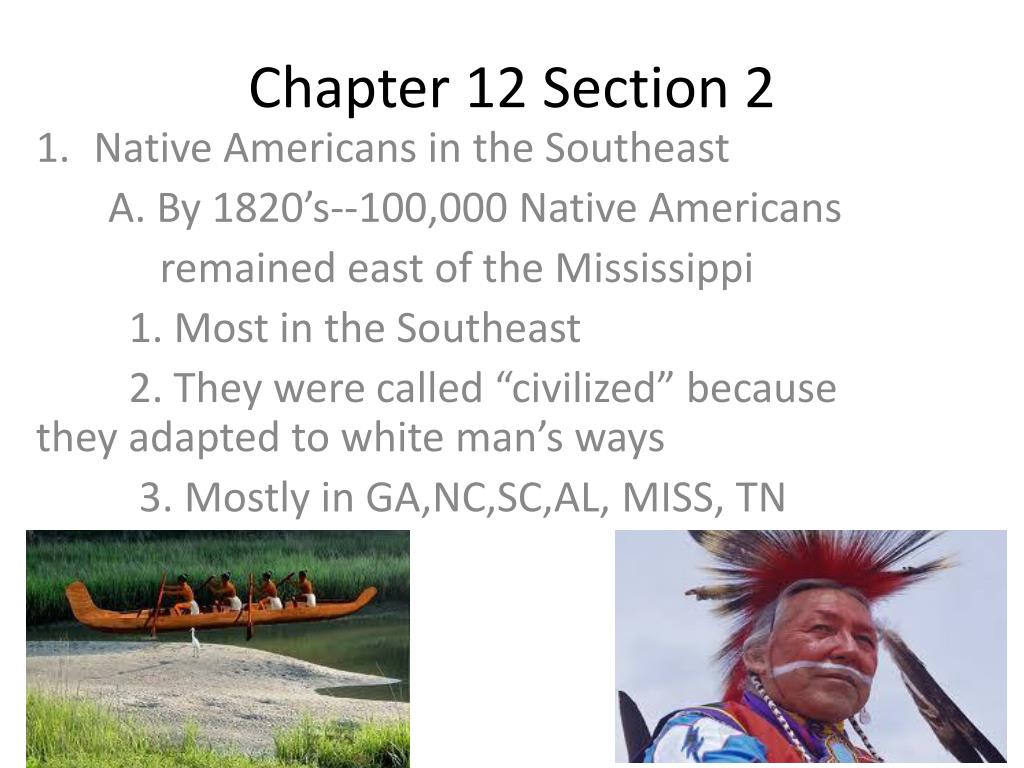
The Trail of Tears: The Displacement of Native Americans in the Southeast - slide 1
01 / 9The Trail of Tears: The Displacement of Native Americans in the Southeast
1 / 17

Télécharger la présentation

The Trail of Tears: The Displacement of Native Americans in the Southeast
Une image / un lien ci-dessous est fourni (tel quel) pour télécharger la présentation

Politique de téléchargement : le contenu du site vous est fourni TEL QUEL pour votre information et votre usage personnel ; il ne peut être vendu, concédé sous licence ni partagé sur d’autres sites sans l’accord de son auteur.Le contenu vous est fourni TEL QUEL, pour votre information et votre usage personnel uniquement. Téléchargez la présentation en cliquant sur ce lien. Lors du téléchargement, si vous ne parvenez pas à télécharger une présentation, l’éditeur a peut-être supprimé le fichier de son serveur.Pendant le téléchargement, si vous ne parvenez pas à obtenir une présentation, le fichier a peut-être été supprimé par l’éditeur.

F I N

Plus de contenu associé

Transcription de la présentation
  1. Chapter 12 Section 2 Native Americans in the Southeast A. By 1820’s--100,000 Native Americans remained east of the Mississippi 1. Most in the Southeast 2. They were called “civilized” because they adapted to white man’s ways 3. Mostly in GA,NC,SC,AL, MISS, TN

  2. Chapter 12 Section 2 2. Cherokee Nation A. Most were similar to whites 1. dress 2. owned farms and slaves 3. had a newspaper and a written language 4. schools 5. constitution

  3. Chapter 12 Section 2 B. 1828 Gold was discovered on Cherokee land and now whites want the land

  4. Chapter 12 Section 2 3. Jackson’s removal policy A. Jackson believed the US government could tell natives where to live B. Jackson asked congress to pass a law saying natives should move west or obey state laws C. Many disagreed with Jackson D. Indian Removal Act of 1838: Natives must now move West.

  5. Chapter 12 Section 2 4. Trail of Tears A. Whites invaded land 1. Many natives were forced to sign treaties exchanging their land for land in the west. 2. This west land became Indian Territory

  6. Trail of Tears B. Federal government ruled that states could not force natives to move C. Jackson ignored the Supreme Court D. John Ross and the majority of the Cherokees refused to leave

  7. Trail of Tears E. 1838 United States Army rounded up 16,000 Cherokees and forced them to leave. 1. very difficult trip in the Fall and Winter: cold, wet and much illness 2. ¼ died on the march (4,000 Cherokee) 3. This became known as the Trail of Tears.

  8. 5. Native American Resistance • There were some examples of natives refusing to leave and getting away with it • Osceola, The Seminole Wars, The Blackhawk Wars (pg 362)