Understanding Cell Structure and Function: Key Traits of Prokaryotic and Eukaryotic Cells**
140 likes | 275 Vues
This lesson delves into the fundamental traits of cells, highlighting their significance as the smallest units capable of life functions. We'll explore the differences between prokaryotic cells, which lack membrane-bound structures, and eukaryotic cells that possess complex organelles. Key components such as the cell wall, cell membrane, cytoplasm, cytoskeleton, nucleus, nucleolus, and chromatin will be examined. Understanding these structures is essential for grasping how cells maintain their shape, protect themselves, and regulate processes, offering insight into the biological world.


Understanding Cell Structure and Function: Key Traits of Prokaryotic and Eukaryotic Cells**
E N D
Presentation Transcript
Chapter 2 “Cells”Section 1: “Cell Structure Pages 38 – 40 LESSON 1
COMMON CELL TRAITS • A cell is the smallest unit that is capable of performing life functions.
COMPARING CELLS • The size & shape of a cell relates to its function. (job it does)
Prokaryotic Cells(proh KAYR ee yah tihk) • cells without membrane-bound structures • EX: bacteria pond scum
Eukaryotic Cells(yew KAYR ee yah tihk) • cells with membrane-bound structures • EX: animals, plants, fungi and protists
CELL WALL • protects the cell • gives shape • is made of cellulose • A cell wall is found in plants, algae, fungi, & most bacteria.
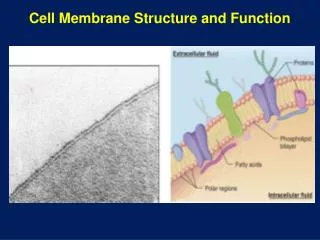
CELL MEMBRANE • Outer covering, protective layer around ALL cells • For cells with cell walls,the cell membrane is inside the cell wall • Allows food, oxygen, & water into the cell & waste products out of the cell.
CYTOPLASM • gelatin-like inside cell membrane • constantly flows • aka protoplasm
CYTOSKELETON • scaffolding-like structure in cytoplasm • helps the cell maintain or change its shape • made of protein
NUCLEUS • Directs all cell activities • Contains instructions for everything the cell does • These instructions are found on a hereditary material called DNA • Usually the largest organelle
NUCLEAR MEMBRANE • separates nucleus from cytoplasm • controls movement of materials in & out of nucleus
NUCLEOLUS • Aka “little nucleus” • Found in the nucleus
CHROMATIN • contains genetic code that controls cell • made of DNA & proteins
This powerpoint was kindly donated to www.worldofteaching.com http://www.worldofteaching.com is home to over a thousand powerpoints submitted by teachers. This is a completely free site and requires no registration. Please visit and I hope it will help in your teaching.