SlideServe
Menu
Préférences
© SlideServe · v2026

Erik Erikson

clodia avatar
9 diapositives · 699 Views · Jul 30, 2014

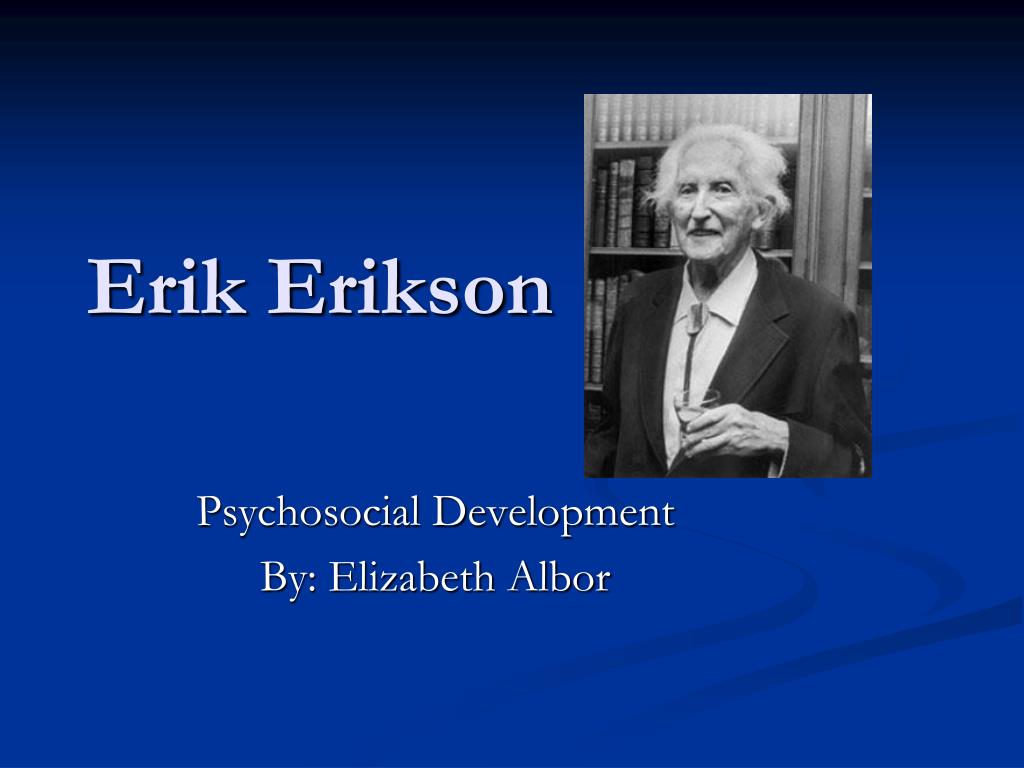
Erik Erikson. Psychosocial Development By: Elizabeth Albor. Background . Born in Germany on June 15, 1902-May 12, 1994 Mother Karla Abrahamsen Step-father Dr. Theodor Homberger Baden Art School he wasn’t interested in Medical School
Erik Erikson - slide 1
01 / 9Erik Erikson
1 / 17

Télécharger la présentation

Erik Erikson
Une image / un lien ci-dessous est fourni (tel quel) pour télécharger la présentation

Politique de téléchargement : le contenu du site vous est fourni TEL QUEL pour votre information et votre usage personnel ; il ne peut être vendu, concédé sous licence ni partagé sur d’autres sites sans l’accord de son auteur.Le contenu vous est fourni TEL QUEL, pour votre information et votre usage personnel uniquement. Téléchargez la présentation en cliquant sur ce lien. Lors du téléchargement, si vous ne parvenez pas à télécharger une présentation, l’éditeur a peut-être supprimé le fichier de son serveur.Pendant le téléchargement, si vous ne parvenez pas à obtenir une présentation, le fichier a peut-être été supprimé par l’éditeur.

F I N

Plus de contenu associé

Transcription de la présentation
  1. Erik Erikson Psychosocial Development By: Elizabeth Albor

  2. Background • Born in Germany on June 15, 1902-May 12, 1994 • Mother Karla Abrahamsen Step-father Dr. Theodor Homberger • Baden Art School he wasn’t interested in Medical School • Assistant professor and research assistant in Harvard and Yale • Research Associates-University of California Berkley • President of San Francisco Society and Institution

  3. Influences • Knowing his own identity • Especially after he found out his father wasn’t his biological father • Sigmund Freud • Theory of Psychosexual Development which consists of only five stages, from birth to age eighteen

  4. Other Influences • Others who influenced him were • Franz Boas, Ruth Benedict, Margaret Mead, Gregory Bateson • Anthropolgy • Children within each culture learn different values, different goals, and receive vastly different kinds of nurturing and guidance

  5. Theory: 8 stages of development • A theory that consists of eight stages of development • It takes a whole life time for a full development • Infancy (birth-18 months) • Trust vs. Mistrust • care and affection • Early Childhood (2-3yrs) • Autonomy vs. Shame and Doubt • Personal control, independence

  6. Preschool (3-5yrs) • Initiative vs. Guilt • Reason to do something, to much-guilt • School Age (6-11yrs) • Industry vs. Inferiority • Social and academic demands, failure-feelings of inferiority • Adolescence (12-18 yrs) • Identity vs. Role confusion • Personal identity, failure-confusion

  7. Young Adulthood (19-40 yrs) • Intimacy vs. Isolation • Strong relationships, failure-loneliness and isolation • Middle Adulthood (40-65 yrs) • Generativity vs. Stagnation • Nurture things that outlast them to feel accomplishment useful, failure-not very involved with the world • Maturity (65-to death) • Ego Integrity vs. Despair • Either wise or regret and bitterness

  8. Critique • Theory was all about males • Girls are more sensitive/emotional • Theory was too vague and difficult to test • Based on his life experiences • Stages are very similar to one another • Life experiences that make people change • Sequence of stages

  9. References • http://psychology.about.com/library/bl_psychosocial_summary.htm • http://psychology.about.com/od/profilesofmajorthinkers/p/bio_erikson.htm • http://www.nndb.com/people/151/000097857/ • http://www.interculturalstudies.org/Mead/biography.html • http://voices.yahoo.com/psychosocial-development-theory-its-impact-on-1509865.html