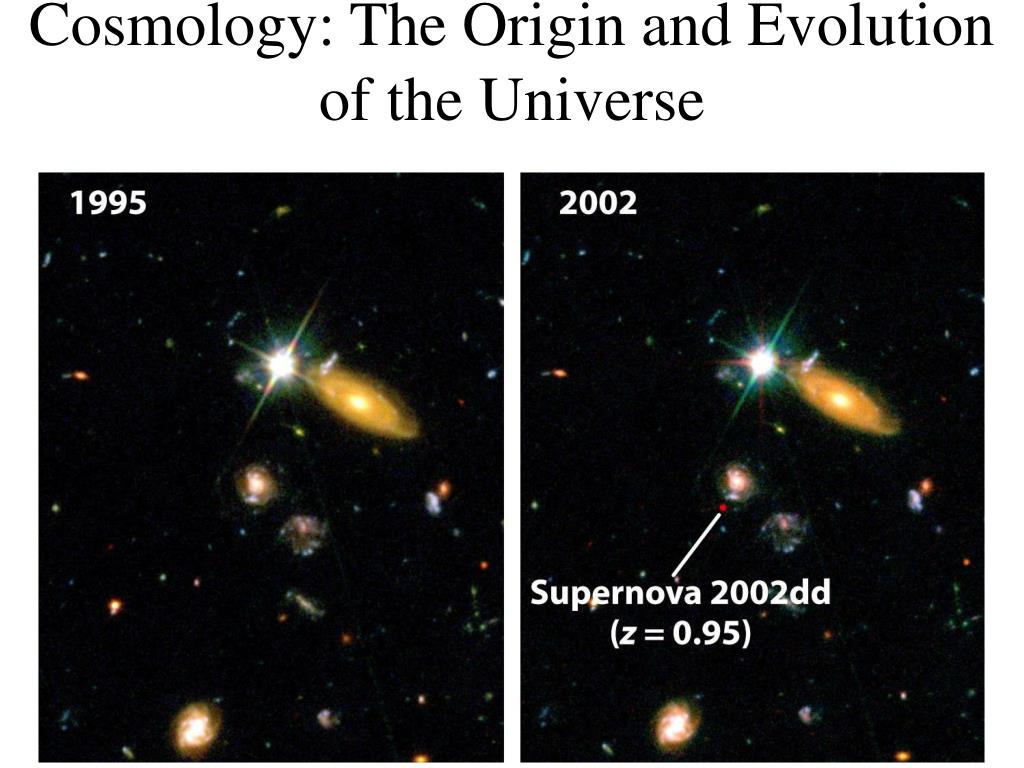
Cosmology: The Origin and Evolution of the Universe. The universe shows structure at many scales subatomic particles atoms stars and planets star clusters and galaxies galactic cluster and superclusters voids and sheets. Does this structure ever end? .
01 / 60Cosmology: The Origin and Evolution of the Universe
1 / 17
Télécharger la présentation
Cosmology: The Origin and Evolution of the Universe
Une image / un lien ci-dessous est fourni (tel quel) pour télécharger la présentation
Politique de téléchargement : le contenu du site vous est fourni TEL QUEL pour votre information et votre usage personnel ; il ne peut être vendu, concédé sous licence ni partagé sur d’autres sites sans l’accord de son auteur.Le contenu vous est fourni TEL QUEL, pour votre information et votre usage personnel uniquement.Téléchargez la présentation en cliquant sur ce lien.Lors du téléchargement, si vous ne parvenez pas à télécharger une présentation, l’éditeur a peut-être supprimé le fichier de son serveur.Pendant le téléchargement, si vous ne parvenez pas à obtenir une présentation, le fichier a peut-être été supprimé par l’éditeur.
The universe shows structure at many scales • subatomic particles • atoms • stars and planets • star clusters and galaxies • galactic cluster and superclusters • voids and sheets
Does this structure ever end? • While the data is not totally conclusive, it appears that on the scale of greater than 200 Mpc the structure does ends in other words becomes homogenous and isotropic.
Cosmological Assumptions • Homogeneous • – Every region is like every other region • – This is true over large regions (300 Mpc and more) • Isotropic • – The Universe has the same properties, no matter what direction you look • • Together these requirements make up the cosmological principle • • This basic assumption is needed to get started
The Expanding Universe • Olbers's Paradox • The observation that the sky is dark at night contrasted with a simple argument that shows that the sky should be uniformly bright. • This haunted Kepler as long ago as 1610. • 1823 - Heinrich Olbers proposed paradox
Argument • Assume universe is infinite and stars are randomly scattered. • Isaac Newton argued that no other assumption made sense • Then - in every direction you will eventually come to a star and the sky will be glowing
Resolution of the paradox • Stars are moving away so light is red-shift and not as bright. • The universe is not infinitely old - so some light hasn't had time to reach us.
The darkness of the night sky tells us aboutthe nature of the universe • The Cosmological Principle:Cosmological theories are based on the idea that on large scales, the universe looks the same at all locations and in every direction • It is meaningless to speak of an edge or center to the universe or of what lies beyond the universe
The Big Bang Explains the features of the universe Present data favors this model of cosmology Follows Einstein's General Theory of Relativity
Supporting Data for the Big Bang Theory • Hubble's Law • As the universe expands, galaxies move apart • Quasars (i.e. the universe appears to have an early history) • Cosmic microwave background • We can reinterpret the cosmological redshift • As the universe expands, the wavelength of radiation is stretched • Helium abundance (cosmic microwave background)
Exactly what is expanding? The Universe is not expanding into empty space This idea comes from watching explosions Instead, space-time itself is expanding and carrying galaxies along with it Another question: are we really at the center of the expansion? • critical density is about 5 hydrogen atoms per cubic meter, averaged over the entire universe, • or 10-26 kg/m3not much!
Tried to fix static problem • Tried to eliminate all static • fixed loose joints • repaired faulty connections • removed nesting pigeons and "sticky white deposits"
The 100,000 year old universe was a 3,000 K blackbody. • peak wavelength = 1 micrometer = 10-6m • As we look across space we see it glowing • we see 1 millimeter = 10-3 meters • The shift of the spectrum of the cosmic microwave background from 3,000K to 3K is an enormous red-shift (cosmological red shift) • This "light", which we detect on earth now comes from the very early days of the universe • (Age~100,000 years or about 15 billion years ago)
The background radiation was hotter and more intense in the past • The cosmic microwave background radiation, corresponding to radiation from a blackbody at a temperature of nearly 3 K, is the greatly redshifted remnant of the hot universe as it existed about 380,000 years after the Big Bang • During the first 380,000 years of the universe, radiation and matter formed an opaque plasma called the primordial fireball
Steady-State Theory • The steady state theory pre-dates the Big Bang • Consistent with Hubble's Law • Assumption - • universe is homogeneous, isotropic, and unchanging in time • New matter is continuously created as universe expands to keep universe unchanged
BB/SST • Both BB and ST assume a homogeneous, isotropic Universe: • (i) no edge • (ii) no centre • (iii) every part looks the same (on average, i.e. over a large enough volume)
Big Bang assumes also: • (i) initial 'singularity' (beginning) • (ii) expansion • (iii) evolution: • (iv) cooling, transformation of energy into matter, formation of structure, all through normal physical processes.
Steady State also: • (i) expansion (in current theory; original theory did not!) • (ii) no evolution • (iii) no beginning • (iv) matter (Hydrogen) spontaneously created "in between" Galaxies • (v) all radiation is from stars
How much matter must be created? • 1 hydrogen atom/cubic cm every 1015 years • (1,000,000,000,000,000 years) • or 1,000 atoms per year in the Astrodome (cannot be detected) • not much
Einstein found that he couldn't allow universe to be static in his theory • it either expands or contracts • Einstein was unhappy with these two and invented a fudge factor (the cosmological constant) to force a static universe • Basically the force of expansion is equaled by the gravitational force of the mass
Hubble later tells us it's expanding 3 Possibilities in Einstein's General Theory of Relativity: • infinite and unbounded - open • infinite and unbounded - flat • finite - closed (need not be bounded)
Future of the Universe • Major Question - Will it continue to expand or will it collapse to big crunch? Open, closed, or flat?
Same Question - • Is there enough gravity (or matter) to bend universe back in on itself • to "close" the universe • the amount of mass needed to close the universe is call the critical density
The expanding universe emerged from a cataclysmic event called the Big Bang • The universe began as an infinitely dense cosmic singularity which began its expansion in the event called the Big Bang, which can be described as the beginning of time • During the first 10–43 second after the Big Bang, the universe was too dense to be described by the known laws of physics