Download

1 / 34
370 likes | 500 Vues
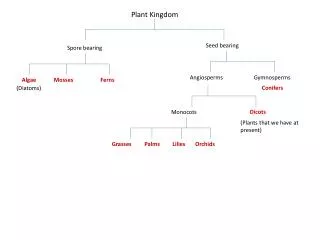
Explore the fascinating world of the Plant Kingdom in this video, covering key topics such as plant tropisms, asexual and sexual reproduction, and the anatomy of roots, stems, and leaves. Learn about the differences between primary and secondary roots, root hairs, and the functions of the elongation section and root cap. Discover the various types of stems, including herbaceous and woody, and understand leaf classifications based on shape and vein patterns. Delve into the diverse types of flowers and plant groups, including mosses, ferns, and angiosperms.

E N D
PLANT KINGDOM video
INTERACTION IN PLANTS TROPISMS NASTIES
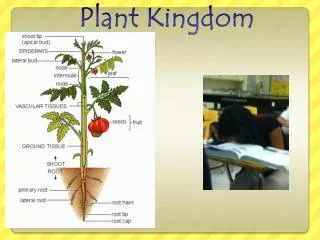
Secondary roots are not as thick and tend to grow sidewards. Root hair section, part of the root on which the root hairs are located, they absorb water and nutrients from the soil. The primary root is the thickest and grows downwards. Elongation section, set of cells that determine the growth of the root. Root cap Parts of a root
Taproot A main root that grows vertically into the soil.
Fibrous roots Root formed in bundles where it is not possible to determine the primary root.
Terminal bud Lateral buds Nodes Internodes PARTS OF A STEM
Herbaceous stems Woody stems Shrub Tree
Underground stems Tuber Bulbs Rhizomes
Vein Blade Upper surface Lower surface Petiole Stomata Most leaves are thin and flat like this:
According to the divison of limb According to the shape of the leaf According to the leaf veins According to the limb margins Heart-shaped Entire leaf Spear-shaped Simple leaf Parallel veins Pinnate veins Lobed leaf Compound leaf Palmate veins Serrated leaf Ovate Lanceolate
Cedar pine