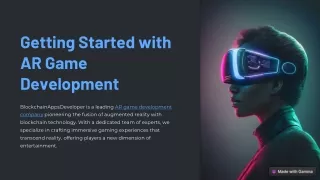
Getting Started with VR Development in 2025
Virtual Reality (VR) has evolved rapidly, becoming a mainstream technology in gaming, education, healthcare, and beyond. If youu2019re looking to step into the exciting world of VR development in 2025, now is the perfect time.


Getting Started with VR Development in 2025
E N D
Presentation Transcript
Getting Started with VR Development in 2025 Virtual Reality (VR) has evolved rapidly, becoming a mainstream technology in gaming, education, healthcare, and beyond. If you’re looking to step into the exciting world of VR development in 2025, now is the perfect time. The industry is booming, and the tools are more accessible than ever. This guide will help you understand the basics of VR development and how to get started effectively. Why VR Development is Thriving in 2025 According to Statista, the global VR market is expected to exceed $20 billion by the end of 2025. With advancements in hardware and software, VR has transformed into a practical tool for various industries, not just entertainment. Businesses are adopting VR for training, simulation, and remote collaboration, creating vast opportunities for developers. What is VR Development? VR development involves creating immersive digital experiences that users can interact with through VR headsets and controllers. Developers build environments, simulations, or applications using specialized tools and programming languages. Key Components of VR Development 1. Hardware: Devices like Oculus Quest, HTC Vive, or PlayStation VR. 2. Software: Development platforms like Unity or Unreal Engine. 3. Input Systems: Controllers, motion trackers, and hand gesture recognition. The Demand for VR Developers As industries embrace VR for innovation, the demand for skilled VR developers is at an all-time high. Learning VR development opens doors to a lucrative and future-proof career. Tools and Software for VR Development Starting with the right tools is essential. Here are some of the most popular options in 2025:
1. Unity Unity remains a leading platform for VR development. It offers user-friendly tools, a vast asset store, and extensive tutorials. Unity supports multiple VR devices, making it versatile. 2. Unreal Engine Known for its high-quality graphics, Unreal Engine is a preferred choice for creating realistic VR experiences. Its Blueprint visual scripting system makes it beginner-friendly. 3. Blender Blender is a free, open-source tool for creating 3D models and animations. It’s an essential skill for designing VR environments. 4. WebXR For web-based VR experiences, WebXR is a robust API that enables VR functionality directly in browsers. It’s gaining popularity for lightweight VR applications. Steps to Get Started with VR Development Getting into VR development can seem daunting, but breaking it down into steps makes it manageable. Here’s how to begin: 1. Learn Programming Basics Knowledge of programming languages like C# (for Unity) or C++ (for Unreal Engine) is crucial. Start with beginner-friendly courses to understand the fundamentals. 2. Pick a Development Platform Decide whether you’ll use Unity, Unreal Engine, or another platform based on your project goals and preferences. Experiment with free versions to get a feel for each. 3. Understand VR Design Principles Designing for VR is different from traditional development. Consider factors like: ● ● ● Field of view (FOV) User comfort to avoid motion sickness Interaction and feedback systems 4. Build Simple Projects
Start small by creating basic VR applications. For instance, design a simple room that users can explore or a basic interactive object. 5. Test on VR Hardware Testing is a critical part of VR development. Use affordable VR headsets like Meta Quest 3 to test your projects and refine them. 6. Join VR Communities Online communities like Reddit’s r/VRDev or Discord groups are excellent for networking, learning, and troubleshooting. Key Skills for VR Developers in 2025 To succeed in VR development, focus on the following skills: 1. 3D Modeling and Animation Understanding 3D modeling tools like Blender or Maya helps create engaging environments. 2. Physics Simulation Realistic simulations require a solid grasp of physics concepts like gravity, collisions, and inertia. 3. User Experience (UX) Design Designing intuitive and immersive VR experiences is critical for user satisfaction. 4. Problem-Solving Troubleshooting and debugging are routine in VR development. Logical thinking is a must-have skill. Industries Adopting VR in 2025 1. Gaming Gaming remains the largest market for VR. Titles like "Half-Life: Alyx" demonstrate how immersive gameplay can redefine entertainment. 2. Healthcare
VR is used for surgery simulations, therapy, and pain management. 3. Education From virtual classrooms to historical recreations, VR is transforming how we learn. 4. Real Estate Virtual property tours are becoming a standard offering in real estate. 5. Retail Retailers are using VR for virtual showrooms, enhancing the shopping experience. Fact: Why VR is Unstoppable in 2025 A study by PwC reveals that VR training can improve learning retention by up to 75% compared to traditional methods. This makes it a valuable tool for businesses and educators alike. Challenges in VR Development While VR development is exciting, it comes with its challenges: 1. High Development Costs Building high-quality VR applications requires significant investment in hardware and software. 2. User Comfort Designing experiences that minimize motion sickness and discomfort is crucial. 3. Hardware Limitations Despite advancements, VR hardware can still be expensive and has performance constraints. 4. Steep Learning Curve Mastering the skills and tools for VR development takes time and effort. Tips for Aspiring VR Developers 1. Stay Updated
The VR industry evolves rapidly. Keep up with the latest trends and technologies. 2. Focus on Portfolio Practical projects showcase your skills better than certifications. Build a strong portfolio. 3. Collaborate Work on projects with other developers to learn and grow faster. 4. Seek Feedback User feedback is invaluable for improving your VR applications. Conclusion VR development in 2025 offers immense opportunities for creativity and innovation. With the right tools, skills, and mindset, you can build immersive experiences that captivate users and solve real-world problems. While challenges exist, the growth and potential of VR make it an exciting field to explore. Start small, stay curious, and immerse yourself in the world of VR development. Remember, every great VR developer starts with a single step. Why not take yours today?