Understanding Binary, EBCDIC, ASCII, and Unicode in Computer Encoding
Explore the world of computer encoding with a focus on binary representation, Extended Binary Coded Decimal Interchange Code (EBCDIC), ASCII (American Standard Code for Information Interchange), and Unicode. Learn how the value 2,287,249 is represented in binary and examine how different systems encode characters and data. Discover the differences between 7-bit and 8-bit encoding systems, and understand Unicode's extensive capacity to represent a wide range of characters through UTF-8, UTF-16, and UTF-32 formats.

Understanding Binary, EBCDIC, ASCII, and Unicode in Computer Encoding
E N D
Presentation Transcript
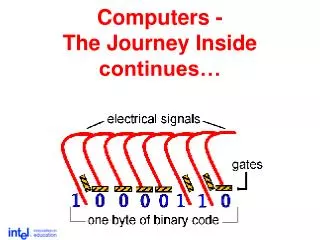
Binary Coded Decimal The value of 2,287,249 in binary is 0001,1110,0000,0100,1001,0001
http://www.dynamoo.com/technical/ebcdic.htm Extended Binary Coded Decimal Interchange Code EBCDIC • 8-bit code
http://www.dynamoo.com/technical/ascii.htm ASCII American National Standard Code for Information Interchange • 7-bit code
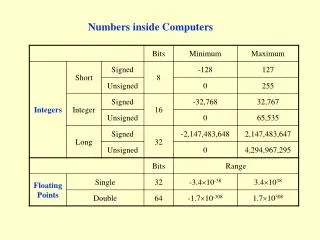
What is Unicode? • Up to 32 bits. 216 = 65,536 232 = 4,294,967,296 • Encoded in 3 forms: UTF-8, UTF-16, UTF-32. Unicode http://home.att.net/~jameskass/INDEXUNI.HTM
Text String Binary: 0101 0100 0110 0101 0110 1100 0010 1010 0010 0000 0011 0010 0011 0010 0011 1000 0011 0111 0011 0010 0011 0100 0011 1001