Understanding the Peripheral Nervous System: Voluntary and Involuntary Functions
70 likes | 182 Vues
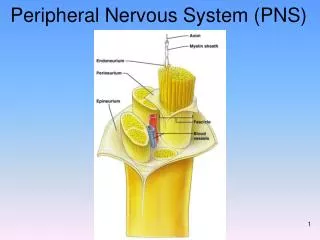
The Peripheral Nervous System (PNS) consists of two main divisions: the Voluntary (Somatic) and Involuntary (Autonomic) PNS. The Voluntary PNS contains sensory and motor nerves directly under conscious control, facilitating interactions with the external environment. Meanwhile, the Involuntary PNS, or Autonomic Nervous System, regulates internal processes without conscious effort, including the Sympathetic (stress response) and Parasympathetic (rest and digest) systems. Key sensory receptors in the PNS, like those for touch, taste, and sight, play crucial roles in perception.


Understanding the Peripheral Nervous System: Voluntary and Involuntary Functions
E N D
Presentation Transcript
PNS PERIPHERAL NERVOUS SYSTEM Pages 433-435 VOLUNTARY PNS INVOLUNTARY PNS
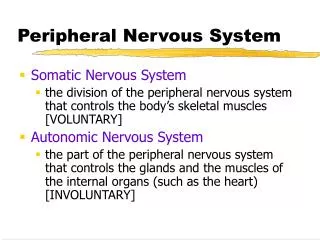
Voluntary PNS • made up of voluntary SOMATIC nerves - a.k.a. voluntary SENSORY & MOTOR neurons • under CONSCIOUS control • how you relate with the EXTERNAL environment
Involuntary PNS • also called the Autonomic Nervous System (the ANS) • made up of autonomic (“automatic”) nerves to your internal glands & organs (heart, lung, liver, etc.) • Unconcious • divided into the: • SYMPATHETIC NERVOUS SYSTEM =stress system! “fight or flight”! =adrenaline! • PARASYMPATHETIC NERVOUS SYSTEM =think PARAmedic keeping you normal / at homeostasis =“rest & digest”
PNS: SENSORY RECEPTORS • highly modified structures on the dendrites of sensory neurons • Examples • skin receptors: pain, temp., pressure, etc. (see handout) • nose (called olfactory receptors) • tongue (“tastebuds”) • *eyes: photoreceptors • *ears: hearing & balance receptors