Download
1 / 9
90 likes | 224 Vues
This overview explores the essential organic compounds that make up living organisms, focusing on carbon's role as the backbone of macromolecules. We define key terms such as monomers and polymers, and delve into the four major macromolecules: carbohydrates, lipids, proteins, and nucleic acids. Each macromolecule has unique structures and functions, from carbohydrates providing energy to nucleic acids storing genetic information. This concise guide is essential for anyone seeking to understand the complex chemistry of life.

E N D
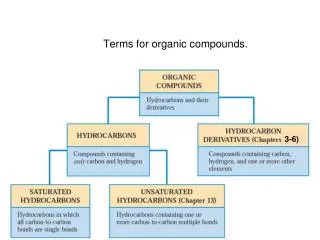
Let’s start with a quick review… • CARBON is the backbone of all organic compounds. • It has the ability to form 4 covalent bonds.
Macromolecules • All large organic compounds are like a train consisting on many cars…they are composed of smaller subunits or building blocks called MONOMERS. • When you join monomers together you get a larger molecule called a POLYMER! • A macromolecule is a large molecule and can also be called a polymer!
4 MAJOR MACROMOLECULES • Carbohydrates (also called polysaccharides) • Lipids • Proteins (also called polypeptides) • Nucleic Acids
CARBOHYDRATES • Composed of C, H, O (1:2:1 ratio) • EXAMPLE: C6H12O6 • Functions include: providing quick energy, being structural components • Examples include starch(plants store energy), cellulose(plant cell walls), glycogen(mammals store energy)
Carbs continued • Made from smaller subunits or monomers called MONOSACCHARIDES (or simple sugars) • Example = Glucose
LIPIDS • Contain elements C, H, O (many hydro-carbon bonds) • Includes fats, oils, waxes, cholesterol, steroid hormones • Made of FATTY ACIDS & GLYCEROL • Main functions include: back-up/stored energy, insulation, component of cell membrane
PROTEINS • Have COHN (unlike carbs and lipids, have N!) • Made of AMINO ACIDS (20 different ones) • MANY functions: structural component, transport substances, speed up chemical reactions, regulation • Examples include enzymes, hormones, antibodies, hemoglobin
NUCLEIC ACIDS • Includes only DNA (deoxyriboNUCLEIC ACID) & RNA (riboNUCLEIC ACID) • Elements include COHNPS (the biggies!) • Built of repeating units known as NUCLEOTIDES • Functions include storing and communicating genetic information