
SlideServe
Menu
Préférences
© SlideServe · v2026

Understanding Native American Vocabulary: Key Terms and Concepts

dara avatar
17 diapositives · 301 Views · Jul 22, 2014

This review covers essential vocabulary related to Native American history and culture, focusing on terms that describe their way of life during the Ice Age and beyond. Key words include glaciers, migration, agriculture, and civilization, which illuminate the environmental and social aspects of Native American societies. Additional concepts such as surplus, clan, potlatch, irrigation, pueblo, and ceremony showcase their innovative practices and communal living. Understanding these terms is crucial for appreciating the rich heritage and adaptability of Native American tribes.
Understanding Native American Vocabulary: Key Terms and Concepts - slide 1
01 / 17Understanding Native American Vocabulary: Key Terms and Concepts
1 / 17

Télécharger la présentation

Understanding Native American Vocabulary: Key Terms and Concepts
Une image / un lien ci-dessous est fourni (tel quel) pour télécharger la présentation

Politique de téléchargement : le contenu du site vous est fourni TEL QUEL pour votre information et votre usage personnel ; il ne peut être vendu, concédé sous licence ni partagé sur d’autres sites sans l’accord de son auteur.Le contenu vous est fourni TEL QUEL, pour votre information et votre usage personnel uniquement. Téléchargez la présentation en cliquant sur ce lien. Lors du téléchargement, si vous ne parvenez pas à télécharger une présentation, l’éditeur a peut-être supprimé le fichier de son serveur.Pendant le téléchargement, si vous ne parvenez pas à obtenir une présentation, le fichier a peut-être été supprimé par l’éditeur.

F I N

Plus de contenu associé

Transcription de la présentation
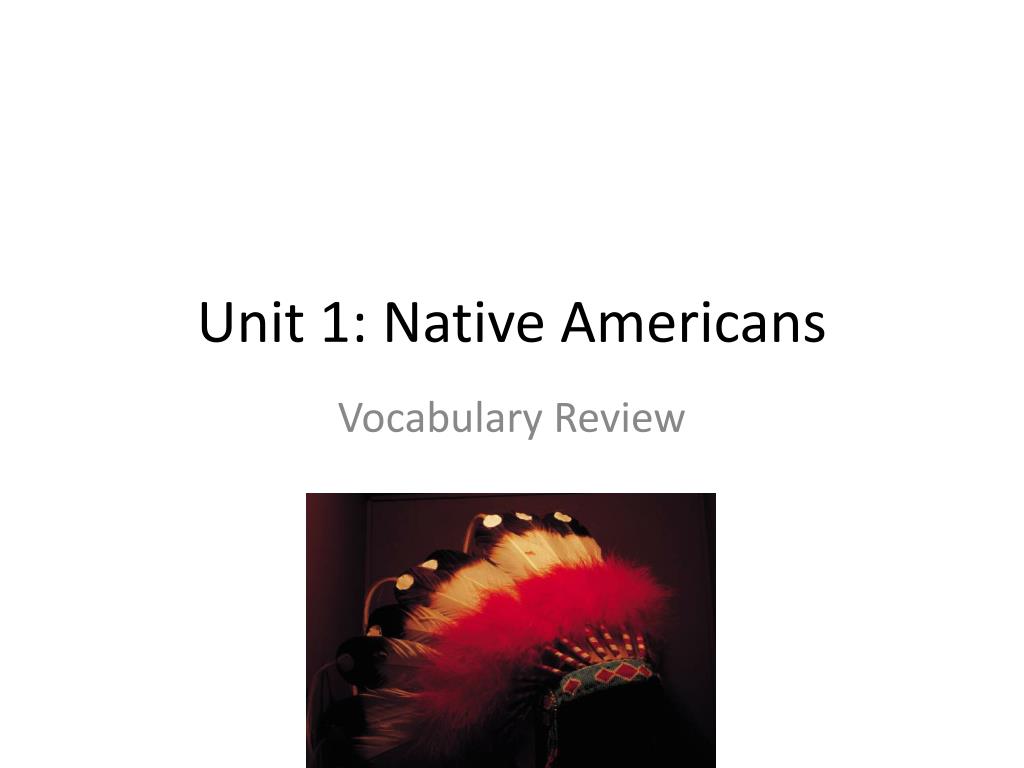
  1. Unit 1: Native Americans Vocabulary Review

  2. Glacier A huge, thick sheet of slowly moving ice. During the Ice Age, glaciers covered almost half of the world!!!

  3. Migration The movement from one region to another During the winter months, many birds will migrate to the south where the climate is warmer.

  4. Agriculture Farming, or growing plants Many Native Americans depended on agriculture to survive.

  5. Civilization A group of people living together who have the same systems of government, religion, and culture. The civilization of many Native Americans depends on the natural resources that are available to them.

  6. Surplus Extra, having more than enough Since we got a surplus of candy on Halloween, my mother made me give some away.

  7. Potlatch A large feast that could last for several days The Nez Perce would celebrate important events by having potlatches.

  8. Clan A group of related families The Jackson clan made lots of money performing and singing songs across the country.

  9. Irrigation A way of supplying water to crops with streams, ditches, or pipes Since there was little rain in the southwest, many Southwest Indians used irrigation to grow their crops.

  10. Pueblo Southwestern native community that built their homes from clay Since there was a scarce supply of wood, the Hopi built their pueblos out of clay.

  11. staple A main crop that is used for food Corn was a staple crop for the Hopi tribe.

  12. Ceremony A special event at which people gather to express important beliefs Since they lived in an area of dry climate, the Hopi tribe would often hold special ceremonies to pray for rain.

  13. lodge A home made out of bark, earth, and grass The Plain Indians built lodges out of the resources available to them.

  14. Nomad A person who moves around and does not live in a permanent village The Western Plains Indians were nomads because they moved around and followed buffalo to kill for food.

  15. travois A Sled used by nomads to help them bring their belongings with them when they traveled Since the Plains Indians were always moving, they used travois to carry their belongings.

  16. longhouse A large house made of wood poles and bark Many tribes in the eastern united states lived in longhouses because they were surrounded by trees from the forest.

  17. Barter To trade using goods, instead of money Many Native Americans bartered for goods they did not have.