Download
1 / 8
80 likes | 210 Vues
This presentation addresses the essential elements of P-20 alignment, outlining the roles of various stakeholders, including governors, legislators, and educational leaders. It discusses the importance of data systems, funding mechanisms, and public support in creating effective educational pathways from pre-K through post-secondary. Key topics include lobbying efforts in alignment, the composition of councils, and best practices for collaboration among partners in education. The session encourages discussion on expected outcomes, policy questions, and potential challenges in implementing effective P-20 alignment strategies.

E N D
P-20 Alignment Jennifer DounayEducation Commission of the StatesPresentation to ECS Fall Steering Committee MeetingDenver, CONovember 5, 2007
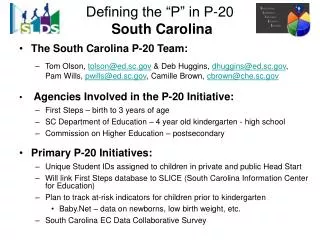
P-20 • It may include a council • It can (and should be) more than a P-20 council • Data systems • Funding mechanisms • Ways of thinking • Public support • Legislation, rulemaking, executive decisionmaking
Passing the Buck Middle schools Elementary schools Parents Pre-K programs High schools 4-year institutions Employers 2-year institutions
Who’s Lobbying for Alignment? • Govs: 10 states • Legislatures: 8 states • Voluntary efforts: 16 states • Unclear: 4 states • These have changed over time • GA, IL, NV, WA, others
Who’s on Board? • Governors • Legislators • Chiefs • SHEEOs, 2-/4-year presidents • Business community members • Others
The “P” Building staff District staff Parents Students Who’s Not on Board?
Councils Work Best • When given meaningful work to do • Immediate goal or task • When reform agendas are honed • Legislative input • Meet at least quarterly • [Insert your ideas here]
Questions for Group Discussion • What are the outcomes we expect from P-20 alignment? • What are the policy questions related to P-20 alignment? • What are the components of quality policies that could address these questions? • What landmines might policymakers face as they implement these new policies?