Emotions in Conflict
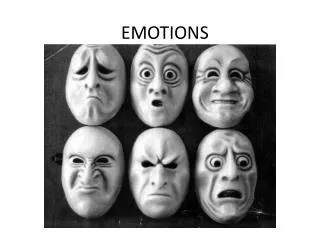
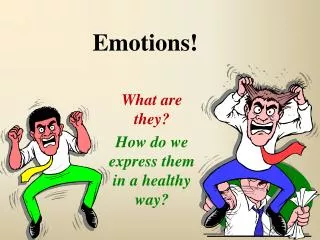
Emotions in Conflict. Chapter Six. Emotions. States of feelings We experience emotions when our feelings and sensibilities are triggered. Designed to move through the body. Emotions.

Emotions in Conflict
E N D
Presentation Transcript
Emotions in Conflict Chapter Six
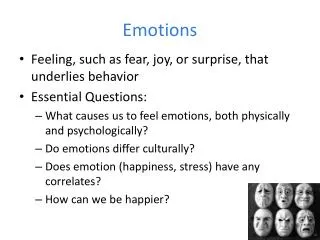
Emotions • States of feelings • We experience emotions when our feelings and sensibilities are triggered. • Designed to move through the body
Emotions • Constructive conflict resolution depends on our ability to work with and transform, not close off or repress, human emotion
Feelings • Are facts • Are neither right or wrong, they just are
Emotions Defined • Both intrapersonal and interpersonal • We feel some type of strong emotion when we feel or perceived to be attacked
Intensity of emotions varies through the conflict process • Self protective emotions tend to be from the right brain • Prosocial or soft emotions come from the left brain • We experience emotion as good or bad • Our identity is at stake, thus we experience emotions • With maturity we define ourselves less by the outcome of each conflict because we have a better sense of who we are • Relationships are defined by the kind of emotion expressed
Misconceptions of Emotion • Page 200
Functions of Emotions - Adaptation • Motivation depends on emotions – the reason for our actions is rooted in our feelings • Each discrete emotion serves different functions in organizing perception, cognitions, and actions for coping and creative endeavors • Significant personal situations trigger organized patterns of emotions
Functions of Emotions – Adaptation, cont. • People develop emotion-behavior patterns early in life and build on them • Individual personalities are built upon the blocks of emotion-behavior patterns • While emotions help people adapt to community life, they also trigger difficult behavior in response to certain triggers
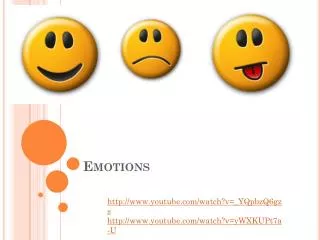
Emotions • Hard, closed or negative emotions • Positive, vulnerable or prosocial emotions
Functions of Negative Emotions • The functions of anger • Angry emotions threaten most people • Anger is the feeling connected to a perceived unfairness or injustice • Anger helps people set boundaries and to right wrongs • Anger can be a wake-up call, a motivator, and an energerizer – a source of empowerment for the person who feels it
Functions of Negative Emotion – Fear and Anxiety • Fear leads people to avoid • Fear does not necessarily lead to flight • Fear sometimes disables the physical and emotional system • Threat is often personal and psychological • We feel threats to our integrity, or our sense of well-being, or the painful threat of loss of a person, position, or role we value • Fear makes us experience vulnerability
Functions of Negative Emotions –Sadness and Depression • Sadness can strengthen social bonds • Unrelieved sadness may create anger over a long time; this may in turn into depression • Some gender differences in sadness • Women are more likely to express sadness and cover up anger • Men are more likely to express anger and cover up sadness
Disgust, Contempt and Revulsion • Emotions that move to expel something noxious or repulsive • Disgust is an emotion we need to feel, reflect upon and not communicate about until we understand and process the raw emotion
Shame and Guilt • When you act in a way that is incompatible with your own standards, your ideal self, or your own sociocultural values, you may feel these emotions • Shaming others usually leads to defensiveness, and works poorly for conflict resolution
Positive Emotions in Conflict Resolution • When people feel positive emotions such as interest, joy, altruism, hope, sympathy and empathy, the are more likely to think creatively • For example: eating a meal together helps people relax and think of their opponents as people who want to solve problems • Interest in the other person and the problem, as well as oneself brings us closer to the other so we can solve problems
Warrior of the Heart • Learn to be aware • Remain compassionate • Have courage to bring painful truths into a relationship • Be willing to be vulnerable
Working with Emotions • Express Anger Responsibly • Verbally state the anger • Work to find the stimulus for the anger • Agree that you will never attack each other • Use the X-Y-Z formula for Clarity • When you do X, in situation Y, I feel Z • Actively Listen to Emotional Communication • When someone is upset with you, he or she needs to express that feeling or the feeling will turn into resentment, despair, sadness, or some other emotion
Working with Emotions • Protect yourself from verbal abuse • When another’s expression of anger, rage, or contempt burns out of control, you have a responsibility to protect yourself • Never try to argue with a person who is engaged in verbal abuse • Verbal abuse lowers the dignity and self-esteem of all parties • Use Fractionation • Use positive language to work with strong emotion
Personal Responsibility for Emotional Transformation • The only one we can deeply influence is ourself • You have to care about the relationship