SlideServe
Menu
Préférences
© SlideServe · v2026

Essential Tips for Delivering an Engaging and Persuasive Speech

dewitt avatar
7 diapositives · 216 Views · Jul 22, 2014

Mastering the art of speech delivery requires a focus on attitude, rehearsal, verbal, and nonverbal expression. Confidence is key; it enhances your credibility and persuasiveness. Practice extensively—write your speech a week in advance and rehearse daily in various settings. Familiarize yourself with your script to maintain eye contact. Pay attention to vocal expression, adjusting volume, pitch, rate, and articulation for clarity. Additionally, ensure effective nonverbal communication through natural gestures and eye contact. Enjoy the process; your enthusiasm will engage the audience.
Essential Tips for Delivering an Engaging and Persuasive Speech - slide 1
01 / 7Essential Tips for Delivering an Engaging and Persuasive Speech
1 / 17

Télécharger la présentation

Essential Tips for Delivering an Engaging and Persuasive Speech
Une image / un lien ci-dessous est fourni (tel quel) pour télécharger la présentation

Politique de téléchargement : le contenu du site vous est fourni TEL QUEL pour votre information et votre usage personnel ; il ne peut être vendu, concédé sous licence ni partagé sur d’autres sites sans l’accord de son auteur.Le contenu vous est fourni TEL QUEL, pour votre information et votre usage personnel uniquement. Téléchargez la présentation en cliquant sur ce lien. Lors du téléchargement, si vous ne parvenez pas à télécharger une présentation, l’éditeur a peut-être supprimé le fichier de son serveur.Pendant le téléchargement, si vous ne parvenez pas à obtenir une présentation, le fichier a peut-être été supprimé par l’éditeur.

F I N

Plus de contenu associé

Transcription de la présentation
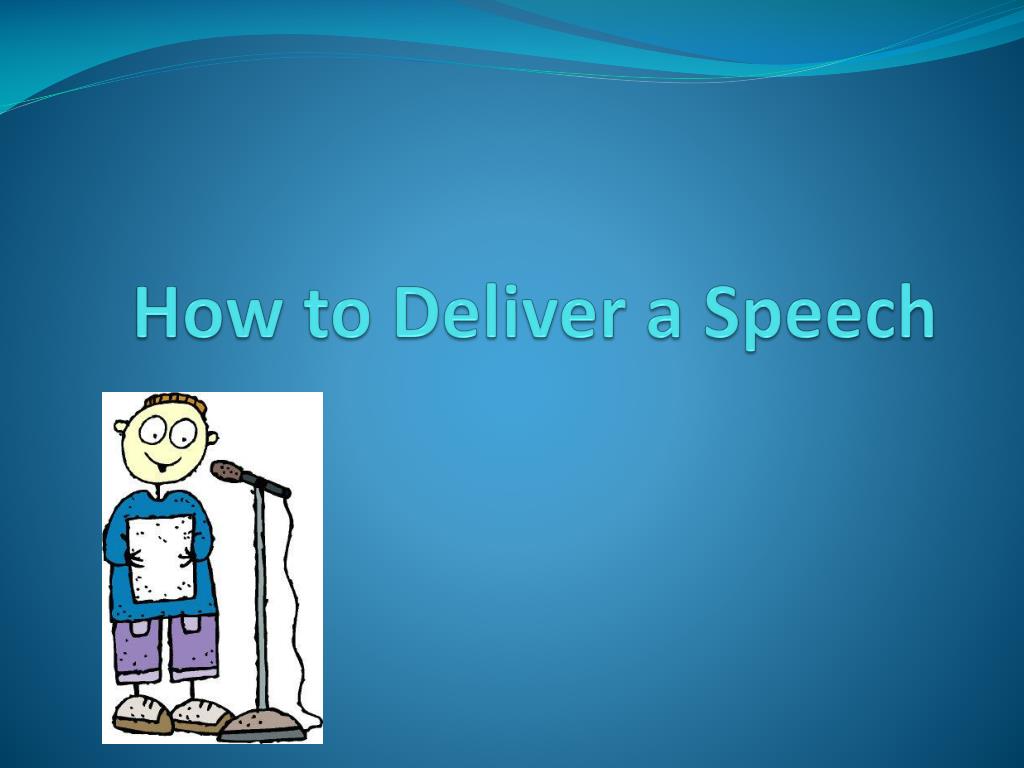
  1. How to Deliver a Speech

  2. Elements of a Good Speech Attitude Rehearsal Verbal Expression Nonverbal Expression

  3. Attitude Attitude matters a great deal with delivery. A confident presence shows your credibility and persuasiveness

  4. Rehearsal Practice, practice, practice Get your speech written at least a week early and say it out loud every day Practice in the car, in the shower, in your bedroom in front of the mirror

  5. Delivery There are several ways to deliver a speech By memory – we won’t require that! By reading from a fully written script but being familiar enough to keep eye contact with your audience Speaking extemporaneously from a memorized or written outline. For our purposes, I expect you to follow #2 because you are working with a script with the purpose of persuading your audience to believe what you do.

  6. Vocal Expression When we get nervous, sometimes we laugh inappropriately or read our speech incorrectly. That is where practice comes in. Focus on: *The volume of your voice – you want people in the back of the room to be able to hear you but you don’t want to be too loud. *The pitch of your voice – don’t speak in too high of a range *The rate of your voice – not too fast or too slow. Use the rate to emphasize where you see it is appropriate *Articulation – speak clearly so that everyone can hear each word

  7. Nonverbal Expression *Stand still while you speak *Don’t pace around or tap your fingers *Make eye contact with your audience *Gesture naturally – as you would when you talk with friends *Use the podium for your notes *Keep your hands out of your pockets *Make the type on your script large enough so that you don’t struggle to read it. *Have fun! If you are enjoying yourself, the audience will enjoy themselves too.