Urinary System
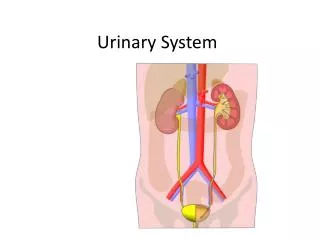
This comprehensive overview explores the anatomy of the human urinary system, focusing on the kidneys' structure, including the cortex, medulla, and hilus, as well as the nephron, which serves as its functional unit. We compare the characteristics of proximal and distal tubules, highlighting their differences in lumen size, cellular composition, and abundance. Additionally, we examine the ureter, urinary bladder, and urethra, detailing their structural features like transitional epithelium and smooth muscle layers. This guide is essential for understanding renal physiology and urinary function.


Urinary System
E N D
Presentation Transcript
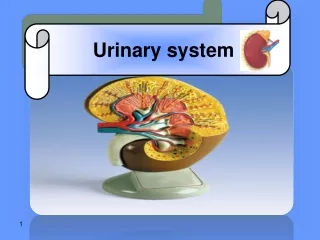
Kidney A = cortex B = medulla Arrow = hilus
Comparison of proximal and distal tubules •Proximal tubule •Large diameter lumen •More eosinophilic •Lumen often stellate •Brush boarder visible •Fewer nuclei seen in cross section •More abundant than D.T. •Distal tubule •Smaller dia. Lumen •Less eosinophilic •Lumen circular •Brush boarder not visible •More nuclei seen in cross section •Less abundant than P.T
Ureter Arrowhead = blood vessels Arrow = adipose tissue in adventitia
Urinary Bladder Arrowhead = serosa Arrow = smooth muscle
Urethra Arrowhead = lamina propria Arrow = muscularis
Arrow = transitional epithelium Arrowhead = lamina propria M = muscle