SlideServe
Menu
Préférences
© SlideServe · v2026

The Nephron: Kidney's Functional Unit

huggard avatar
13 diapositives · 317 Views · Jan 05, 2020

Explore the anatomical structure of the urinary system focusing on the nephron, its types, and functions in urine formation. Learn about glomerular filtration and tubular reabsorption processes in maintaining fluid balance.
The Nephron: Kidney's Functional Unit - slide 1
01 / 13The Nephron: Kidney's Functional Unit
1 / 17

Télécharger la présentation

The Nephron: Kidney's Functional Unit
Une image / un lien ci-dessous est fourni (tel quel) pour télécharger la présentation

Politique de téléchargement : le contenu du site vous est fourni TEL QUEL pour votre information et votre usage personnel ; il ne peut être vendu, concédé sous licence ni partagé sur d’autres sites sans l’accord de son auteur.Le contenu vous est fourni TEL QUEL, pour votre information et votre usage personnel uniquement. Téléchargez la présentation en cliquant sur ce lien. Lors du téléchargement, si vous ne parvenez pas à télécharger une présentation, l’éditeur a peut-être supprimé le fichier de son serveur.Pendant le téléchargement, si vous ne parvenez pas à obtenir une présentation, le fichier a peut-être été supprimé par l’éditeur.

F I N

Plus de contenu associé

Transcription de la présentation
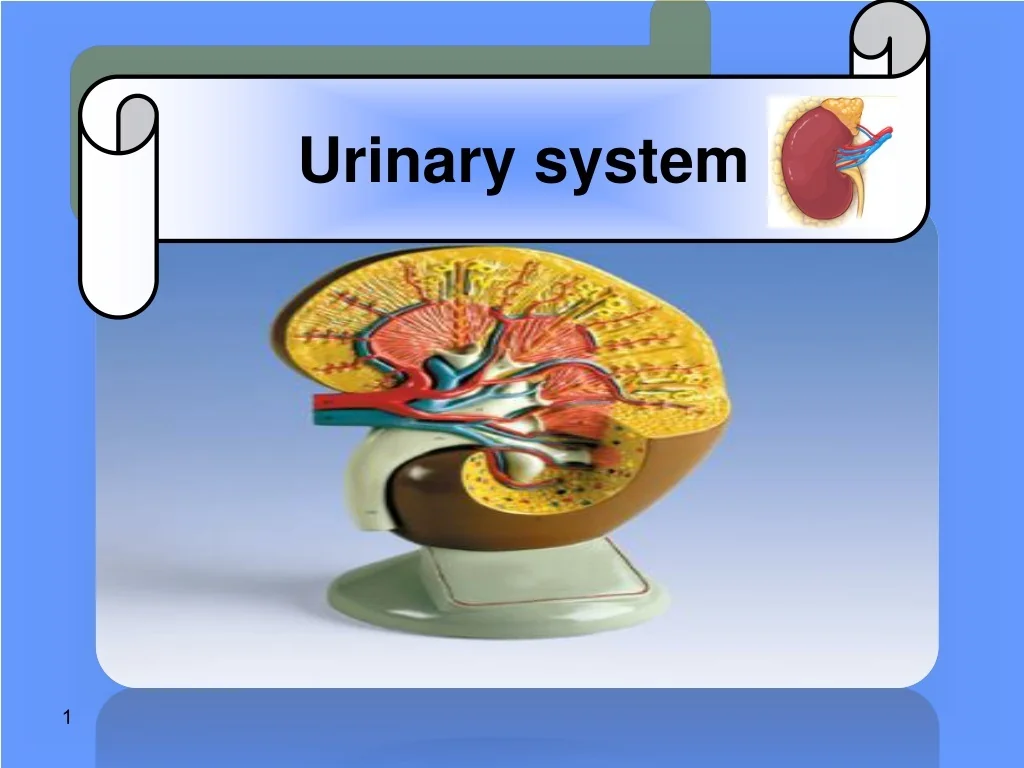
  1. Urinarysystem

  2. Anatomical structure The kidney present in the lower back of t the abdominal wall Adrenal gland kidney ureter Urinary bladder urethra

  3. The nephrone Bowman’s capsule and glomerulus

  4. The nephrone

  5. Nepherone • Its small functional unit, which is equal one million on each kidney. • Its two types: 1) cortical nepheron (85%), responsible for formation of urine 2) medullary nepheron (15%), responsible for concenration of the urine

  6. Structure of the nephron the kidney is composed of about 1 million functional units called nephron. one nephrone consist of : 1-glomerular capsule (Bowman”s capsule & glomerulus) 2- the proximal convoluted tubule 3- loop of Henle ( medullary (long) and cortex (short) loop) 4- distal convoluting tubule 5- collecting duct

  7. function of cortical nephrone ((Urine formation • Glumerular filtration (movement of the blood from glumorulus toward Bowman’s capsule) • Tubular reabsorption (movement of filtrated fluids from convoluted tubules toward the blood) • Secretion (movement of the blood from the blood capillaries around the tubules toward convoluted tubules) • excretion (movement of filtrated blood from renal tube to outside the body)

  8. I- Glumerular filtration • Glumerular filtration is move the fluid (plasma-protein) from glumorulus toward Bowman’s capsule. • Glumerular filtration depends on three pressures. These pressures are: 1) glomerular capillary hydrostatic pressure (60 mmHg) 2) intracapsular pressure (18 mmHg) 3) colloidal pressure (plasma protein pressure) (25mmHg)

  9. (Glomerular filtration rate) GFR Definition: its volume of the blood filtrate from the glomeruli into Bowman`s space per unit time. Normal value: in 70Kg person the volume of filtration equal 125ml\min or 180L\day. plasma volume filtrate by the kidney is about 60 times a day

  10. II- Tubular reabsorbtion(movement of filtrated fluids from convoluted tubules toward the blood) This process help to maintain fluids and electrolyte balance and blood PH Proximal tubule 1- glucose • all glucose molecules filtrated in Bowman’s capsule are reabsorbed again toward the blood by active transport process. • Tubular maximum absorption for glucose is equal 300mg/ min • Normal amount of glucose in the blood is about 100mg/ 100ml • If the amount of glucose in the blood is more than 180mg/100ml the glucose molecules will appear the urine (glucouria)

  11. Proximal tubule 2- protein • Small amount of protein filtrated from Bowman’s capsule (30-50mg\day), but its reabsorbed again in proximal tubule by active transpose process • If the protein molecule not absorbed due to kidney diseases, it will appear in the urine (albuminuria)

  12. Proximal tubule 3- water and electrolyte (Na) • 70% of water and Na reabsorbed in proximal tubule by active transport 4- urea • 50% of urea absorbed

  13. 20-30% of water and electrolyte absorbed in lube of Henley by diffusion for the water and active transport for electrolyte • (descending lube of Henley is thin and mainly its reabsorbed the water, but ascending lube of Henley is thick and reabsorbed Na and electrolytes)