Draft Regional Haze SIP
The Draft Regional Haze State Implementation Plan (SIP) outlines Massachusetts' approach to addressing visibility impairment in Class I Federal areas, as mandated by the 1977 Clean Air Act Amendments. The plan aims to achieve natural background visibility conditions by 2064 through measures like adopting Best Available Retrofit Technology (BART), establishing reasonable progress goals, and implementing a low-sulfur fuel oil strategy. Key emissions from major sources contributing to haze, particularly sulfur dioxide (SO2), will be targeted for a 90% reduction, thereby promoting cleaner air quality for all residents.

Draft Regional Haze SIP
E N D
Presentation Transcript
Draft Regional Haze SIP SIP Steering Committee January 13, 2011
Regional Haze Requirements • 1977 Clean Air Act Amendments: Congress hereby declares as a national goal the prevention of any future, and the remedying of any existing, impairment of visibility in mandatory Class I Federal areas which impairment results from man-made air pollution. • Goal: To achieve natural background conditions in all Class I areas by 2064
Core Requirements of Regional Haze Rule • Calculation of Baseline and Natural Visibility Conditions • Reasonable Progress Goals • Best Available Retrofit Technolgoy (BART) • Long-term Strategy (control measures needed to achieve reasonable progress goals)
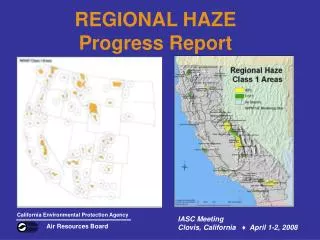
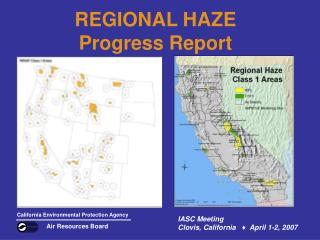
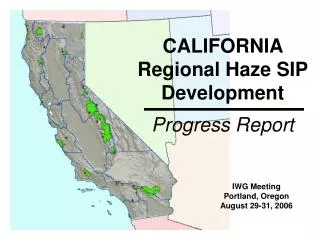
Class I Areas Impacted by Emissions from Massachusetts Sources
Modeled 2002 Contributions to Sulfate by State at Acadia National Park MA
MANE-VU “Ask” • Timely Implementation of Best Available Retrofit Technology (BART) • Low Sulfur Fuel Oil Strategy • 90% Reduction in SO2 Emissions from each of the top 167 stacks at 100 EGUs identified by MANE-VU as contributing to haze • Continued evaluation of other control measures
BART • Applies to NOx, SO2, and PM2.5 Emissions • 26 major point source categories • 250 tons/year of any haze-forming pollutant • Commenced operation between Aug. 7, 1962 – Aug. 7, 1977
Average Change in 24-hr PM2.5due to Low-Sulfur Fuel Strategies (µg/m3)
Average Change in 24-hr PM2.5 due to 90% Reduction in SO2 Emissions from 167 Stacks (µg/m3)
Other Considerations / Control Measures • Construction Activities • Agricultural and Forestry Smoke Management • MassDEP including Outdoor Hydronic Heater (Outdoor Wood-fired Boiler) regulation in SIP
Draft Regional Haze SIP Process • Preliminary draft SIP reviewed by Federal Land Managers and EPA in 2008/09 • Draft SIP hearings 2/10/11 and 2/11/11; comments by 2/21/11 • Submit final SIP to EPA for approval in Spring; propose low sulfur fuel regulations • Full SIP approval by EPA likely contingent on finalization of Transport Rule, low sulfur fuel regulations, amended permits