Cyberbullying: What You Need to Know
Learn about cyberbullying, the use of phones or the internet to harm others. Understand the laws and examples, how to handle it, and report incidents. Follow the Anti-Cyberbullying Code and guidelines to stay safe online.


Cyberbullying: What You Need to Know
E N D
Presentation Transcript
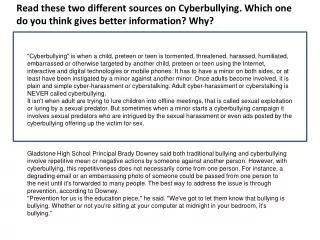
What is it? The use of phones or the internet to deliberately upset someone else.
The Law • There are laws which may apply in terms of: • harassment and • threatening and menacing communications. • Your school should contact the police if they feel a law has been broken
Examples of cyberbullying • Threats • Harassment repeatedly sending unwanted messages • Sending nasty messages • Impersonation • Sending upsetting images
Who is a cyberbully? • Someone who deliberately sends this hurtful information. • Someone who passes the message/image on to someone else. • Someone who sends the message thinking it is only a joke.
If you receive a nasty message… • Save it. • Do not reply. • Block future messages. • Show it to your parents/carer or teacher.
Cyberbullying can be reported through: • Mobile phone companies, • Internet service providers and • Social networking sites –myspace
The Anti-Cyberbullying Code • Always respect others. • Think before you send. • Block the Bully. • Don’t retaliate or reply. • Save the evidence. • Make sure you tell. • Treat your password like your toothbrush. From DCSF guidance on Cyberbullying