
SlideServe
Menu
Préférences
© SlideServe · v2026

ALEXANDRIA

dustin avatar
14 diapositives · 1.2K Views · Aug 24, 2014

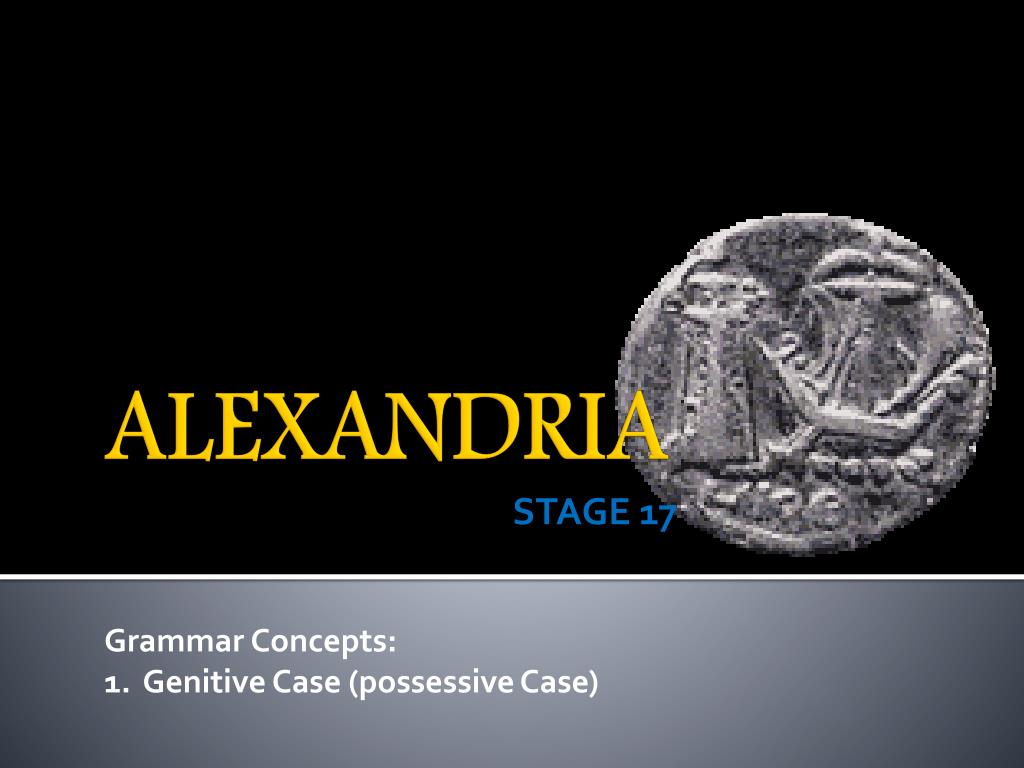
STAGE 17. ALEXANDRIA. Grammar Concepts: Genitive Case (possessive Case). Quintus de Alexandria (p. 92-93). Alexandria magnum portum habet . Alexandria has a great/large port. Prope portum est insula . Near the port is an island. Pharos lighthouse Alexandria was founded by
ALEXANDRIA - slide 1
01 / 14ALEXANDRIA
1 / 17

Télécharger la présentation

ALEXANDRIA
Une image / un lien ci-dessous est fourni (tel quel) pour télécharger la présentation

Politique de téléchargement : le contenu du site vous est fourni TEL QUEL pour votre information et votre usage personnel ; il ne peut être vendu, concédé sous licence ni partagé sur d’autres sites sans l’accord de son auteur.Le contenu vous est fourni TEL QUEL, pour votre information et votre usage personnel uniquement. Téléchargez la présentation en cliquant sur ce lien. Lors du téléchargement, si vous ne parvenez pas à télécharger une présentation, l’éditeur a peut-être supprimé le fichier de son serveur.Pendant le téléchargement, si vous ne parvenez pas à obtenir une présentation, le fichier a peut-être été supprimé par l’éditeur.

F I N

Plus de contenu associé

Transcription de la présentation
  1. STAGE 17 ALEXANDRIA Grammar Concepts: Genitive Case (possessive Case)

  2. Quintus de Alexandria (p. 92-93) • Alexandria magnum portumhabet. • Alexandria has a great/large port. • Propeportumestinsula. • Near the port is an island. Pharos lighthouse Alexandria was founded by Alexander the Great in 334 BC.

  3. Quintus de Alexandria (p. 92-93) • Facile estnavibus ad (+ acc) portumpervenīre, quod in hacinsulaestpharusingens. • It is easy for ships to reach/arrive (to) the port because there is a huge lighthouse on this island. • Multae naves in portuAlexandriae* sunt. • Many ships are in the port of Alexandria. *New Grammar Concept – the genitive noun case

  4. Quintus de Alexandria (p. 92-93) • Alexandria esturbsturbulenta. • Alexandria is a rowdy city. • Ingensturbasemperurbem complet. • A huge crowd always fills the city. • Multi mercatores per vias ambulant. • Many merchants walk through the streets.

  5. Quintus de Alexandria (p. 92-93) • Multi servi per urbemcurrunt. • Many slaves run through the city. • Multi milites per vias urbis*incedunt. • Many soldiers march through the streets of the city. • Romani urbemcustodiunt. • The Romans guard the city. *New Grammar Concept – the genitive noun case

  6. Quintus de Alexandria (p. 92-93) • Ego et Clemens, postquam ad urbempervenimus, templumvidimus. • I and Clemens, after we arrived to the city, (we) saw a temple. • Ad hoc templum, quod Augustus Caesar propelitusaedificaverat, festinavimus. • We hurried to this temple, which Augustus Caesar had built near the shore.

  7. Quintus de Alexandria (p. 92-93) • Pro temploCaesaris*eratara. • In front of the temple of Caesar there was an altar. • Ego vinum in aram (in+acc) fudi. • I poured wine onto the alter. *New Grammar Concept – the genitive noun case

  8. Quintus de Alexandria (p. 92-93) • PropehancurbemhabitabatBarbillus, vir dives. • Barbillus, a rich man, was living near this city. • Barbillusnegotium cum patremeosaepeagebat. • Barbillus used to do business with my father often.

  9. Quintus de Alexandria (p. 92-93) • Villamsplendidamhabebat. • He used to have a splendid house. • Ad villamBarbilli*moxperveni. • Soon I arrived (to) the house of Barbillus. • Facile eratmihivillaminvenīre, quod Barbilluseratvirnotissimus. • It was easy for me to find (his) house because Barbillus was a very well known man. *New Grammar Concept – the genitive noun case

  10. Quintus de Alexandria (p. 92-93) • Barbillusmultos servos habebat, ego nullos. • Barbillus used to have many slaves; I have none. • “decorum esttibiservumAegyptiumhabere,” inquitBarbillus. • “It is proper for you to have an Egyptian slave,” said Barbillus.

  11. Quintus de Alexandria (p. 92-93) • Inter servos Barbilli* eratpuerAegyptius. • Among the slaves of Barbilluswas an Egyptian boy. • Barbillus, virbenignus, mihihunc puerumdedit. • Barbillus, a kind man, gave this boy to me. *New Grammar Concept – the genitive noun case

  12. 1st Declension -ae -arum (possessive noun adjective)

  13. 2nd Declension -i -orum (possessive noun adjective)

  14. 3rd Declension -is -um (possessive noun adjective)