Effective Classroom Management Techniques for Dealing with Student Misbehavior
90 likes | 108 Vues
Explore Sprick’s Hierarchy of Correction Procedures to address student misbehavior, analyze case studies, implement strategies such as positive reinforcement, attention redirection, and family contact for effective classroom management.


Effective Classroom Management Techniques for Dealing with Student Misbehavior
E N D
Presentation Transcript
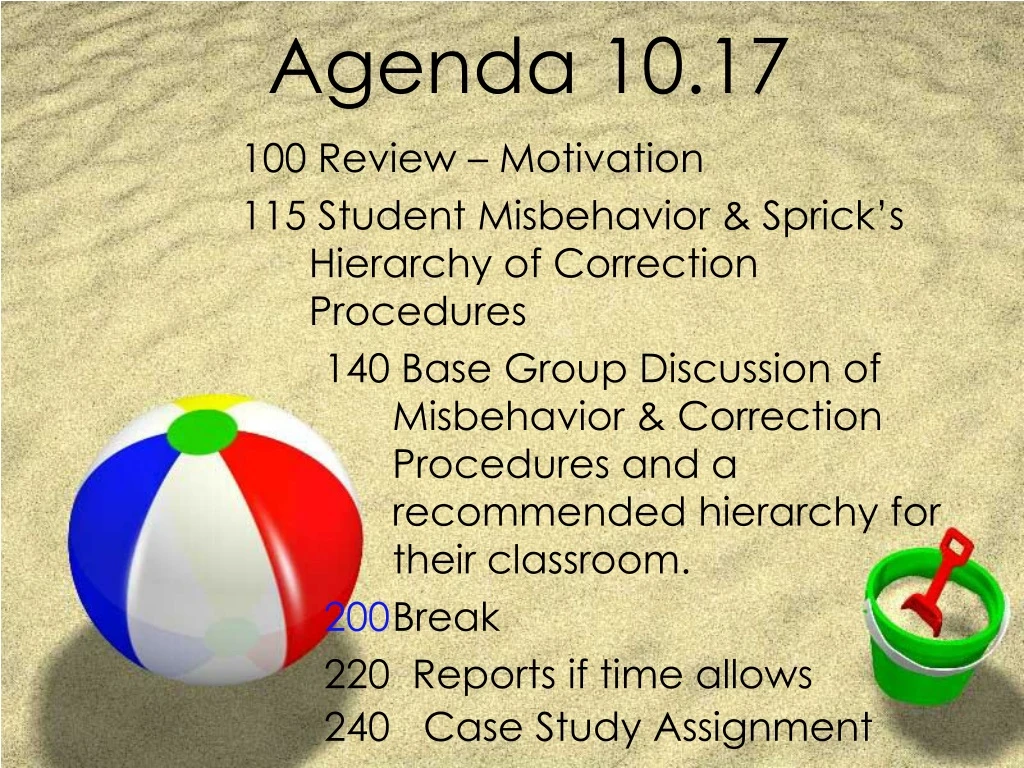
Agenda 10.17 100 Review – Motivation 115 Student Misbehavior & Sprick’s Hierarchy of Correction Procedures 140 Base Group Discussion of Misbehavior & Correction Procedures and a recommended hierarchy for their classroom. Break 220 Reports if time allows 240 Case Study Assignment
Misbehavior p. 277 • Student misbehavior because: • Don’t Know Teacher Expectations • Unaware of when/how they misbehave • Don’t Know desired behavior • Need Attention • Feel Powerless • Escape Task – Leave Class
Analyze Misbehavior(Your Case Study Kinda) • Nature and Context of problem • Collect Information/Data • Develop preliminary plan • Discuss with student/family • Implement & Evaluate
Misbehavior & Consequences • Early-stage Reminders, Reorient to Classroom Expectations, proximity, low voice, no loss of face, clear, family contact Praise those on task, “catch em being good” • Awareness (Doesn’t Know) Clarify desired behavior and teach it Monitor student frequently, precorrect as needed, Remind, redirect, and signal as needed
Hierarchy of Consequences • Ability (Doesn’t Know How) - Discuss, teach skill, correct errors, make accommodations, positive feedback, reward • Attention Seeking - Planned ignoring, reinforce others, schedule feedback, increase attention in other ways • Habitual Misbehavior - Remove positive attention/escape, identify positive way, increase motivation systems
Or A Continuum of Consequences • Proximity & quiet reminder. • Review Rules & Expectations • Precision Requests • Differential Reinforcement for Attention-Seeking • Brief Verbal Problem Solve 3.1 Written Problem Solve/Contract • Behavior Card • Response Cost Program • Consult with specialist • Safety plan
Your turn - Groups • Discuss situations in your classroom that will require different levels of correction • Use Sprick’s approaches • Develop a Possible Hierarchy for your classroom on the What If Handout
Observational Study • Assignment is Posted • Review by Monday for Discussion • Suggested dates begin with 10/27 • 10/27 Identify and Collect Field Notes • 11/3-14, Collect more data • 11/17-24 Write the plan