Understanding Earthquakes: Causes, Effects, and Preparedness Strategies
100 likes | 238 Vues
Earthquakes are sudden movements of the Earth's crust caused by stress release, typically occurring less than 25 miles deep. They can lead to significant damage including collapsed buildings and fires. Major earthquake zones include the Western United States and the New Madrid Fault Zone. Preparedness is essential: develop a household earthquake plan, conduct drills, and secure items in your home. Remember to drop, cover, and hold during an earthquake, and check for damages after. Stay informed through emergency alerts and be ready for aftershocks.


Understanding Earthquakes: Causes, Effects, and Preparedness Strategies
E N D
Presentation Transcript
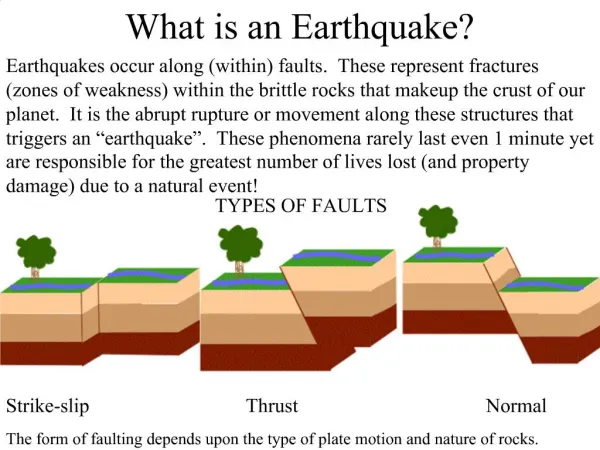
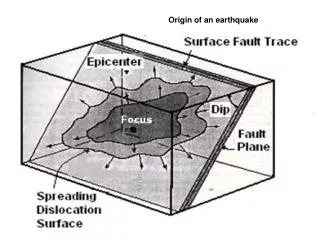
An Earthquake Is . . . A sudden slipping or movement of a portion of the Earth’s crust, caused by a sudden release of stresses, usually less than 25 miles below the surface.
Damage Caused by Earthquakes • Collapsed buildings • Damage to utilities, structures, and roads • Fires and explosions • Structural instability
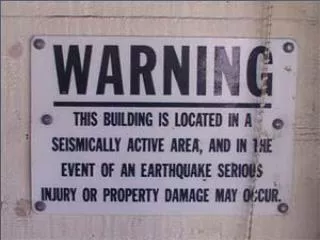
Likelihood of an Earthquake The greatest likelihood of a major earthquake is in: • The Western United States. • The New Madrid Fault Zone in Missouri. • A few pockets on the east coast.
Earthquake Statistics • 15% of the population lives in zones of potential major disaster. • Residents of California face the highest risk. • Four million people along the New Madrid Fault Zone are at great risk. • Residents of Massachusetts, North Carolina, and South Carolina are also at risk.
Richter Scale • Small: 5.0 to 5.9 • Moderate: 6.0 to 6.9 • Major: 7.0 to 7.9 • Great: 8.0 or greater
Earthquake Preparedness • Develop a home earthquake plan. • Conduct earthquake drills. • Develop a plan for reuniting family members. • Identify an out-of-state family contact. • Keep supplies on hand.
Earthquake Preparedness • Store heavy and breakable objects on low shelves. • Secure bookshelves and water heaters. • Install flexible pipe. • Move beds away from windows. • Move or secure hanging objects over beds, sofas, or chairs. • Keep shoes and a flashlight under the bed.
During an Earthquake • Drop, cover, and hold. • If indoors, stay there! • If outdoors, find a spot away from buildings, trees, streetlights and power lines, and overpasses. • If in a vehicle, drive to a clear spot and stop.
After an Earthquake • Extinguish small fires. • Clean up spills. • Inspect home for damage. • Help neighbors. • Tune to Emergency Alert System (EAS). • Expect aftershocks.