

SlideServe
Menu
Préférences
© SlideServe · v2026

Viktor Frankl

elina avatar
6 diapositives · 830 Views · Nov 21, 2011

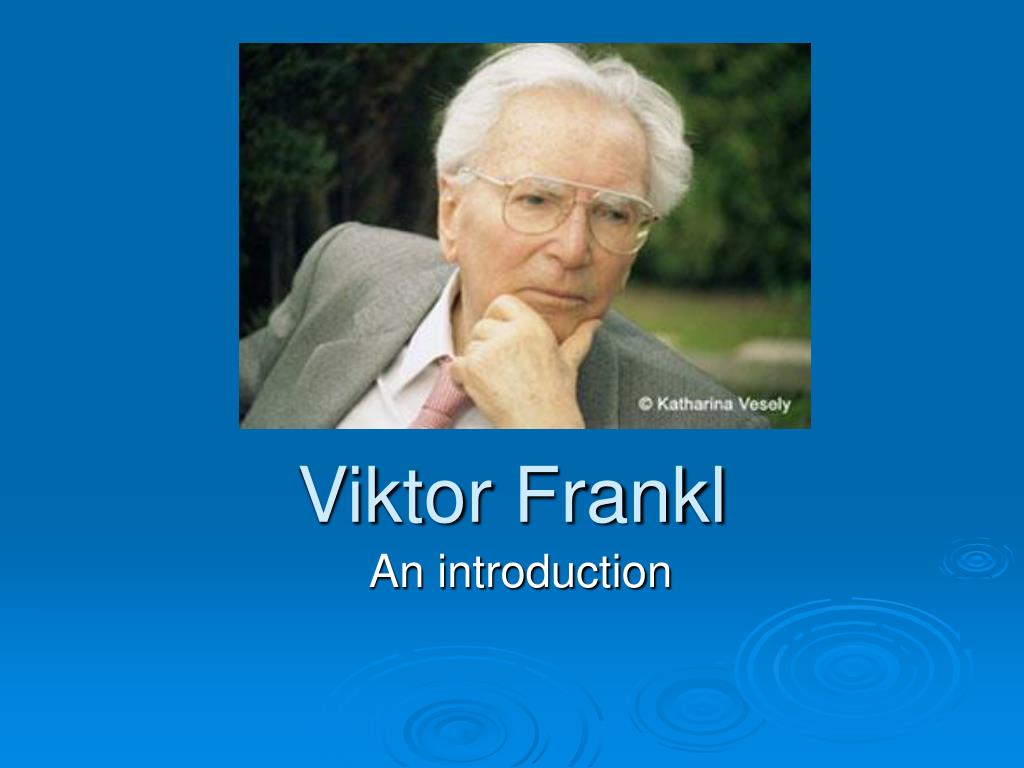
Viktor Frankl. An introduction. Early Life. In 1905, Frankl was born in Vienna into a Jewish family of civil servants. His interest in psychology and philosophy emerged early.
Viktor Frankl - slide 1
01 / 6Viktor Frankl
1 / 17

Télécharger la présentation

Viktor Frankl
Une image / un lien ci-dessous est fourni (tel quel) pour télécharger la présentation

Politique de téléchargement : le contenu du site vous est fourni TEL QUEL pour votre information et votre usage personnel ; il ne peut être vendu, concédé sous licence ni partagé sur d’autres sites sans l’accord de son auteur.Le contenu vous est fourni TEL QUEL, pour votre information et votre usage personnel uniquement. Téléchargez la présentation en cliquant sur ce lien. Lors du téléchargement, si vous ne parvenez pas à télécharger une présentation, l’éditeur a peut-être supprimé le fichier de son serveur.Pendant le téléchargement, si vous ne parvenez pas à obtenir une présentation, le fichier a peut-être été supprimé par l’éditeur.

F I N

Plus de contenu associé

Transcription de la présentation
  1. Viktor Frankl An introduction

  2. Early Life • In 1905, Frankl was born in Vienna into a Jewish family of civil servants. His interest in psychology and philosophy emerged early. • In 1924 he created a special program to counsel students during the time they were to receive their grades. During his tenure, not a single Viennese student committed suicide.

  3. Early Career • From 1933 to 1937 he headed the "suicide pavilion" of the General Hospital in Vienna. Here, he treated over 30,000 women prone to suicide. • Starting in 1938, he was prohibited from treating Aryan patients due to his Jewish ethnicity. • Later worked as a brain surgeon.

  4. Deportation • On September 25, 1942 he, along with his wife, and his parents were deported to the Theresienstadt concentration camp • Worked there as General Practitioner and set up a suicide watch for prisoners. • Gave lectures on mental and physical health, and set up clinics and psychiatric care wards. • Transported to Auschwitz and then Türkheim in October, 1944.

  5. Liberation • On April 27, 1945, Frankl was liberated by the Americans. • He returned to Vienna and wrote Man’s Search for Meaning in 1945. • Among his immediate relatives, the only survivor was his sister. • After publishing 32 books, Frankl died in 1997.

  6. Logotherapy (logos = meaning) • It was due to his and others' suffering in these camps that he came to his hallmark conclusion that even in the most absurd, painful and dehumanized situation, life has potential meaning and that therefore even suffering is meaningful. • “If a prisoner felt that he could no longer endure the realities of camp life, he found a way out in his mental life – an invaluable opportunity to dwell in the spiritual domain, the one that the SS were unable to destroy. Spiritual life strengthened the prisoner, helped him adapt, and thereby improved his chances of survival.”