Download
1 / 11
110 likes | 221 Vues
This study examines the persistent climate changes in the Arctic, focusing on zonal mean surface air temperature anomalies during winter (Nov-Mar) from the 20th century. It analyzes the influence of atmospheric oscillations, particularly the Arctic Oscillation (AO), and explores the impacts of feedback mechanisms and external forcings on Arctic conditions. The findings reveal that the current state of Arctic climate is unparalleled in the instrumental record, with notable implications for sea ice, permafrost degradation, and broader climatic patterns.

E N D
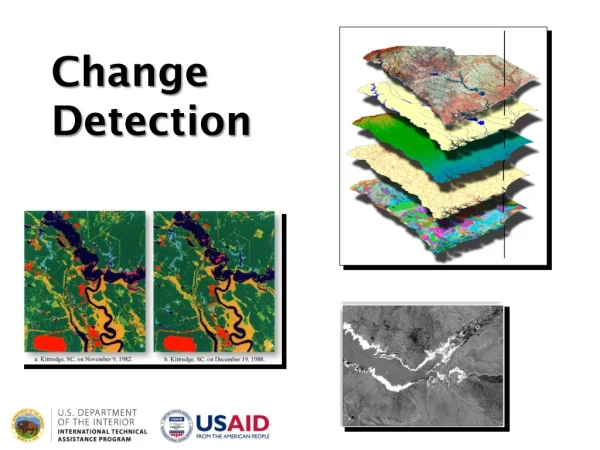
Arctic Change Detection Atmospheric Sciences-APL-PMEL
20th Century Zonal Mean Surface Air Temperature Anomalies (Nov. – Mar.)
Winter (Nov. – Mar. ) Land Surface Air Temperature averaged 60-90N 18 IPCC Models
Sept 2003 Tundra shown in Pink AVHRR Surface Temperature -4 -2 0 2 4 deg C Persistent Multivariate Arctic Changes Sea Ice Permafrost degradation
Arctic Oscillation (AO) Index Thompson and Wallace, 1998 Geo. Res. Let.
OW 2 4 6 8 10+ Ice Age Sept 2000 Sea Ice work with Applied Physics Laboratory
Arctic Change in the last Decade March-May Heights Temps 500 hPa Temps 150 E 150 W Thickness
http://www. http://www.arctic.noaa.gov/detect
SUMMARY • JISAO collaboration on Arctic climate • Present Arctic conditions are unique in the instrumental record (1880 -2004). Over last five yearsmany indicators show strong persistence. • Arctic change is a combination of 1) intrinsic atmospheric variability, 2) internal feedbacks and 3) external forcing in unknown amounts.
Projections of Spring Temperature on the AO and PNA Recent Anomalies AO PNA