The Rise of Progressivism: Roots, Reforms, and Legacy of the Movement
The Progressive Movement emerged in the late 19th and early 20th centuries, driven by urban, middle-class Americans, including journalists, social workers, and educators seeking societal reform. Muckrakers like Ida Tarbell and Upton Sinclair exposed corporate malfeasance, prompting calls for government efficiency and democratic reforms, including direct elections and suffrage. Leaders like Theodore Roosevelt and Woodrow Wilson championed policies addressing labor, health, and civil rights. While Progressivism achieved significant reforms, its limitations and the fight for equality continued to evolve.
The Rise of Progressivism: Roots, Reforms, and Legacy of the Movement

E N D
Presentation Transcript
Chapter 8 The Progressive Movement
The Rise of Progressivism • Who were the Progressives? • Urban • Middle-class Americans • Journalists • Social workers • Educators • Politicians • Clergymen
The Rise of Progressivism • The Muckrakers • Ida Tarbell and Standard Oil • Jacob Riis wrote “How the Other Half Lives” • Upton Sinclair wrote “The Jungle”
Reforming Government • Making Government Efficient • A commission plan • A council-manager system
Reforming Government • Democratic Reforms • La Follette’s Laboratory of Democracy • Robert M. La Follette • Direct primary • Initiative • Referendum • Recall
Reforming Government • Democratic Reforms • Direct Election of Senators • 17th amendment
Suffrage • Early Problems • Seneca Falls, New York- 1848 • Susan B. Anthony • Elizabeth Cady Stanton
Suffrage • Early Problems • 14th amendment • 15th amendment
Suffrage • Building Support • NAWSA • Alice Paul • Carrie Chapman Catt • 19th amendment
Reforming Society • Child Labor • John Spargo wrote “The Bitter Cry of the Children” • 60 cents for 10 hours of work in the coal mine
Reforming Society • Health and Safety Codes • Triangle Shirtwaist Company
Reforming Society • The Prohibition Movement • Temperance movement • WCTU • Prohibition
Reforming Society • Progressives vs. Big Business • Big businesses need regulation • Interstate Commerce Commission
Roosevelt Revives the Presidency • Roosevelt Takes on the Trusts • Square Deal • Roosevelt becomes known as a trustbuster and takes on J.P. Morgan
Roosevelt Revives the Presidency • The Coal Strike of 1902 • United Mine Workers go on strike • arbitration
Roosevelt Revives the Presidency • Regulating Big Business • Department of Commerce and Labor • Hepburn Act
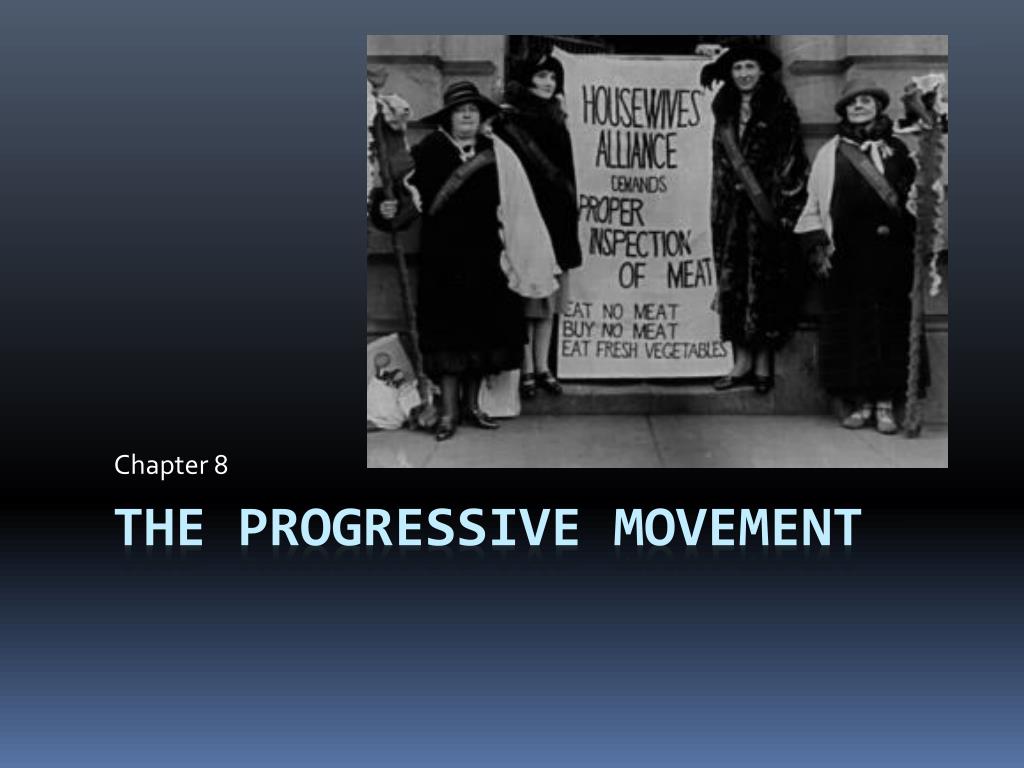
Roosevelt Revives the Presidency • Consumer Protection • Checking out cures • Upton Sinclair writes “The Jungle” • Meat Inspection Act • Pure Food and Drug Act • USDA
Conservation • Western Land Development • Gifford Pinchot • Roosevelt’s Legacy
Taft’s Reforms • The Payne-Aldrich Tariff • Ballinger vs. Pinchot • Ballinger replaces James Garfield as Secretary of the Interior. • Pinchot is fired for insubordination.
Taft’s Reforms • Taft’s Achievements • Children’s bureau • Trustbuster
The Election of 1912 • Pick the Candidates • Progressive party • Nicknamed the Bull Moose Party
The Election of 1912 • Wilson vs. Roosevelt • New Nationalism • New Freedom
Wilson’s Reforms • Reforming Tariffs • Wilson appears before Congress (1st President to do so since John Adams). • Wilson lowers tariffs.
Wilson’s Reforms • Reforming the Banks • Federal Reserve Act
Wilson’s Reforms • Antitrust Action • Federal trade commission • Clayton Antitrust Act
Wilson’s Reforms • Regulating Business • Keating-Owen Child Labor Act • Prohibits employment of children under the age of 14 • But Congress declares it unconstitutional.
Progressivism’s Legacy and Limits • A New Kind of Government
Progressivism’s Legacy and Limits • The Limits of Progressivism • W.E.B. Dubois met at the Niagara Movement in 1905. • The 1st attempt at civil rights • NAACP-1909