Cold War & the Fifties
150 likes | 268 Vues
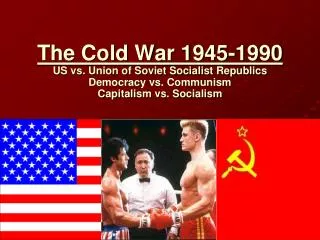
The Cold War emerged after World War II, creating a geopolitical stalemate mainly between the U.S. and the Soviet Union. This period, marked by ideological conflict and military tension, saw the U.S. adopt a containment policy to prevent the spread of communism. In Eastern Europe, nations fell under Soviet control, separated from the West by the Iron Curtain. The 1950s also experienced a baby boom and materialistic values, alongside a pursuit of economic growth, highlighted by rising Gross National Product and increased affluence.


Cold War & the Fifties
E N D
Presentation Transcript
Vocabulary Cold War& the Fifties
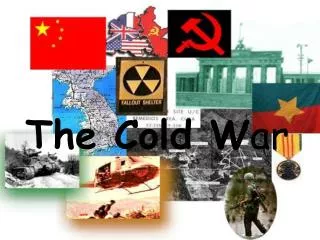
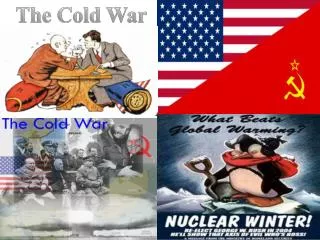
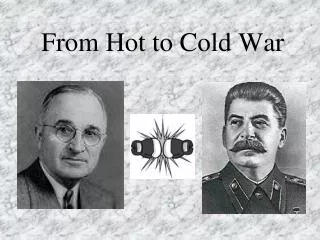
Cold War war of words and threats; developed after World War II between the U.S. and Soviet Union
stalemate situation in which further action by either side is difficult or impossible; deadlock
satellite nation nations in Eastern Europe controlled by the USSR after World War II
iron curtain imaginary line dividing Communist Eastern Europe from free Western Europe
containment U.S. policy of keeping communism from spreading
retaliation an act of fighting or striking back
armistice an agreement to stop fighting
subversion action that undermines the safety of a country & its citizens
affluent having wealth
Gross National Product (GNP) / Gross Domestic Product (GDP) sum total of all goods and services produced in the U.S. in one year
baby boom period in American history when the birth rate was unusually high ~ 1946-1962
moderates not being extreme or radical especially in politics (middle of the road)
conformity the practice of people tending to be the same
materialism valuing money and the things that money can buy