SlideServe
Menu
Préférences
© SlideServe · v2026

Quick Breads

fawn avatar
11 diapositives · 455 Views · Jul 19, 2014

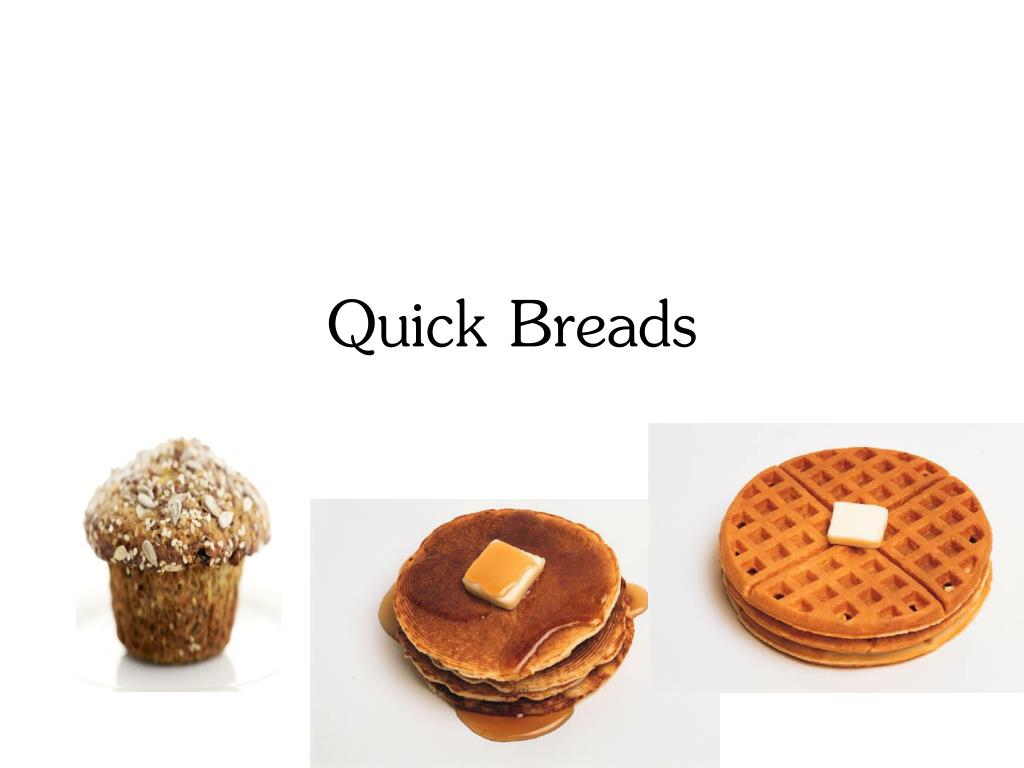
Quick Breads. Quick Breads. products that have a bread- or cake-like texture but do not contain yeast. For example: pancakes, biscuits, muffins, scones, waffles, soda breads. Typical Ingredients. Flour- foundation of quick breads- provides structure
Quick Breads - slide 1
01 / 11Quick Breads
1 / 17

Télécharger la présentation

Quick Breads
Une image / un lien ci-dessous est fourni (tel quel) pour télécharger la présentation

Politique de téléchargement : le contenu du site vous est fourni TEL QUEL pour votre information et votre usage personnel ; il ne peut être vendu, concédé sous licence ni partagé sur d’autres sites sans l’accord de son auteur.Le contenu vous est fourni TEL QUEL, pour votre information et votre usage personnel uniquement. Téléchargez la présentation en cliquant sur ce lien. Lors du téléchargement, si vous ne parvenez pas à télécharger une présentation, l’éditeur a peut-être supprimé le fichier de son serveur.Pendant le téléchargement, si vous ne parvenez pas à obtenir une présentation, le fichier a peut-être été supprimé par l’éditeur.

F I N

Plus de contenu associé

Transcription de la présentation
  1. Quick Breads

  2. Quick Breads • products that have a bread- or cake-like texture but do not contain yeast. • For example: pancakes, biscuits, muffins, scones, waffles, soda breads.

  3. Typical Ingredients • Flour-foundation of quick breads- provides structure • Eggs –provide added volume and structure; a natural leavener • Fat –keep baked products moist and tender; aids in creaming/mixing • Sugar -improve flavor and color; also aids in creaming • Salt –strengthens gluten and enhances flavor • Leavening agent –allow quick breads to leaven, or rise • Liquid –adds moisture; allows dry ingredients to be blended into a batter or dough; helps produce gluten

  4. Quick breads are produced by one of three methods: • Biscuit Method • Cut the fat into dry ingredients (Flour, sugar, salt and leavening agent • then add liquids (liquid and eggs).

  5. Blending Method • Combine liquid, sugar, fat and eggs • then add dry ingredients.

  6. Creaming Method • Mix sugar and shortening • add eggs • add the dry and liquid ingredients alternately

  7. Types of quick breads • Dough-thicker in consistency; they can be rolled and cut into shapes prior to baking. • Examples: • Batters-either a pour batter or drop batter • Pour batters vary in consistency. Examples: • Drop batters are so thick they need to be scraped or dropped from a portion or ice cream scoop to the cookware. Examples

  8. Loaf breads are made from a drop batter or a very thick pour batter. • Baking powder is the chemical leavening agent used. The baked product should: • Have a uniform texture • Have a crust that is lightly browned, but not thick • Be moist and tender, not tough and dry • Have rounded tops with a split down the center

  9. Mixing • Time spent mixing loaf bread batter is crucial. Under mixing will result in a lumpy batter with dry pockets of flour. Over mixing will overdevelop the gluten resulting in a tough product with tunnels. MIX lightly and only long enough to blend all the ingredients.

  10. Flavor • Adding nuts, berries, banana, pumpkin, etc. can alter the flavor.

  11. Leavenings • substance that causes dough and batter to rise. • Double acting baking powder or baking soda are the most common • Purchase in the smallest unit possible—they will deteriorate. • Store in air-tight containers and keep in a cool, dry place.