
Uploaded by
finna
0 SLIDES
272 VUES
0LIKES
Imperialism
DESCRIPTION
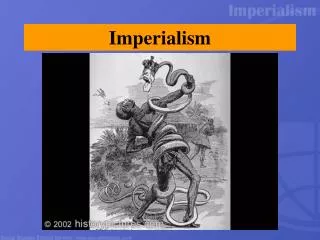
Imperialism . Susan M. Pojer and Lynne Pierce . Who was doing it?. Why would a nation want to practice imperialism?. Commercial/Business Interests. US Foreign Trade: 1870-1914. 2. Military/Strategic Interests. US maintains bases in other countries. Alfred Thayer Mahan.
Download

1 / 0
Download Presentation

Télécharger la présentation
Imperialism
An Image/Link below is provided (as is) to download presentation
Download Policy: Content on the Website is provided to you AS IS for your information and personal use and may not be sold / licensed / shared on other websites without getting consent from its author.
Content is provided to you AS IS for your information and personal use only.
Download presentation by click this link.
While downloading, if for some reason you are not able to download a presentation, the publisher may have deleted the file from their server.
During download, if you can't get a presentation, the file might be deleted by the publisher.
E N D
Presentation Transcript
- Imperialism Susan M. Pojer and Lynne Pierce
- Who was doing it?
- Why would a nation want to practice imperialism?
- Commercial/Business Interests US Foreign Trade:1870-1914
- 2. Military/Strategic Interests US maintains bases in other countries
- Alfred Thayer Mahan The Influence of Sea Power Upon History Great nations have great navies Navies need safe ports to receive supplies and rest
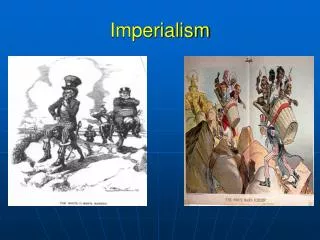
- 3. Social Darwinist Thinking The Hierarchyof Race The White Man’sBurden
- 4. Religious/Missionary Interests Mission Church in Hawaii American Missionariesin China, 1905
- 5. The frontier theory
- 6. Jingoism – nationalism out of control
- Japan
- Commodore Matthew Perry Opens Up Japan: 1853 The Japanese View of Commodore Perry US forces Japan to open to world trade
- Alaska
- “Seward’s Folly” or “Icebox: 1867 $7.2 million
- America as a Pacific Power
- Other Pacific claims Baker Island Howland Island Christmas Island Palmyra Island Jarvis Island Wake Island
- Hawaii: "Crossroads of the Pacific"
- U. S. Missionaries in Hawaii Kamehameha III – 1st Christian Hawaiian king Imiola Church – first built in the late 1820s
- Hawaiian Queen Liliuokalani Hawaii for the Hawaiians!
- U. S. View of Hawaiians Hawaii becomes a U. S. Protectorate in 1849through economic treaties.
- U. S. Business Interests In Hawaii 1893 –Americanbusinessmen backed anuprising against Queen Liliuokalani. Sanford Ballard Doleproclaims the Republic of Hawaii in 1894. Hawaii annexed in 1898
- A shot gun wedding for Hawaii
- Cuba The US had wanted to take it for years
- Spanish Misrule in Cuba
- “Yellow Journalism” & Jingoism Joseph Pulitzer Hearst to Frederic Remington:You furnish the pictures, and I’ll furnish the war! William Randolph Hearst
- ValerianoWeyler’s“Reconcentration” Policy
- De Lôme Letter Spanish Ambassador to the U.S. Criticized PresidentMcKinley as weak, cowardly and incapable of leading the US
- Remember the Maineand to Hell with Spain!
- Theodore Roosevelt Assistant Secretary of the Navy under McKinley Criticized PresidentMcKinley as having the backbone of a chocolate éclair! Resigns his position to fight in Cuba
- Spanish-American War 1898 “That splendid little war”
- The Spanish-American War (1898): US rifle Spanish rifle How prepared was the US for war?
- The “Rough Riders”
- Heroes of San Juan Hill?? By Fredric Remington By Kurz and Allison
- The Philippines
- The Spanish-American War (1898):“That Splendid Little War”
- Dewey Captures Manila!
- Emilio Aguinaldo Leader of the FilipinoUprising. July 4, 1946:Philippine independence
- William H. Taft, 1stGov-General of the Philippines Great administrator.
- American Views of the Philippines
- Philippine Insurrection
- The Treaty of Paris: 1898 Cuba was freed from Spanish rule. Spain gave up Puerto Rico and the island of Guam. The U. S. paid Spain$20 mil. for thePhilippines. The U. S. becomesan imperial power!
- The American Anti-Imperialist League Mark Twain, Andrew Carnegie,and WilliamJennings Bryan amongthe leaders. Campaigned against the annexation of thePhilippines and otheracts of imperialism.
- Our “Sphere of Influence”
- Cuban Independence? Platt Amendment (1903) Cuba was not to enter into any agreements with foreign powers that would endanger its independence. The U.S. could intervene in Cuban affairs if necessary to maintain an efficient, independent govt. (protectorate) Cuba must lease Guantanamo Bay to the U.S. for naval and coaling station. Senator Orville Platt
- DILEMMA--Did U. S. citizenship follow the flag??
- Puerto Rico
- Puerto Rico: 1898 1900 PR became an “unincorporated territory.” Citizens of PR, not of the US. 1901-1903 the Insular Cases. Constitutional rights were not automatically extended to territorial possessions. Congress had the power to decide these rights.
- Puerto Rico: 1898 1917 – Gave full territorial status to PR. (commonwealth) PRs elects their own legislators & governor to enforce local laws. PRs can NOT vote in US presidential elections. A resident commissioner is sent to Washington to vote for PR in the House.
- The Imperialist Tailor
- Spreading the flag
- Uncle Sam Joins the Club
- China
- China divided by the outsidersWhere are the Americans? Spheres of influence – area where another country has political & economic control
- The Open Door Policy - 1899 Gave all nations equal access to trade in China Guaranteed that China would NOT be taken over by any one foreign power
- TheOpen Door Policy
- The Boxer Rebellion:1900
- America as a Pacific Power Area of US involvement
- America as a Carib-bean Power
- U. S. Interventions in Latin America: 1898-1920s
- Big Stick Diplomacy US prevents intervention in Venezuela
- Panama
- Panama: The King’s Crown 1903 Hay-Bunau-Varilla Treaty Dr. Walter Reed – yellow fever cure
- Revolt in PanamaCould this be why Columbia is willing to sell us drugs?
- Making the dirt fly
- Panama Canal TR in Panama(Construction begins in 1904)
- Extending the Monroe Doctrine
- The Roosevelt Corollary to the Monroe Doctrine: 1905 Chronic wrongdoing… may …ultimately require intervention by some civilized nation, and in the Western Hemisphere the adherence of the United States to the Monroe Doctrine may force the United States, however reluctantly, …to the exercise of an international police power .
- US Virgin Islands purchased to guard the canal
- Speak Softly,But Carry a Big Stick!
- America's New Role
- The Cares of a Growing Family
- Constable of the World
- An emerging power
- Treaty of Portsmouth: 1905 Nobel Peace Prize for Teddy
- The Great White Fleet: 1907
- Taft’s “Dollar Diplomacy” Improve financialopportunities for American businesses. Use private capital tofurther U. S. interestsoverseas. Use troops to enforce our position if necessary
- Wilson’s “Moral Diplomacy” The U. S. shouldbe the conscienceof the world. Spread democracy. Promote peace. Condemn colonialism.
- Mexico
- The Mexican Revolution: 1910s Emiliano Zapata Mexico was torn for years by fighting among factions who want to control the country Venustiano Carranza Argentina Brazil Chile Powers Porfirio Diaz Francisco I Madero
- Searching for Banditos General John J. Pershing with PanchoVilla in 1914.
- Uncle Sam: One of the “Boys?”
- The look of US imperialism today
More Related

Audio
Live Player