Ancient Egyptian Music
200 likes | 310 Vues
Explore the rich tapestry of ancient Egyptian music, characterized by diverse instruments and sacred performances. From idiophones like IHY clappers and metal sistrums to membranophones such as the DARABUKKA drum, each sound played a vital role in cultural and religious expressions. Aerophones like flutes and reed pipes added melodic layers, while chordophones, including the long-necked lute, enriched musical compositions. Discover the significance of musicians in worship, including temple performers and lamentations that resonated through the ages.


Ancient Egyptian Music
E N D
Presentation Transcript
Idiophones • IHY = clappers • NA’TA’HI = bone clappers • MA’H = artificial hands and feet clappers • SEHEM = sistrum of pottery body with metal jangles • SES / SESSET = sistrum of metal body with metal jangles
Membranophones • TEBEN = drum • DARABUKKA = vase-shaped drum • QEMQEM = cylinder-shaped drum • A’SHE = barrel-shaped drum • SER = tambourine
Aerophones • SEBA’ / SEBY = flute • WA’YR / WA’DI / WA’D’AI / WA’DENI = recorders / photinx • MA’ = reed pipe • MET = single reed pipe • IS = double reed pipe • ISIT = parallel double reed pipe • A’A’T = angular double reed pipe
‘AB/ ‘ABW / DEB = animal horn • SNEB = trumpet • “hydraulis” = water organ
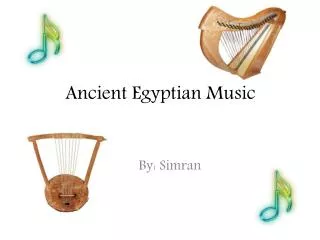
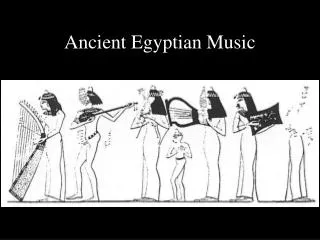
Chordophones • BEN / BENT / BIN / BINT = bow harp • DA’DA’T / DA’DA’NEWT = horizontal harp • KENA’NA’WR = kithara • NEFER = long-necked lute
Worship Music and Musicians • HERW = “voice” • SEM’AYT = female temple musician (harem of the god) • NEHWT = lamentation