Exploring Digital Natives: How Their Unique Experiences Shape News Consumption
80 likes | 209 Vues
Digital Natives (DNs) are immersed in a world where digital technologies shape their daily lives and news consumption. Unlike previous generations, they engage with news differently through a three-step process: Grazing, Deep Dive, and Feedback Loop. Grazing involves quickly scrolling through headlines, often without seeking verification. In contrast, a Deep Dive entails seeking context and credibility, influenced by personal preferences. The Feedback Loop allows for participatory engagement, where DNs discuss and share content, making local stories global. This raises questions about their role in participatory democracy.


Exploring Digital Natives: How Their Unique Experiences Shape News Consumption
E N D
Presentation Transcript
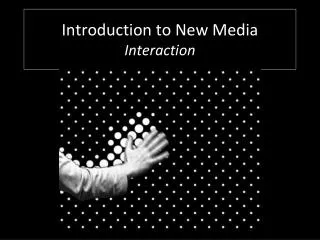
Introduction to New Media Dr. BurçeÇelik
Digital Natives • Born Digital – their experiences with news are different from others. • http://youthandmedia.org/videos/borndigital/ • Immersed in digital environment • fully adopted all digital technologies into their everyday lives • Self-expressive (they use various digital ways to express themselves through social media, blogs, forums etc) • Identity becomes a performance where the digital mediascape functions like a stage for it. • DNs – multiple identities, multiple faces, multiple stories
How do DNs experience News?From John Palfrey • Three step process: Grazing, Deep(er) Dive(s) and Feedback Loop. • Grazing: skipping headlines, surfing at speed; verification of news is not necessary, the reader does not have a clear context of the news.
How do DNs experience News?From John Palfrey • Deep Dive: Digging for the context. The reader chooses the channel for number of reasons (celebrity –the anchormen, politics- certain slant on the news, brand – appealing somehow to her) etc. This is where trustfulness and credibility of news organizations make difference. Key factors are accuracy, trustworthiness, insight/analysis and relationship.
How do DNs experience News?From John Palfrey • Feedback Loop: This stage is not for everyone. Some citizens are more willing to be participatory in discussions –some create their own blogs, write on a wiki or bulletin board about their own ideas. • In theory it is good for participatory and semiotic democracy. • Local news may become a global issue through sharing of these news by DNs. • The key factor is the ability to voice one’s demands and thoughts and the hope to make difference in the processes of political or social decisions.
Are DNs truly political or Is Digital Env. For Participatory Democracy? • Some scholars like John Palfrey are more optimistic; some others like Jodi Dean, Darin Barney are not. • Jodi Dean argues that the fact that people are sharing political messages and writing back to given messages in social media or digital platforms do not make them necessarily more political. She defines the culture of sharing and producing seemingly political messages all around as communicative capitalism. • What do you think? Communicative capitalism or participatory democracy?
What Makes Online Content Viral?From Jonah Berger and Katherine L. Milkman (2011) • What gives rise to the social transmission of messages in the digital mediascape? • Because messages are useful, triggering altruistic purposes or have social exchange value. • More positive content is more viral? • “Consumers often share content for self-presentation purposes (Wojnicki and Godes 2008) or to communicate identity… positive content may be shared more because it reflects positively on the sender” (2).
What Makes Content Viral? • The content becomes more viral the more positive it is. • Certain emotions: sadness does not make viral but anger does.. Or amusement makes it more popular.. • If it is in home page of a newspaper, it gets more viral