Understanding Stress: Causes, Effects, and Strategies for Teens
Stress is the body's response to everyday challenges, affecting both mental and physical health. Teens face various stressors, including school demands, peer pressure, family issues, and environmental threats. Differentiating between eustress (positive stress that motivates) and distress (negative stress affecting performance) is crucial. Understanding the physiological responses, such as the fight-or-flight reaction, can help manage stress. Awareness of stress symptoms, both emotional and physical, is vital for improving well-being and performance in daily life.

Understanding Stress: Causes, Effects, and Strategies for Teens
E N D
Presentation Transcript
Stress Aimee Sauvageau, Health Education
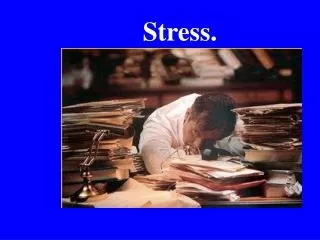
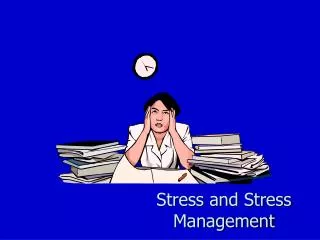
STRESS! The reaction of the body and mind to everyday challenges and demands.
Stressors for Teens Life Situations:-School Demands-Problems with friends, bullying-Peer Pressure-Family Problems, Abuse-Moving or Changing Schools-Breaking Up with a Girlfriend/Boyfriend
Stressors for Teens Environmental-Unsafe neighborhood-Media-Natural Disasters-Threat of terrorist attacks-WarGlobal Warming
Stressors for Teens Biological - Changes in Body-Illness-Injury-Disability
Stressor for Teens Cognitive (Thinking)-Poor Self-Esteem-Personal Appearance-Not Fitting In
Stressors for Teens Personal Behavior- Taking on a busy schedule-Relationship issues-Smoking-Using alcohol or other drugs
Types of Stress Eustress-good stress Distress-bad stress Stressor-anything that causes stress. Examples?
Yerks-Dodson Curve/Principle -Stress can actually increase performance. -Stress to the left of the midpoint can be thought of as eustress, or positive -Stress beyond the midpoint is thought to decrease performance or health and can be thought of as distress, or negative. -Find the optimal level of stress to produce greatest level of performance.
Motivation • Make you want to do better • Can be used for positive events • Examples:-Sports Games-Making Assignment Deadlines-Job Interviews-Going on a Date-Getting Ready for a Trip-Others? Eustress STRESS IS NOT ALWAYS A BAD THING
Caused from an unpleasant event • Could have negative effects on the all areas of the health triangle • Could interfere with your ability to perform • Could cause you to feel distracted, overwhelmed, impatient, frustrated, or even angry. Examples:-Tests-Family Changes-Public Speaking-Accidents-Others? Distress A result of an unpleasant stressor
How Do Your Body Respond to Stress? • Examples? • How did your body respond to the test? • Psychosomatic Response: a physical reaction that results form stress rather than from an injury or illness.
Physiological Effects of Stress -Dry Mouth-Excessive Perspiration -Frequent Illness -Gastrointestinal Problems -Grinding of Teeth -Headaches -High Blood Pressure -Pounding Heart -Stiff Neck or Aching Lower Back -Decreased Immune System
Emotional Symptoms -Anxiety or edginess -Depression -Fatigue -Impulsiveness -Inability to concentrate -Irritability -Trouble remembering
Behavioral Symptoms -Crying -Disrupted eating habits -Disrupted sleeping habits -Harsh treatment to others -Increased use of drugs, alcohol & tobacco -Problems communicating -Sexual problems -Social isolation
Physical Responses to Stressors -Homeostasis-Autonomic Nervous System-Parasympathetic Nervous System
Fight-or-Flight -Physiological response occurs in the body when a threat or stressor is presented. Body prepares itself to either fight or flee.-The body gives the CNS a signal and it responds by altering the body to react to the stimulus: Keeps the Necessary’s
Fight or Flight http://cmhc.utexas.edu/stressrecess/Level_One/fof.html
Fight or Flight, Bodies Responses • Pupils dilate • Decreases saliva • Bronchi Dilate • Perspiration Increases • Intestines Slow/Stop • Bladder Relaxes • Blood Vessels Contract • Increased Hearing • Heart Rate Increase • Muscles Contract • Body Prepares to use Oxygen • Fat is used for extra Energy
General Adaptation Syndrome (GAS) • GAS: the process in which the body tries to accommodate to the stress placed on it by attempting to adapt to it. • Three stages: alarm reaction, resistance, and exhaustion
General Adaptation Syndrome (GAS) • Alarm: When the threat or stressor is identified or realized, the body's stress response is a state of alarm. During this stage adrenaline will be produced, initiating fight-or-flight. • Resistance: If the stressor persists, the body attempts to cope. Although the body tries to adapt to the stress, the body cannot keep this up forever, so its resources are gradually depleted. • Exhaustion: Eventually reality kicks in and our bodies give up on trying to maintain a high level of stress. Parts of the body start to break down and illness/sickness may occur. (ulcers, depression, diabetes, digestive systems, cardiovascular, colds/flu)
Stress is Linked with……. Cardiovascular Disease Colds and other Infections Asthma and Allergies Cancer Chronic Disease Flare-Up Psychological Problems Digestive Problems Headaches Insomnia and Fatigue Injuries (distraction) Pregnancy Complications Type 2 Diabetes