Download
1 / 10
100 likes | 211 Vues
In June 1917, General John J. Pershing led American troops into World War I, marking a significant shift in the conflict. While smaller forces fought throughout 1917, larger contingents arrived in early 1918, participating in fierce battles such as the Second Battle of the Marne and Belleau Wood. American casualties were notably low due to their late entry, with around 50,000 lost and over 230,000 wounded. The war also saw the introduction of new technologies including machine guns and chemical warfare, leading to unprecedented combat tactics and ultimately aiding the Allied victory by November 1918.

E N D
America Joins the War • General John J. Pershing arrived in France in June 1917 • Small forces of men arrived throughout 1917 • Larger groups arrived in early 1918 • American troops (doughboys) fought bravely at some of the wars most brutal battles • 2nd battle of the Marne • Bellau Wood • Chateau-Thierry
Casualties • American causalities were smaller due to late entry into the war • Americans lost 50,000 and had over 230,000 wounded • 1.3 million served during the war
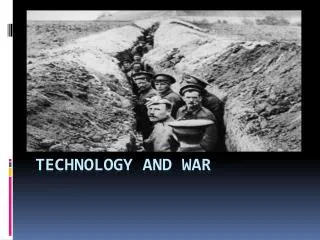
War Tactics • Trench warfare became a trademark war tactic of WWI • 450 miles of trenches were dug from Belgium to the border of Switzerland • Life in the trenches • Rat infested • Dirty (especially in rainy seasons) • Dead bodies often littered the trenches along with trash and human waste.
No Man’s Land • The area of ground separating each side from their enemies trench • The area was often riddled with land mines and barbed wire • Going over the top: • When men would go out of the trench into no man’s land attempting to take their enemies trench.
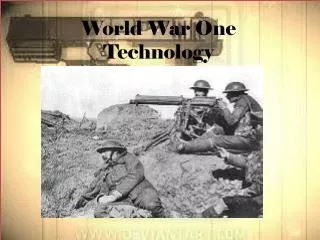
New Technology • Machine guns: • New machine guns could fire over 600 bullets per minute • Artillery: • Long range canons could affectively kill at longer distances causing more death than any other weapons in the war • Rifles • Rifles were more accurate at longer distances and could hold more ammunition
Gas “The special shells the men call “shells on wheels” (shells filled with poison gas) are whizzing by continuously. They explode silently and have no smell but can be deadly. They killed several men yesterday. One of my men refused to put his mask on because he couldn't smell anything. All of a sudden, he was dizzy, foaming at the mouth and his skin went black , then he went rigid and died.” -Paul Truffaut, march 5, 1917 • Modern chemical warfare was first introduced in WWI • Gas invoked terror throughout the trenches • Gas masks were provided to the men on the front lines • Chlorine, phosgene, and mustard gas were used by both sides • Could kill, blind, burn victims
Planes, Tanks, & Boats • German U-Boats wreaked havoc on the Allied forces with their submarine warfare • They sunk supply ships faster than they could be re-built • This led the Allied forces to move supplies in convoys • Tanks and armored cars were built to go over rough roads and barbed wire • These vehicles did not see success until WWII • Airplanes were used for reconnaissance, bombing, and fighting but did not meet their true potential until WWII
Stalemate • The war was a constant stalemate until 1918 • Each side had equally advanced weaponry which allowed them to remain in the fight • Trench warfare allowed for limited advancement keeping soldiers in trenches for years • High casualties on both sides were common • United States entry allowed for revitalizing the Allied war effort and bringing victory
The War Ends • By fall of 1918 the German front had collapsed • Men from German and Austrian-Hungarian armies disserted, refused to fight, or mutinied. • November 11, 1918 Germany surrendered