
Safeguarding Digital Pastures: Managing User Errors in Terrain Analysis

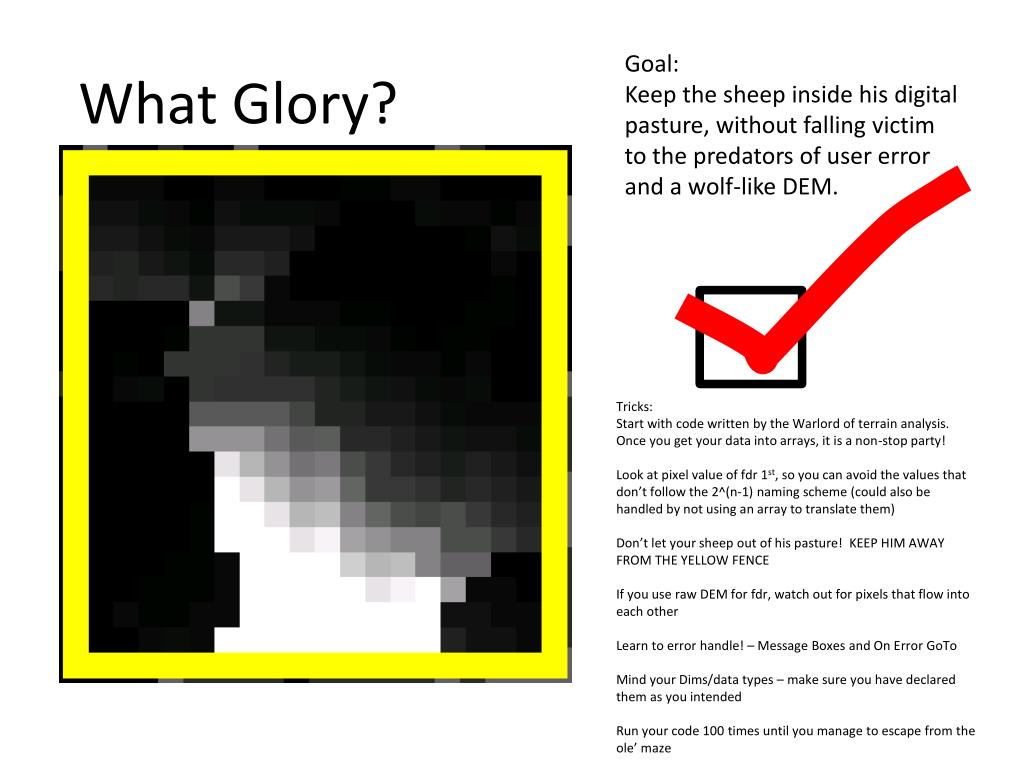
This guide outlines strategies for keeping your "sheep" in the digital pasture - ensuring data integrity while navigating the challenges of user error and complex Digital Elevation Models (DEMs). Built on foundational terrain analysis code, it emphasizes the importance of properly structuring data into arrays and avoiding pitfalls with pixel values. Learn to recognize common errors, implement effective error handling, and maintain clarity in your data types. With diligent practice, you can streamline your analysis and wholly embrace the world of digital terrain without letting your data escape!
Télécharger la présentation 
Politique de téléchargement : le contenu du site vous est fourni TEL QUEL pour votre information et votre usage personnel ; il ne peut être vendu, concédé sous licence ni partagé sur d’autres sites sans l’accord de son auteur.Le contenu vous est fourni TEL QUEL, pour votre information et votre usage personnel uniquement. Téléchargez la présentation en cliquant sur ce lien. Lors du téléchargement, si vous ne parvenez pas à télécharger une présentation, l’éditeur a peut-être supprimé le fichier de son serveur.Pendant le téléchargement, si vous ne parvenez pas à obtenir une présentation, le fichier a peut-être été supprimé par l’éditeur.
F I N