

SlideServe
Menu
Préférences
© SlideServe · v2026

Hard Hat Safety

graceland avatar
18 diapositives · 1.4K Views · Apr 07, 2012

Hard Hat Safety. A HISTORY OF HARDHATS. A HISTORY OF HARDHATS. Manufactured by what is known as the Bullard Company today. Called the Hard-Boiled Hat and patented in 1919. Manufactured out of steamed canvas, glue and black paint. 1938 - first aluminum hardhat became available.
Hard Hat Safety - slide 1
01 / 18Hard Hat Safety
1 / 17

Télécharger la présentation

Hard Hat Safety
Une image / un lien ci-dessous est fourni (tel quel) pour télécharger la présentation

Politique de téléchargement : le contenu du site vous est fourni TEL QUEL pour votre information et votre usage personnel ; il ne peut être vendu, concédé sous licence ni partagé sur d’autres sites sans l’accord de son auteur.Le contenu vous est fourni TEL QUEL, pour votre information et votre usage personnel uniquement. Téléchargez la présentation en cliquant sur ce lien. Lors du téléchargement, si vous ne parvenez pas à télécharger une présentation, l’éditeur a peut-être supprimé le fichier de son serveur.Pendant le téléchargement, si vous ne parvenez pas à obtenir une présentation, le fichier a peut-être été supprimé par l’éditeur.

F I N

Plus de contenu associé

Transcription de la présentation
  1. Hard Hat Safety

  2. A HISTORY OF HARDHATS

  3. A HISTORY OF HARDHATS • Manufactured by what is known as the Bullard Company today. • Called the Hard-Boiled Hat and patented in 1919. • Manufactured out of steamed canvas, glue and black paint. • 1938 - first aluminum hardhat became available.

  4. A HISTORY OF HARDHATS • 1940’s - use of heat resistant fiberglass. • 1950’s and 60’s - use of plastics replaced fiberglass. • 1980’s change in suspension.

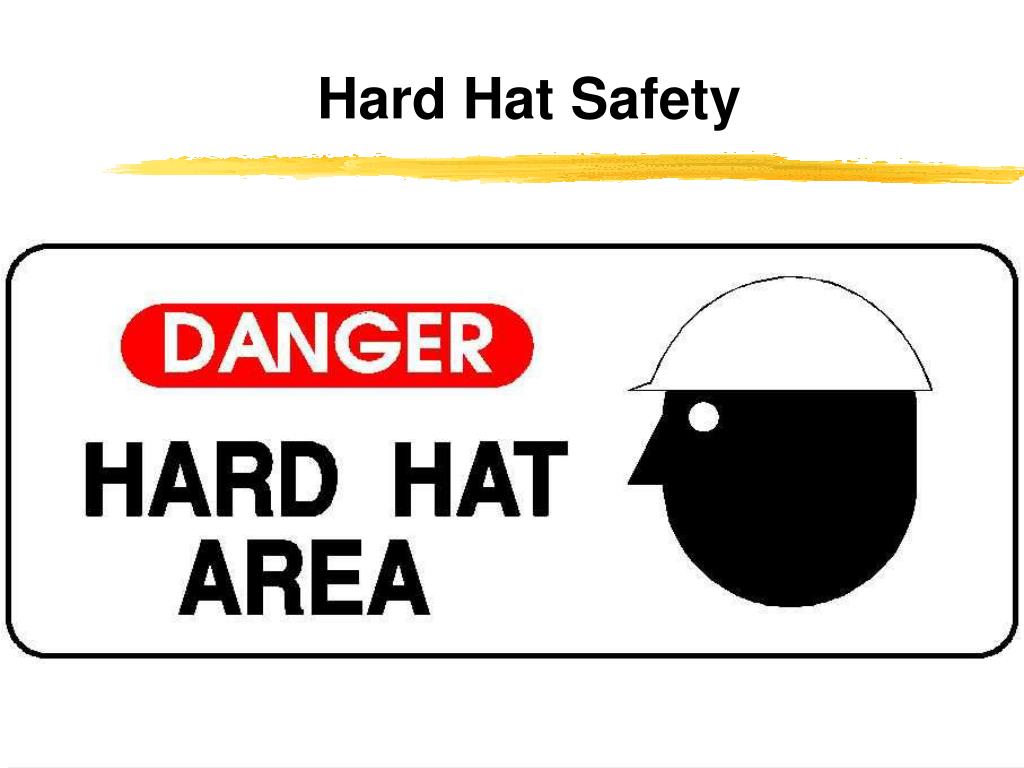
  5. FIRST KNOWN HARD HAT AREA IN THE UNITED STATES

  6. HARD HATS • Must meet ANSI Standards • Require a hard outer shell and a shock-absorbing liner. • Have a liner that incorporates a head band and straps that suspend the shell from 1 to 1 1/4 inches away from the users head.

  7. HARD HATS MUST: • Resist penetration by objects. • Absorb the shock of a blow. • Be water resistant and slow burning.

  8. CLASSES OF HARDHATS

  9. CLASS A • General service only. • Provides good impact protection. • Has limited voltage protection. • Used in mining, building construction, shipbuilding, and manufacturing.

  10. CLASS B • Provide good impact protection. • Protect against high-voltage shock and burns.

  11. CLASS C • Offer limited protection. • Do not protect against falling objects or electric shock.

  12. SUSPENSION REPLACEMENT • Shows signs of deterioration such as cracking, tearing, or fraying. • No longer holds the shell from 1 inch to 1 1/4 inches away from the head.

  13. REPLACEMENT OF THE HARD HAT SHELL • The brim or shell is nicked, cracked, perforated, or deformed. • Loss of surface gloss. • Chalking or fading of surface. • Flaking of surface. • Shell is stiff or brittle. • Struck by a falling object. • Has made an electrical contact.

  14. DEGRADATION TEST OF THE HARD HAT SHELL • Compress the shell inward from both sides about one inch. • Release without dropping the shell. • Should return to its original shape quickly. • If elasticity is not similar to a new shell, it should be replaced.

  15. IMPORTANT POINTS TO REMEMBER • Protects from impacts from above. • Never modify the shell or suspension. • Avoid contact with electrical devices. • Replace if struck by a falling object. • Do not store in direct sunlight. • Do not sit on. • Do not paint. • Do not use solvents or cleaners.

  16. CARE AND MAINTENANCE • Remove head liner and inspect for defects. Replace if needed. • Immerse shell in hot water and detergent for one minute. • Scrub. • Rinse in clear hot water. • Inspect for defects, replace if needed.

  17. CARE AND MAINTENANCE • INSPECT DAILY BEFORE USING

  18. The Brain Is Your Best PPE. Use It.