Understanding Rhetoric: The Power of Persuasion through Ethos, Pathos, and Logos
This guide explores rhetoric and the strategic use of language to persuade in writing and speech. We delve into rhetorical appeals—ethos (credibility), pathos (emotional connection), and logos (logical reasoning)—and how they can effectively convince an audience. The document also examines the context of arguments and implicit messages conveyed through language. Understanding these concepts is crucial for distinguishing between argumentation and persuasion, allowing speakers and writers to engage their audience more powerfully.

Understanding Rhetoric: The Power of Persuasion through Ethos, Pathos, and Logos
E N D
Presentation Transcript
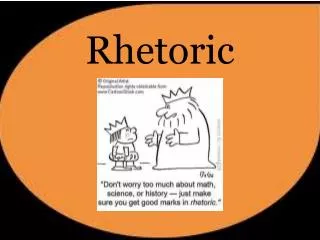
Rhetoric • Use of words to convince, either in writing or speech.
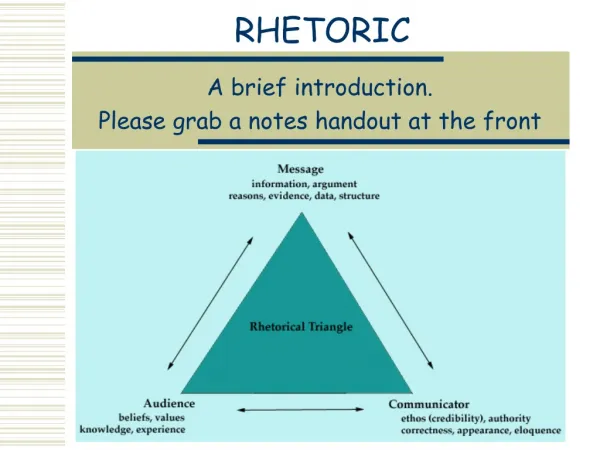
Rhetorical Appeals • Emotional, ethical, and logical appeals used to convince the audience to agree with the speaker or writer. (See triangle). LOGOS ETHOS PATHOS
Ethos Appeal to character and qualification. • Credibility/reputation • Trust • Expert or celebrity endorsements • Brand names LOGOS ETHOS PATHOS
Pathos Appeals to the reader’s or listener’s senses or emotions. • Emotions and feelings, good or bad • Imagination • Guilt • Values and beliefs LOGOS ETHOS PATHOS
Logos An appeal to reason or logic. • Facts • Numbers • Evidence LOGOS ETHOS PATHOS
Context Situation the argument is viewed in • Dates/time period • Locations • Cell phone ad in 1995 vs. 2014 • What body shape for women is considered beautiful 1930 vs. 2014
Explicit What you actually say with words.
Implicit The message you send to people without actually saying it with words, whether intended or not.
Argument vs. Persuasion, Think about what you’ve learned about argument and persuasion so far.
Which point(s) of the triangle do you think persuasion relies on? • Which point(s) of the triangle do you think argument relies on?
Persuasion relies more on the speaker’s or writer’s credibility (ethos) and on the emotional appeals made to the audience (pathos). • Argument relies more on reason and logical appeals (logos).