The Global Journey of Vinegars: From Tradition to Taste
Explore the vibrant world of vinegars, a staple in global cuisine, from Japanese and Chinese varieties to Western selections. Discover the history of vinegar, originating in England over 10,000 years ago, and learn about its fermentation process, turning alcohol into acetic acid. With a pH between 2.5 and 2.9, vinegar comes in many forms, including white, malt, wine, apple cider, balsamic, rice, and date vinegars. Each type offers unique flavors and uses, reflecting regional traditions and applications.


The Global Journey of Vinegars: From Tradition to Taste
E N D
Presentation Transcript
International Vinegars Vibrant, Vivacious, and Ethanol?
About • Japanese and Chinese vinegars differ • Milder than Western vinegars • Any alcoholic beverage will turn to vinegar • Grapes • Dates • Rice • Apples • Coconut
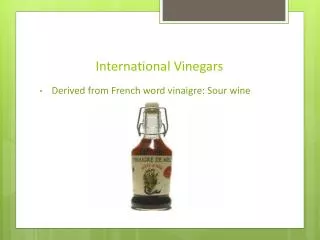
History • Originated in England • Fish & Chips • First used 10,000 years ago • Derived from French word vinaigre: Sour wine
Fermentation Process • Alcohol turns to acetic acid and oxidizes • pH around 2.5-2.9 • The longer the fermentation, the smoother the vinegar • Time and bacteria create smooth vinegar
Many, Many Kinds • White • Malt • Wine • Apple Cider • Fruit • Balsamic • Rice • Date
White • Made from grain and water • Used also for cleaning
Malt • Made from malting barley
Wine • Made from red or white wine • Originated in Mediterranean and Germany • Best matured two years
Balsamic • Made from concentrated juice or must of grapes • Must: grape juice before or during fermentation • Musty: stale or moldy smelling • Originated in Italy • Originally available only to upper classes
Rice • Made from fermented rice or rice wine • Originated in Asia