The Dewey Decimal Classification System
The Dewey Decimal Classification System. Cherokee Elementary Media Center Media Specialist: Mrs. Kelly Bentley. This presentation will focus on an elementary school audience. This presentation will be presented in the Cherokee Elementary Media Center for third grade students.

The Dewey Decimal Classification System
E N D
Presentation Transcript
The Dewey Decimal Classification System Cherokee Elementary Media Center Media Specialist: Mrs. Kelly Bentley
This presentation will focus on an elementary school audience. • This presentation will be presented in the Cherokee Elementary Media Center for third grade students. • The purpose of this presentation is to teach students how books are arranged using the organization of the Dewey Decimal Classification System. • In this lesson, students will learn to locate books in the media center using the Dewey Decimal Classification system.
Pretest: What do you already know? • How are non-fiction books in our media center arranged? a. A.R. color b. Dewey Decimal Classification System c. ABC order • Who created the Dewey Decimal Classification System? a. Melvin Dewey b. Mrs. Bentley c. George Washington • What is a call number? a. the number given to the book in order to help you find it in the library b. the A.R. quiz number • Where is the call number of a book found? a. on the cover of a book b. on the spine of a book c. on the back of the book • How many main classes are in the Dewey Decimal Classification System? a. ten b. seven c. twelve • In which section would this book be found? a. 000s b. 100s c. 200s d. 300s • In which section would this book be found? a. 400s b. 500s c. 600s d. 700s • In which section would this book be found? a. 600s b. 700s c.800s d. 900s
What is the Dewey Decimal Classification System? • The Dewey Decimal Classification System provides a system for organizing every book in our library. • Books with similar subjects are grouped together. • The Dewey Decimal Classification System has ten main classes or groups.
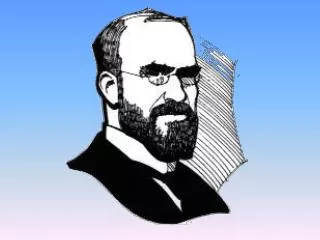
Who created the Dewey Decimal Classification System? • Melvin Dewey • Melvin Dewey created the DDCS when he was only 21 years old and working in a library. • He thought it would be a good idea to group books together based on their subject. • His system for organizing books is still used today even though it was developed long ago. http://images.search.yahoo.com/search/images;_ylt=A0oG7lhFYmZPGgUAuixXNyoA?p=melvin%20dewey&fr=att-portal&fr2=piv-web
What is a call number? • The call number is located on the spine of the book. • It is the number given to the book in order to help you find it in the library. • The numbers represent the ten main classes or groups. Spine Call Number
What are the ten main classes or groups? • 000s-General Works • 100s-Philosophy & Psychology • 200s-Religion • 300s-Social Sciences • 400s-Language • 500s-Science • 600s-Technology • 700s-Arts & Recreation • 800s-Literature • 900s-History & Geography
000-Generalities Reviews: http://www.flr.follett.com/search?SID=b3cca5e3bb59f94beeb3415974147f60
200-Religion Reviews: http://www.flr.follett.com/search?SID=52d2f5aa8cbf10b8dbac334c700da240
400-Language Review: http://www.flr.follett.com/search?SID=b3cca5e3bb59f94beeb3415974147f60
600-Technology Reviews: http://www.flr.follett.com/search?SID=b3cca5e3bb59f94beeb3415974147f60
700-Arts & Recreation Review: http://www.flr.follett.com/search?SID=b3cca5e3bb59f94beeb3415974147f60
800-Literature Reviews: http://www.flr.follett.com/search?SID=b3cca5e3bb59f94beeb3415974147f60
900-Geography & History Reviews: http://www.flr.follett.com/search?SID=b3cca5e3bb59f94beeb3415974147f60
Post test: What have you learned? • How are non-fiction books in our media center arranged? a. A.R. color b. Dewey Decimal Classification System c. ABC order • Who created the Dewey Decimal Classification System? a. Melvin Dewey b. Mrs. Bentley c. George Washington • What is a call number? a. the number given to the book in order to help you find it in the library b. the A.R. quiz number • Where is the call number of a book found? a. on the cover of a book b. on the spine of a book c. on the back of the book • How many main classes are in the Dewey Decimal Classification System? a. ten b. seven c. twelve • In which section would this book be found? a. 000s b. 100s c. 200s d. 300s • In which section would this book be found? a. 400s b. 500s c. 600s d. 700s • In which section would this book be found? a. 600s b. 700s c.800s d. 900s
References • Aberg, R. (2003). Map keys. Chicago, IL: Children’s Press. • Adil, J. (2006). Scarcity. Mankato, MN: Capstone Press. • Aliki. (1994). The gods and goddesses of Olympus. New York, NY: Harper Collins. • Bozzo, L. (2008). My first dog. Berkeley Heights, NJ: Enslow Elementary Pub. • Cambria Friesland School District. (2012). Dewey decimal numbers for kids. Retrieved on March 18, 2012 from http://www.cf.k12.wi.us/library/deweydecimal.htm • Cole, J. (2001). Ms. Frizzle's adventures: Ancient Egypt. New York, NY: Scholastic Press. • Dicker, K. ( 2010). I belong to the Muslim faith. New York, NY: PowerKids Press. • Fisher, D. ( 2008). Touchdown nouns. Milwaukee, WI: Gareth Stevens Pub. • Georgia Department of Education. (2012). 3rd grade standards. Retrieved March 18, 2012 from https://www.georgiastandards.org/Pages/default.aspx • Gudgeon, C. (2010). Ghost trackers. New York, NY: Tundra Books. • Hall, K. (2002). Kitty riddles. New York, NY: Puffin.
References continued • Ipcizade, C. (2008). Giraffes. Mankato, MN: Capstone Press. • Jakubiak, D. (2010).A smart kid's guide to social networking online. New York, NY: PowerKids Press. Landau, E. (2008). Ellis Island. Chicago, IL: Children’s Press. • Lillegard, D. (2003). Hello school: A classroom full of poems. New York, NY: Dell Dragonfly Books. • Lindeen, C. (2008). Soil basics. Mankato, MN: Pebble Books. • Loewen, N. (2007). If you were a homonym or a homophone. Minneapolis, MN: Picture Window Books. • Marzollo, J. (2003). I spy a dinosaur's eye: Riddles. New York, NY: Scholastic. • Maurer, T. (2010). Cupcakes, cookies, and cakes. Vero Beach, FL: Rourke Pub. • Miller, K. (2011). I love the Jonas Brothers. New York, NY: Windmill Books. • Mora, P. (1996). Confetti : Poems for children. New York, NY: Lee & Low Books. • Oracle Thinkquest. (2012). Dewey and the Alien. Retrieved on March 18, 2012 from http://library.thinkquest.org/5002/Alien/alien.htm
References continued • Penn, M. W. (2012). It’s a pattern. Mankato, MN: Capstone Press. • Roberts, C. (2007). Airplanes. Mankato, MN: Child’s World. • Scheunemann, P. (2003). –unk as in skunk. Edina, MN: Abdo Publishing Co. • Teitelbaum, M. (2009). Mysterious creatures. Mankato, MN: Child’s World. • Wick, W. (2008). Optical tricks. New York, NY: Scholastic.