Download
1 / 12
120 likes | 227 Vues
Explore the impact of sagebrush on snow cover energy budget. Discover how sage affects snow melt under varying wind conditions and its role in local weather dynamics. Preliminary findings question aerodynamic models' accuracy in estimating sublimation/evaporation.

E N D
Fluxes over snow surfaces Larry Mahrt Oregon State University mahrt@coas.oregonstate.edu
Main Participants • L. Mahrt, Dean Vickers, Young-Hee Lee, Richard Cuenca, Yutaka Hagimoto, Oregon State University • Robert Kelly, U. of Wyoming • Glen Liston, John Strak, Chris Heimstra, C.S.U. • Bill Massman, U.S.F.S. • Jielun Sun, Sean Burns, NCAR • Steve Oncley, Tony Delany and staff. NCAR ATD
Dependence of roughness length on snow cover over native grass
Some preliminary conclusions • During the experiment period, snow patchiness was less important than sage patchiness • Sage has low albedo with respect to low winter sun angles, even if it is sparse • Heating of the air by the sage apparently increases snow melt in windy conditions, • but reduces snow melt during weak wind conditions due to formation of an inversion over the snow.
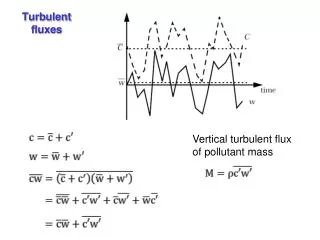
Advection of heat and turbulence, partly due to Peterson Ridge, sometimes exerts a strong influence on local conditions. • The bulk aerodynamic approach grossly overestimates the sublimation/evaporation (model or observational error?).