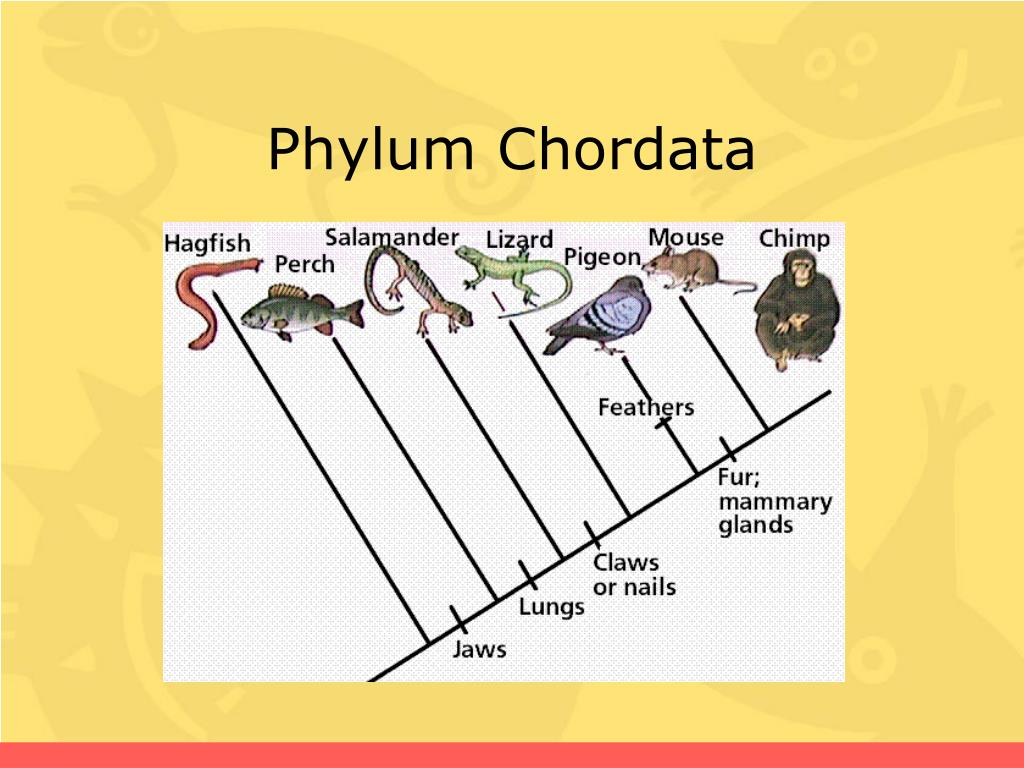
Phylum Chordata
Phylum Chordata Includes 5 Classes • Fish • Amphibians • Reptiles • Birds • Mammals
Fish • Habitat: nearly every aquatic environment • Respiration: use gills to breathe • Circulation: 2 chambered heart • Reproduction: sexual (mostly external) • Nervous System: lateral line system that can detect movement
Fish • 3 Major Types of Fish • Jawless Fish • Cartilaginous Fish (chondricthes) • Bony Fish (osteicthes)
Amphibians • Examples: frogs, salamanders, toads • Habitat: live on land and water • Respiration: lungs in adults, gills in tadpoles, but mostly through the moist skin • Reproduction: External reproduction (water needed to transport sperm and eggs must be kept moist)
Circulation: 3 chambered heart (mixing) One chamber gets oxygen-rich blood from the lungs and skin One gets oxygen-poor blood form the rest of the body Both of those chambers collect in a third chamber that pumps a mix of oxygen-rich and oxygen-poor blood to the lungs, skin and body Amphibians
Temperature Regulation: Ectotherms, variable body temperature – gets heat from outside source Metamorphosis – eggs, tadpoles, adult Tadpoles – fins, gills, 2-chambered heart Adult – legs, lungs, 3-chambered heart Amphibians
Examples: snakes, crocodiles, turtle, lizards Habitat: Land mostly Respiration: No exchange thru skin bc it is scaly MUST use lungs Circulation: most have 3 chambered heart Obtain food: claws, legs directly under body makes running easier Temp Regulation: ectotherms Reptiles
Reproduction: Internal fertilization and can lay eggs on land due to the evolution of the amniotic egg Reptiles
Amnion: fluid that cushions embryo Shell: leathery shell Yolk: food source for embryo Allantois: wastes are excreted into this Chorion: allows gas exchange Egg tooth: horny tooth that helps hatch the egg Amniotic Egg
Birds • Examples: pelican, penguin, blue jay • Respiration: lungs and air sacs for extra oxygen for flight • Temp Regulation: Endotherm (internally regulates body temp so it is constant) • Reproduction: internal fertilization and lay amniotic egg with a hard shell, must incubate eggs • Characteristics to Fly: hollow bones for flight, feathers are lightweight, wings, one urogenital orphus
Birds • Circulation: 4 chambered heart (one side pumps oxygen-poor blood to lungs the other side pumps oxygen-rich blood to the rest of the body)
Mammals Must haves to be a mammal: • Hair • Mammary glands that secrete milk to nurse young • Diaphragm to expand and contract chest cavity to get more oxygen • Specialized teeth (ex. Molars, canines, incisors) • Can learn!
Mammals • Temp Regulation: Endotherms, maintain fairly constant body temperature • Circulation: 4 chambered heart the oxygenated blood is kept separate from the deoxygenated blood • Respiration: Diaphragm – sheet of muscle located beneath the lungs that separates the chest cavity from the abdominal cavity
Mammals • Why is HAIR important? • Insulation • Waterproofing • Conserves body heat • Mammals cool off by panting and sweating
Mammals Mammals are classified into 3 groups based on their method of reproduction • Placental Mammals • Marsupials • Monotremes
Placental Mammals • Carries baby in the mother’s uterus until development is almost complete • Placenta provides food for the baby, allows gas exchange, and removes waste • 95% of mammals are placental
Marsupials • After a baby has grown to a certain size, the mom carries the baby inside a pouch made of skin and hair on the outside of the mom’s body • Most are found in Australia
Monotremes • Reproduces by laying eggs • Found only in Australia, Tasmania, and New Guinea • 3 species of monotremes alive today (platypus, spiny anteater and long-beaked echidna