
The Importance of Economic Growth for Businesses and Individuals
E N D
Presentation Transcript
Unit 4 Section 1: slides 1 through 17
Is Economic Growth Important? • YES!!! • EconomicGrowth: increase in the amount of goods and servicesproduced in a country. • American economy has grown • Businesses grown • Businesses improved • Jobs for people, earn $ • Spend $ for goods and services
Business fails: • Lose money • Jobs lost • Spending ability negatively affected • SLOWS down economic growth
Three Reasons for Economic Growth • LargeSupplyofNaturalResources • Land • Water • Oil • Trees
SteadyIncreaseinPopulation - Provides workers - Demand for goods and services • Free Enterprise System - Provides a variety of jobs - “Be your own boss”
Technology Has Also Helped Economic Growth • Technology: use of scientific knowledge, especially in industry and trade. • Cuts down on production costs • Better methods of growing crops • Better methods for feeding animals • Improves how products are made • Cars • Televisions • Appliances • Electronics
GrossNationalProduct • Economic growth is measured annually (yearly) • GrossNationalProduct (GNP): Total $ value of all goods and services added up • Some products will sell better in some years, not in other years. • Businesses rely on GNP to know what to expect in the future
Companies can tell what products are selling well • That knowledge helps businesses decide what and how much to produce in the future
Uneven Growth of American Economy • Economicgrowth is essential for well-being of US • Today, people have morematerialgoods than their parents • Economy has improved for the good of most citizens • This growth did not take place at a steadyrate!
Many economic ups and downs • 1920s following WWI = Rapidgrowth! • 1930s= Slowdown • Unemployment: being without a job • Peoplelostfaith in the bankingsystem • Afraid of losing their money, peoplerushedinto banksand tookoutall $they saved
Banks did not have $ to give everyone • Many banksfailed • Large numbers of people lostlifesavings • GreatDepression–lasted until the 1940s • WWIIhelped the economy • The economydoesnotremainthe samefor very long!
What is a Business Cycle? • Business Cycle: series of changes in the American economy • Usually goes from one period of prosperity (good times) to the next period of prosperity • Periods of prosperity most people have jobs, spendingis high businessessellalmost all they produce businessesgrow • GNPgrowsduring prosperity
Recession: gradual slowdownin business activity and consumer spending • Businesses not growing harder to find jobs less money for goods and services • Depression: Greaterslowdownin business activity and consumer spending • Poverty: Lack of money • 1930s, The Great Depression • Government tried to help poor by setting up soup kitchens and shelters for homeless people
Recovery: Time when businesses start to improve • Employers able to offer jobs • People begin spending money • Economy improves • GNP begins to rise
Why Do Business Cycles Take Place? • 1. Consumers can change their demands • Businesses rush to make the good or service • 2. Businesses may change willingness to grow and expand • 3. Changes in interestrates charged to borrow money • Growth of economy too fast = gvt raise interest rates = more difficult to borrow $ • Slow growth of economy = gvt lowers interest rates = encourages spending
The Problem of Inflation • Inflation: when pricesrisequickly, but incomes do not rise as quickly • Value of $ is decreased • Hurts those on fixedincomes (retirees—people no longer working, disabled) • Difficult to change • Gvt may try to control inflation with wage and price freezes • Only for short period of time • Does not always stop inflation
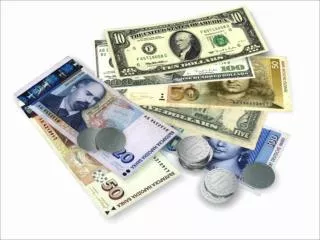
What is Money? • Something given in exchange for goods or services • Currency: coins and paper money • Older forms of currency • Shells • Stones • Animal teeth • Spices • Tea • Salt
Bartering: trading something that you have for something you want • Farmer needs lumber to build barn • Barters wheat for lumber
Checks: an order to a bank to pay a certain amount of money to another person or place of business • Debit: Money is in an account and paiddirectlyfromaccount when used. • Both are: • Forms of currency • Used in place of money
Creditcards: Shows businesses or banks that payment is able to be made at a future date • Some credit cards charge a fee when amount owed is not paid in full each month
Functions of Money • Mediumofexchange: accepted by most people as payment for goods or services • Measureofvalue: Worth of goods can be measured • Car $20,000 • Book $20 • Chocolate $2 • Storeofvalue: Save or store money to use in the future • PEOPLE LOVE MONEY! Easy to use
What is the Function of Banks? • Keepsmoneysafe • Accepts deposits(put in) for safekeepingand convenience • Can be withdrawn(taken out) at any time • Demand deposits • Interest paid on savings accounts • Some banks pay interest on checking accounts
Banksmake loans • IMPORTANT FUNCTION OF BANKS! • Banks lend money charge interest (usually percentage of loan) and fees borrower pays back original amount PLUS interest and fees • $100 borrowed at 10% for one year $110 paid back
Banks Must Earn Profits • Make profit by makingloans • Interest charged is profit for bank • Banks will checkbackground of loan applicant • If you are responsible, you will likely get a loan • If you are irresponsible (not pay your bills, late with payments, have too much credit), you will likely NOT get a loan
When bank agrees to loan money, borrower signs a promissorynote (note promising to pay back the money) • Each month, person pays a certain amount to the bank until loanANDinterest is paid off • Helps YOU (get what you want to buy), helps bank (earn profit), helps economy (buying things!)
The Federal Reserve System • In early times, Goldsmiths kept other people’s valuables in a safe place • Storedvaluablesand gaveslipsofpapersaying how much was stored • Slipsofpapercould be used as currency • Goldsmithswere the firstbankers
Banking in US started in colonialtimes • Privatebanksformed and storedpeople’s money • Many banks failed • 1791, Congress founded nationalbankto help • It failed! • 1816, Congress founded a secondnationalbank • It failed! (lasted only about 20 years)
So, why did the early banks fail? • Early banks issued papermoneyto showhowmuchof a valuablewas stored • Toomuchpaper money printed • Notbackedby goldor silver • Peopletried cashingin paper money, foundit was worthless • 1863, panic set it • Congress tried to fix things, did not help
1913 • FederalReserveSystemwas founded • Helped banking improve • Limitedamount of paper moneythat was printed • People’s depositsprotected • Federal Reserve System saved banking in the US
What is the Federal Reserve System? • Centralbankingsystemin US • Often called “TheFed” • “Banker’s Bank” • 25 Federal Reserve banks in 12 districts throughout US • Federal Reserve banks dobusinesswithcommercial banksand financialinstitutionswithin own district • ALLNATIONALBANKSMUST BELONGTO FEDERALRESERVESYSTEM, but any other financial institution may join if they choose • Current chairman: Jerome H. Powell
Federal Reserve System ControlsMoney • Offers 4 services: • 1. Banks can borrowmoney from them • 2. Keepsreserves of cash for banks to draw on • 3. Financialadvice and assistance offered • 4. Dividendspaid on stocks bought in district banks
Federal Reserve System Controls Money Supply • Supplyof moneyimportantin free enterprise system • No$for loans= economywill notgrow/improve • Toomuch$ = valueof money goes down • Supplyof money is closely monitoredby FederalReserve • Each member bank MUST keep a certain amount of money on hand (reserve) • CANNOT be loaned out
Amountin reserve can be raisedor loweredby FederalReserve • Controlsthe amount of moneyin circulation • Controlsamount of moneybeing used in businesses • Controlsamount of moneyused by individuals • Controlsinterestratesto bank • Highinterest rates = banks less likely to borrow = bank has less money to lend out = lowers money supply
Bankmust keep%of money inreserve • This reservekepton depositwith FederalReservebank • testmoz.com/1566364 • 123