Download
1 / 8
80 likes | 196 Vues
Explore the rise of Ottoman Turks, Safavid Dynasty, and Mughal Empire from 1450-1800. Discover their conquests, cultural achievements, and governance. Witness the splendor of mosques, arts, and societal norms in this transformative era.

E N D
The Muslim Empires 1450-1800
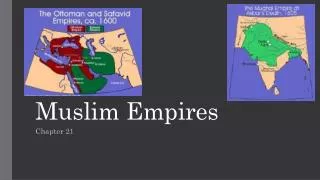
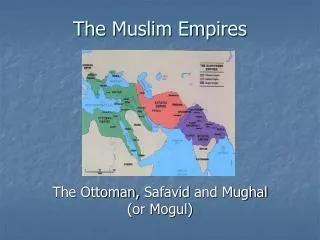
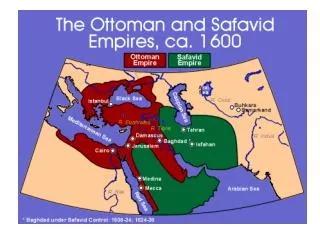
Rise of the Ottoman Turks • Empire began near the Bosporus and Dardanelles • Over the next 300 years, rule expanded to Asia, North Africa and Europe • Under the leadership of Mehmed II, the Ottoman Turks, gained control of Constantinople and the Byzantine Empire • Eventually controlled Islam’s Holy cities • Tried to push into Europe, but these attacks were repelled
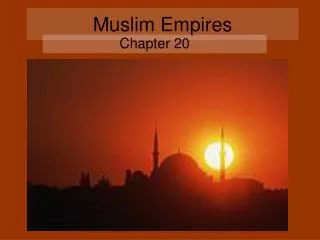
The Ottoman World • Gunpowder Empire • Mastered technology of firearms • Sultans • Head of Ottoman government • Hereditary • Took many wives • Religion • Islam • Generally tolerant of non-Muslims • Architecture/Arts • Pottery, rugs, silk • Magnificent mosques
Problems in the Ottoman Empire Sultans became less involved in government Western ideas, began to take over Ottoman ideas
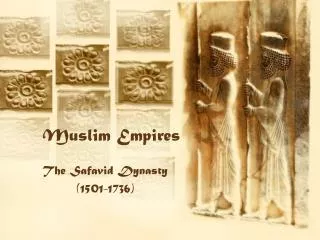
The Safavid Dynasty • Founded by Shah Esmail • Seized much of Iran and Iraq • Conquered many territories • Used Shia faith to unite empire • Sunni had to convert to Shia
Life Under the Safavids • Shah • More available to their subjects • Economy • Active in trade and manufacturing • Roads were fair • Culture • Growth of the arts, especially painting
The Mogul Dynasty • Moguls came from area north of Indus River Valley • Akbar brought most of India under Mogul rule by 1605 • Increased power of military • Very tolerant of those conquered • Long period of peace and stability • Prosperous trade
Life in Mogul India • Women • Played an active role in society • Used for political advice • Culture • TajMahal constructed